
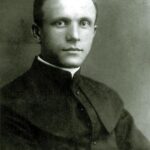

In November 1960, following the hostile report of Monsignor Carlo Maccari, the Vatican struck Padre Pio with a new series of crippling restrictions. Acting on incomplete and poisoned information, the administration of Pope John XXIII imposed severe decrees that isolated the elderly friar, curtailed his contact with spiritual children, and strictly mandated that his mystical Holy Mass be reduced to a hurried thirty minutes.
Key Findings & Archival Record
- The Decrees: Issued in late 1960 by the Supreme Sacred Congregation of the Holy Office under Cardinal Alfredo Ottaviani.
- The Specific Restrictions: Padre Pio was forbidden from speaking privately with women, forbidden from giving blessings from his window, barred from signing letters, and strictly ordered to celebrate Mass in under thirty minutes.
- Enforcement: Armed Italian Carabinieri and hostile Capuchin guards posted at the friary gates to control pilgrim crowds and monitor the friar’s movements.
- Padre Pio’s Obedience: Perfect submission to every administrative decree without protest, public appeal, or self-defense.
History records few trials more painful than that of a saint misunderstood by the highest authorities of the Church he loves. The restrictions of 1960 to 1964 tested Padre Pio’s vow of obedience to its absolute breaking point, revealing the true depth of his mystical surrender.
The Scene Lede: The Hurried Mass of Mount Gargano
For more than forty years, Padre Pio’s celebration of Holy Mass had been a profound immersion into the Passion of Christ, lasting anywhere from ninety minutes to nearly three hours. During the Consecration, the stigmatist wept, paused in agonizing ecstasies, and gazed upon the elevated Host as if suspended outside of time. Tens of thousands of converts traced their spiritual awakening to this prolonged liturgical sacrifice.
Under the new Vatican decrees, superiors stood near the altar holding pocket watches. The friar was commanded to finish the entire liturgy in thirty minutes flat. For Padre Pio, whose physical wounds bled profusely during the Canon, rushing through the sacrifice of Calvary was pure torture. Yet, in absolute obedience, he struggled through tears to accelerate the prayers, subordinating his mystical inclinations to the command of his superiors.

The Nut Graph: The Tragedy of John XXIII’s Misinformation
Pope John XXIII was a pontiff celebrated for pastoral kindness, yet his personal journal entries regarding Padre Pio reveal how deeply he had been misled by the Maccari dossier. In his private diary (*Giornale dell’Anima*), the Pope wrote with distress of the reports reaching his desk, referring to the ‘immense deception’ that seemed to surround the mountain friary.
The tragedy lay in the fact that John XXIII never traveled to San Giovanni Rotondo, nor did he ever meet Padre Pio face to face. He acted entirely upon the briefings of trusted curial administrators who had accepted the fabricated claims of the Giuffrè-entangled faction. It would require the sharp mind of Pope Paul VI and the urgent intervention of Polish bishops to finally dismantle this web of falsehood.
Forensic Evidence & Archival Records: The Siege of the Monastery
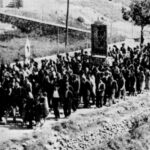
Archival documents from the municipal records of Foggia describe the atmosphere of San Giovanni Rotondo between 1960 and 1962 as a state of siege. Iron gates were installed across the monastery corridors. Pilgrim hostels were searched, and local police monitored the townspeople, who were once again threatening open rebellion against the provincial authorities.
Despite being stripped of all personal autonomy, Padre Pio never encouraged resistance. When his spiritual son Emanuele Brunatto prepared to publish a blistering legal defense that would expose the financial corruption of the accusers, Padre Pio sent a strict order forbidding the publication: “Do not publish. Christ was silent before Pilate and Herod. We must do the same.”

Spiritual Reality & Discernment: Obedience as the Ultimate Proof
In the Catholic tradition, miracles, prophecies, and stigmata are never definitive proof of sanctity; even demonic spirits can produce illusions of the supernatural. The ultimate, infallible test of genuine holiness is heroic obedience. Had Padre Pio defied the Pope, organized an independent splinter community, or denounced Rome, his movement would have perished as a schismatic cult.
By bowing his head in total submission, the stigmatist proved that his wounds were from the wounded Heart of Jesus. In a letter to his spiritual director, he expressed his unreserved fidelity:
“The sweet decree of the Church is the sweet will of God. I wish to live and die in absolute obedience to the Vicar of Christ, even when his decisions pierce my very heart.”
This crucible prepared the ground for the miraculous vindication that lay immediately ahead, beginning with a desperate cry for help dispatched from a hospital room in Kraków.

Institutional Bibliography & Primary Sources
The decrees, diaries, and historical testimonies surrounding the 1960–1964 restrictions are documented in primary sources:
- Pope John XXIII (Angelo Roncalli). Journal of a Soul (Giornale dell’Anima). Doubleday, 1965.
- Ruffin, C. Bernard. Padre Pio: The True Story. Our Sunday Visitor, 1991, Chapter XXV: “The Second Storm.”
- Zavala, José María. Padre Pío: Los milagros desconocidos del santo de los estigmas. LibrosLibres, 2010.
- Congregation for the Doctrine of the Faith (CDF). *Decreti e disposizioni riguardanti la comunità di San Giovanni Rotondo (1960–1963).* Vatican Secret Archives.
Continue reading our 52-week archival investigation: examine the miraculous telegram that broke through terminal throat cancer in our next installment: Part 35: The Urgent Telegram from Kraków (1962): Dr. Wanda Poltawska’s Cure.