



On March 1, 1858, in the small Pyrenean village of Loubajac, a pregnant mother of four named Catherine Latapie made a desperate, faith-filled journey that would alter the course of modern medical and religious history. Suffering from severe radial nerve paralysis that had left two fingers permanently contracted and her hand virtually useless, Catherine experienced what the Catholic Church, after exhaustive medical scrutiny, would declare the very first recognized miracle of Lourdes.
The Injury: A Two-Year Paralysis of the Dominant Hand
In October 1856, Catherine had fallen heavily from a tree, severely dislocating her right shoulder and crushing the brachial plexus nerves. While local bonesetters managed to reduce the shoulder dislocation, the extensive nerve trauma left her right arm partially paralyzed. Her index and middle fingers were locked in hyperflexion toward the palm: stiff, immobile, and causing constant chronic pain. For a rural mother whose daily livelihood depended on spinning, farm chores, and caring for young children, the disability was devastating.
For more than seventeen months, medical interventions produced no relief. Doctors in Lourdes and Tarbes considered the neurological damage irreversible, concluding that the fibrosed tissue and nerve degeneration would leave her hand permanently crippled.
The Prompting: Walking to Massabielle at Dawn
In late February 1858, news swept through the surrounding hamlets of extraordinary apparitions occurring at the Massabielle grotto, where fourteen-year-old peasant girl Bernadette Soubirous reported encounters with a heavenly lady who revealed a hidden freshwater spring. Inspired by an irresistible inner prompting during the night of February 28, Catherine rose at dawn, dressed her two young children, and began the six-mile trek over rough, muddy mountain terrain to the grotto.
Upon arriving at the rocky overhang on March 1, she found Bernadette kneeling in deep prayer before the rock niche. Waiting quietly until the visionary concluded her devotions, Catherine approached the small pool of muddy water that had begun to flow from the spring.
The Instantaneous Recovery at the Spring
With simple, humble devotion, Catherine knelt on the damp earth and plunged her paralyzed hand into the cold spring water. Witnesses recorded that almost immediately, a profound sense of warmth and sudden movement surged through her arm.
Right before the eyes of the gathered onlookers, the contracted fingers straightened completely, the rigid joints unlocked, and full muscular coordination was instantly restored without the slightest pain. Overcome with gratitude, Catherine offered prayers of thanksgiving. That very night, after returning home on foot to Loubajac, she went into labor and safely gave birth to her third son, Jean-Baptiste, who later grew up to be ordained a Catholic priest.
The Rigorous Medical Investigation
Unlike modern faith healings that often lack pre- and post-event diagnostic rigor, Catherine’s case was subjected to intense scrutiny by Dr. Pierre Romaine Dozous, the chief physician of Lourdes who had personally examined her injured hand prior to the event. Dr. Dozous conducted exhaustive motor and sensory tests, noting that full tendon reflexes, grip strength, and range of motion were perfectly present with no scientific explanation for such an instantaneous reversal of nerve paralysis.
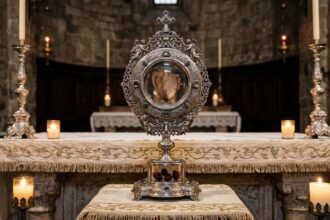


Her cure served as the foundational benchmark for what would become the renowned Lourdes Medical Bureau, an international panel of secular and religious physicians dedicated to investigating alleged cures against strict medical protocols. On January 18, 1862, after a four-year episcopal inquiry, Bishop Laurence of Tarbes formally declared Catherine Latapie’s cure miraculous.
The Enduring Legacy of the First Lourdes Miracle
Catherine lived for another twenty-four years in robust health, using her right hand daily without any relapse of paralysis until her death in 1882. Her healing confirmed the prophetic nature of Bernadette’s visions and set in motion a sanctuary that has drawn over 200 million pilgrims from around the world. For believers today facing seemingly insurmountable physical or emotional paralysis, Catherine’s journey stands as a timeless reminder that faith often calls for stepping out into the unknown before receiving God’s restoring touch.
Watch: The Miracles and Medical Investigations of Lourdes
Historical documentary analysis of the first miracle of Lourdes investigated by Dr. Pierre Romaine Dozous.
Academic Citations and Historical Sources
- Dozous, Dr. Pierre Romaine. (1874). La Grotte de Lourdes: Sa Fontaine, Ses Guérisons. Paris: Victor Palmé. Detailed clinical reports and eyewitness depositions of Catherine Latapie’s neurological examination.
- Laurentin, Abbé René. (1988). Lourdes: Dossier des Documents Authentiques. Paris: Lethielleux. Primary archival compilation of the 1858-1862 episcopal investigation commissions.
- Sanctuary of Our Lady of Lourdes Medical Bureau. Official registry of canonical miracles: Case 01, Catherine Latapie (Loubajac), cured March 1, 1858, recognized January 18, 1862. Available via Lourdes Sanctuary Archives.
- Harris, Ruth. (1999). Lourdes: Body and Spirit in the Secular Age. London: Penguin Books. Comprehensive scholarly assessment of nineteenth-century French medical disputes surrounding Lourdes.
Have you or a loved one experienced an extraordinary answer to prayer or divine healing? Submit your faith story to encourage fellow believers across the world.