
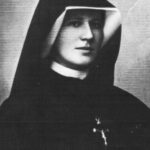

In November 1962, while attending the opening session of the Second Vatican Council in Rome, Archbishop Karol Wojtyła received devastating news from Poland. Dr. Wanda Półtawska, a brilliant psychiatrist, Ravensbrück survivor, and mother of four, was diagnosed with advanced, inoperable throat cancer. Bypassing ecclesiastical channels, Wojtyła dispatched a handwritten Latin telegram directly to San Giovanni Rotondo.
Key Findings & Archival Record
- The Patient: Dr. Wanda Półtawska (1921–2023), Polish physician and survivor of Nazi pseudomedical experiments at Ravensbrück concentration camp.
- The Diagnosis: Inoperable malignant throat neoplasm confirmed by clinical biopsy in Kraków; scheduled for exploratory tracheotomy and radical resection on November 28, 1962.
- The Intermediary: Archbishop Karol Wojtyła (future Pope John Paul II), who hand-delivered an urgent Latin petition via papal courier Angelo Battisti.
- Padre Pio’s Response: “Angiolino, I cannot say no to this request.”
- The Clinical Outcome: On November 28, 1962, minutes before surgical incision, pre-operative examination and radiological checks revealed complete disappearance of the tumor; surgery was cancelled immediately.
The clinical healing of Wanda Półtawska stands as one of the most thoroughly documented medical anomalies of the twentieth century. Verified by Communist Poland’s state surgical teams and authenticated by Vatican archival files, it established an eternal bond between Padre Pio and the future Pope.
The Scene Lede: A Latin Telegram from the Council
Archbishop Karol Wojtyła sat in his Roman lodgings during the bustling opening weeks of the Second Vatican Council. His heart was heavy. Back in Kraków, Wanda Półtawska, who had endured horrific torture under Nazi doctors in Ravensbrück and had dedicated her medical career to treating traumatized concentration camp survivors, was preparing to die. Surgeons gave her less than five percent chance of surviving radical surgery.
Remembering his 1948 encounter with Padre Pio, Wojtyła took a sheet of paper bearing the episcopal seal and penned a concise Latin plea: “Reverend Father, I beg you to pray for a forty-year-old mother of four daughters from Kraków, Poland… That God, through the intercession of the Blessed Virgin Mary, may show His mercy to her and her family.” He handed the envelope to Angelo Battisti, a Vatican administrator and spiritual son of Padre Pio, who immediately traveled to San Giovanni Rotondo.

The Nut Graph: “I Cannot Say No to This Request”
When Battisti arrived in the friary and handed the sealed letter to Padre Pio, the stigmatist did not open it immediately. Holding it against his chest, as recorded in Battisti’s sworn deposition, Padre Pio closed his eyes in profound prayer for several minutes. He then handed it back and uttered prophetic words:
“Angiolino, write down what I tell you: to this request, one cannot say no.”
In Kraków, Dr. Półtawska knew nothing of the telegram. She spent the night of November 27 in prayer at the Franciscan church before checking into the surgical clinic. She had made her peace with God, arranged guardians for her four young daughters, and surrendered to the impending knife.
Forensic Evidence & Archival Records: The Vanishing Neoplasm
On the morning of November 28, 1962, the surgical team prepared the operating theater for radical excision. Professor Jan Grochowski and senior surgeons conducted the final manual palpation and endoscopic check of the throat tissue. To their utter bewilderment, the hard, ulcerated mass that had blocked her airway days earlier had entirely vanished. The inflamed mucosal lining was completely pink, smooth, and healthy.
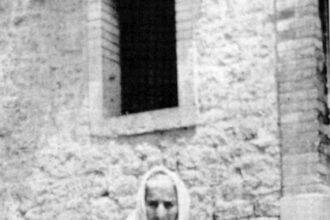
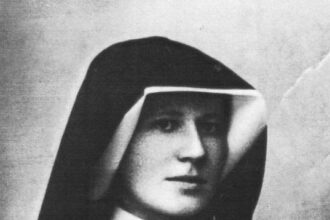
Baffled, the surgeons repeated radiological scans and endoscopic examinations. There was nothing to excise. The surgical intervention was abandoned on the table, and Dr. Półtawska was discharged within forty-eight hours without receiving a single dose of chemotherapy or radiation. She lived another sixty-one years in vigorous health, passing away in 2023 at the age of 101.

Spiritual Reality & Discernment: The Prophetic Preservation of Evidence
A few days later, Archbishop Wojtyła dispatched a second Latin letter to Padre Pio: “Reverend Father, the woman from Kraków suffering from cancer was suddenly healed before the surgical operation. We give thanks to God and to you, Reverend Father.”
When Battisti brought this second letter to the friar, Padre Pio instructed him firmly: “Angiolino, do not lose these letters. Preserve them carefully in your archives. One day they will be of great importance.” At the time, Battisti could not comprehend why a provincial friar would care about letters from an obscure auxiliary bishop behind the Iron Curtain. Sixteen years later, when Karol Wojtyła emerged on the loggia of St. Peter’s as Pope John Paul II, the prophetic meaning became unmistakable.

Institutional Bibliography & Primary Sources
The documentation verifying the instantaneous cure of Dr. Wanda Półtawska is preserved across canonical archives:
- Wojtyła, Archbishop Karol. *Original Latin Telegrams to Padre Pio (Nov 17 & Nov 28, 1962).* Archives of the Postulation, San Giovanni Rotondo.
- Półtawska, Wanda. Beskidzkie rekolekcje: Dzieje przyjaźni z Karolem Wojtyłą. Edycja Świętego Pawła, 2009.
- Ruffin, C. Bernard. Padre Pio: The True Story. Our Sunday Visitor, 1991, Chapter XX: “The Roman Question.”
- Zavala, José María. Padre Pío: Los milagros desconocidos del santo de los estigmas. LibrosLibres, 2010, Chapter XV: “El milagro de Wanda Poltawska.”
Continue reading our 52-week archival investigation: explore the spiritual combat and theology of the Rosary that sustained the stigmatist in our next installment: Part 36: The Weapon: Why Padre Pio Called the Rosary His Machine Gun.