
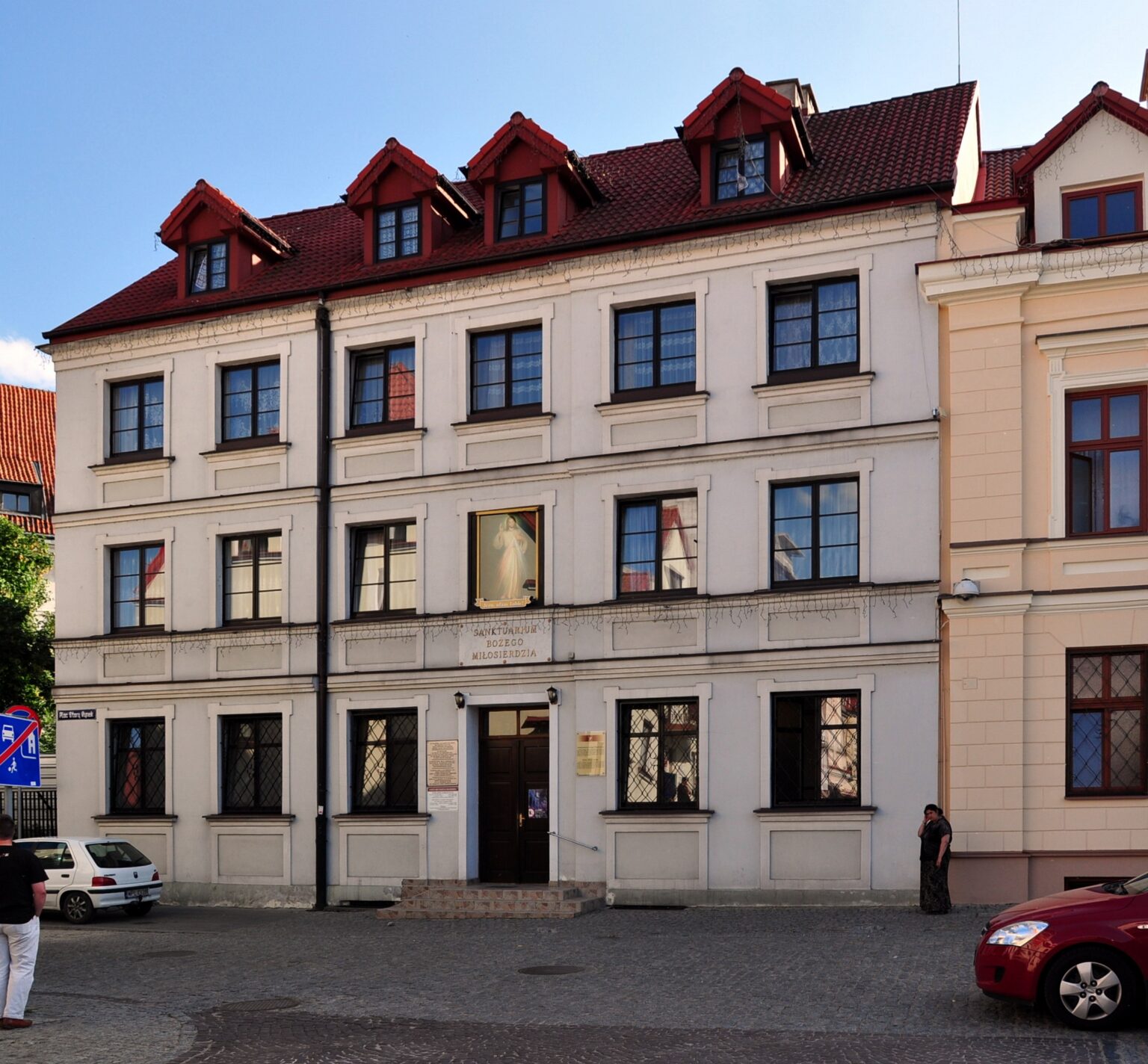

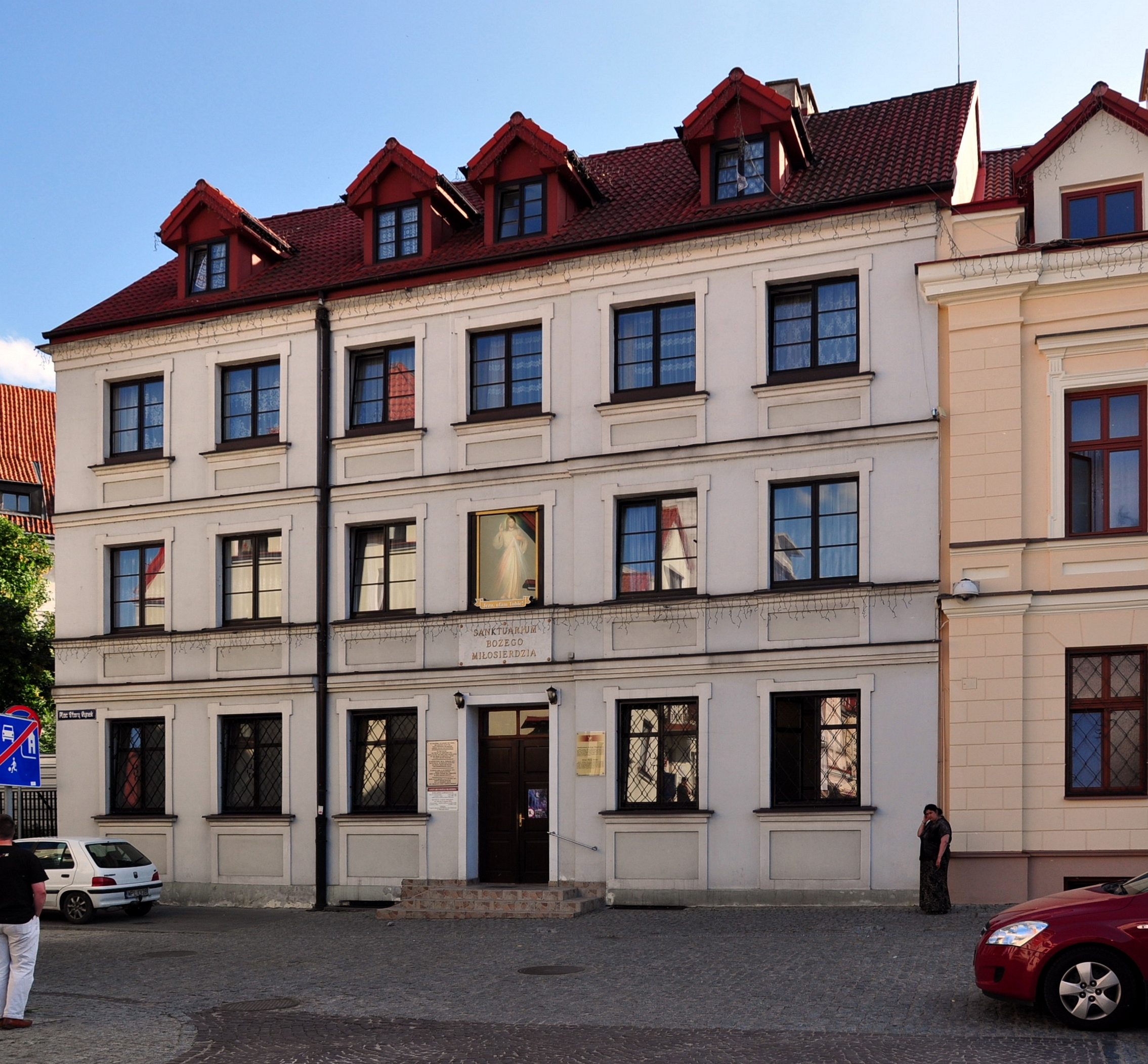
On February 22, 1931, inside a freezing convent cell on the Vistula River, Sister Faustina Kowalska witnessed the risen Christ and received a mandate that met two years of monastic ridicule: “Paint an image according to the pattern you see.”
Key Findings & Archival Record
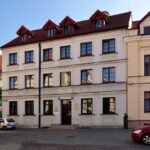
- Date & Location: Sunday evening, February 22, 1931; cell of the Congregation of the Sisters of Our Lady of Mercy, Old Market Square (Stary Rynek), Płock, Poland.
- Direct Mandate: Christ commanded an uneducated domestic nun with three winters of basic schooling to produce a monumental oil painting featuring pale and red rays, bearing the signature “Jesus, I trust in You” (Diary, 47).
- Initial Reaction & Psychological Scrutiny: Superiors and confessors dismissed the apparition as neurotic fantasy; Mother Rose Kłobukowska sarcastically handed Faustina a paintbrush and challenged her to paint it herself.
- Forensic Fulfillment: Resolved only after her transfer to Vilnius in 1933, where university professor Fr. Michał Sopoćko commissioned academic realist Eugeniusz Kazimirowski; first publicly displayed at the Gate of Dawn (Ostra Brama) on April 26–28, 1935.
1. Scene Lede: Sunday Night in the Convent Attic
The winter of 1931 along the frozen Vistula River in Płock was brutally cold. Inside the convent of the Sisters of Our Lady of Mercy on the town’s Old Market Square, heat was a luxury reserved for the chapel and infirmary. In the unheated cells of the second-choir sisters, water froze solid in ceramic washbasins overnight.
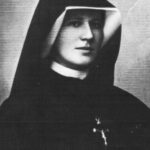
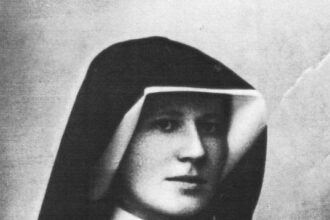
Sister Maria Faustina Kowalska, twenty-five years old, had spent the day performing domestic chores: hauling firewood, baking bread, and washing grease from large iron cauldrons. Her hands were raw, chapped, and rough from lye soap and manual labor.
Retiring to her small cell on Sunday evening, February 22, she knelt on the bare floor for her private prayers before extinguishing her candle. As she looked up into the darkness, the ambient cold of the room dissolved.
Standing in the center of the cell was Jesus Christ. He was clothed in a simple white tunic, His right hand raised in the classic episcopal gesture of blessing, His left hand pulling aside the garment at His chest. From the opening near His heart emerged two colossal beams of light: one pale and translucent, the other radiant crimson, casting brilliant illumination across the bare whitewashed walls.
Faustina was struck with reverent awe. In the absolute silence of the monastery, Christ broke the quiet with an extraordinary command:
“Paint an image according to the pattern you see, with the signature: Jesus, I trust in You. I desire that this image be venerated, first in your chapel, and throughout the world.” (Diary, 47)
For modern believers, this encounter represents the genesis of the modern Divine Mercy devotion. But for Faustina on that freezing February night, it was the start of an agonizing two-year personal humiliation.

2. Archival Record: “Paint Him Then”
The immediate aftermath of the Płock apparition was met not with reverence, but with institutional derision.
The next morning, Faustina approached her confessor. The priest gave her a standard pastoral brush-off, attempting to spiritualize away the literal nature of the command: “That refers to your soul; paint God’s image in your own interior.”
When Faustina stepped out of the confessional, she heard Christ’s voice interiorly rebuke the priest’s reductionism: “My image already is in your soul. I desire that there be a Feast of Mercy. I want this image, which you will paint with a brush, to be solemnly blessed on the first Sunday after Easter.” (Diary, 49).
Her subsequent conversation with the convent’s superior, Mother Rose Kłobukowska, proved even more humiliating. Mother Rose was an austere, pragmatic administrator managing a shelter for troubled girls. She had zero patience for emotionalism or visionary claims from a kitchen sister.
When Faustina relayed Christ’s command, Mother Rose demanded proof: “Bring me a sign from Jesus so that I may know this is true.” A few days later, exasperated by Faustina’s quiet persistence, Mother Rose retrieved an ordinary paintbrush, handed it to the bewildered nun, and challenged her sarcastically: “Well, Sister, paint Him then.”
Faustina held the wooden brush in complete helplessness. She had left school after three winter terms; she could barely write Polish without grammatical errors, let alone execute a grand oil portrait on linen canvas. Rumors spread among the community that Sister Faustina was suffering from religious delusions, nervous hysteria, or spiritual vanity.
3. The Two-Year Impasse and the Spiritual Crucible
From February 1931 until May 1933, Faustina lived in an unbearable spiritual limbo. Every day during prayer, the image pressed upon her conscience. Yet every human avenue to fulfill the command was blocked.
Her diary records the acute psychological torture she endured during this period. She began to suspect her own sanity, fearing that Satan was masquerading as an angel of light to destroy her vocation:
“After that, it was as if I mistrusted Jesus. In one of my morning talks with Him I said, ‘Jesus, are You not an illusion?’ Jesus answered me: My love deceives no one.” (Diary, 29)
During these agonizing months, Christ delivered the core promise attached to the veneration of the canvas:
“I promise that the soul that will venerate this image will not perish. I also promise victory over its enemies already here on earth, especially at the hour of death. I Myself will defend it as My own glory.” (Diary, 48)
This assurance anchored Faustina’s soul while she endured medical examinations, whispers from fellow sisters, and sleepless nights. The delay, as she later realized, was providential: God was waiting to place her in proximity to the exact intellectual instrument capable of championing her cause.
4. Vilnius and the Gate of Dawn: The Physical Realization
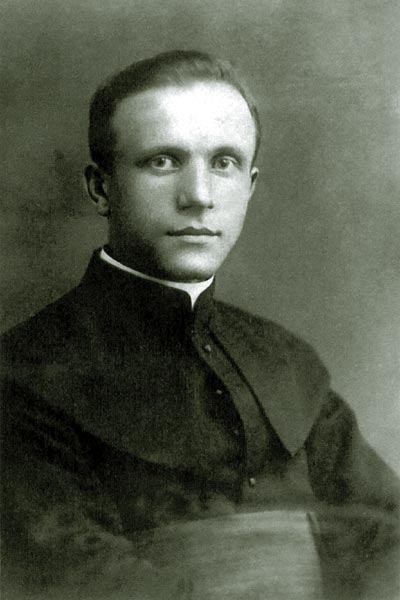
In late May 1933, Faustina received orders transferring her to the congregation’s house in Vilnius (now Lithuania). It was there, in the confessional box of the convent chapel, that she met Father Michał Sopoćko.
Sopoćko was not an impressionable cleric. He was a university professor of pastoral theology and military chaplain who approached private revelations with rigorous Thomistic skepticism. Before entertaining Faustina’s requests, he arranged for her to undergo a complete psychiatric evaluation with Dr. Helena Maciejewska, who certified her as completely sound of mind.
Convinced of Faustina’s authentic virtue, Sopoćko did what no one in Płock had dared to do: he rented studio space on Rasų Street and hired academic painter Eugeniusz Kazimirowski. Over six months in 1934, the painting was methodically produced, culminating in the historic canvas now enshrined in Vilnius.
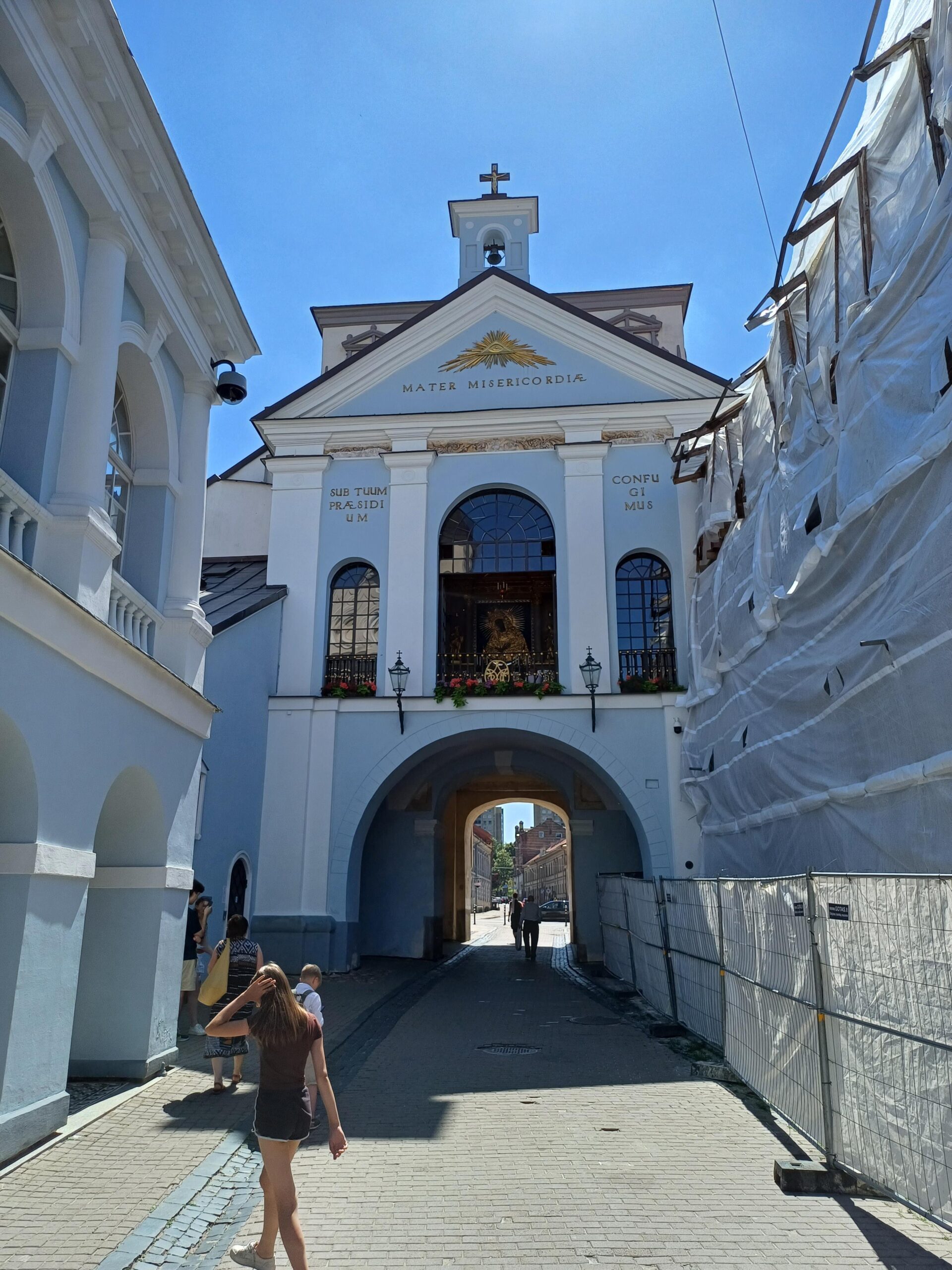
The public climax came on the weekend of April 26–28, 1935, during the Jubilee Year of the Redemption. Sopoćko obtained permission to hang the canvas high in the window gallery of the Gate of Dawn (Ostra Brama) overlooking the city streets.
Faustina stood among the thousands of packed pilgrims below. In her diary, she recorded the supernatural confirmation of her two-year trial:
“When the image was displayed, I saw a live movement of the hand of Jesus, who made a large sign of the cross… The rays from the image pierced into the hearts of the people, especially the youth… When the service was over, I saw Jesus as He is painted in the image, looking with great benevolence at all the people.” (Diary, 417, 420)
5. Spiritual Discernment: When God Mandates the Impossible
The narrative of the Płock cell offers profound clarity for anyone facing a divine calling that seems absurd in the eyes of the world.
In our comprehensive investigative feature on Saint Faustina’s overall mystical mission and the 20-year Vatican ban, we explored how her writings survived institutional suppression. But the root of that triumph was forged in the freezing winter of 1931.
Consider the deliberate divine irony: God did not appear to a master artist in Florence, Paris, or Rome. He appeared to a domestic servant who scrubbed convent floors. He placed an assignment requiring elite academic execution into the hands of someone who possessed nothing except docility.
Three Lessons from the Płock Cell
- Inadequacy Is the Prerequisite: If you possess all the natural talents, wealth, and connections to accomplish a task, humanity receives the credit. When God chooses an instrument that is visibly inadequate, His grace alone remains manifest.
- Do Not Mistake the Waiting Room for Abandonment: Faustina waited twenty-six months between the command in Płock (February 1931) and the arrival of Fr. Sopoćko in Vilnius (May 1933). The delay was not wasted; it was the crucible that burned away self-reliance.
- The Power of the Signature: The words “Jesus, I trust in You” were not meant only for the bottom of the canvas. They were the lifeline Faustina repeated every time a superior laughed at her or a confessor doubted her sanity.
Institutional Bibliography & Archival Sources
Primary Historical Documentation:
- Kowalska, St. Maria Faustina. Diary: Divine Mercy in My Soul. Stockbridge, MA: Marian Press, 2005. (Entries 47–50, 299, 313, 414–420).
- Sopoćko, Blessed Michał. My Recollections of Sister Faustina Kowalska. Białystok: Archdiocesan Publishing House, 1970.
- Archives of the Congregation of the Sisters of Our Lady of Mercy (Płock & Warsaw Houses), Annals of 1930–1932.
- Chróściechowski, Julian, MIC. The Divine Mercy: The History of the Devotion. London: Veritas Foundation, 1968.