


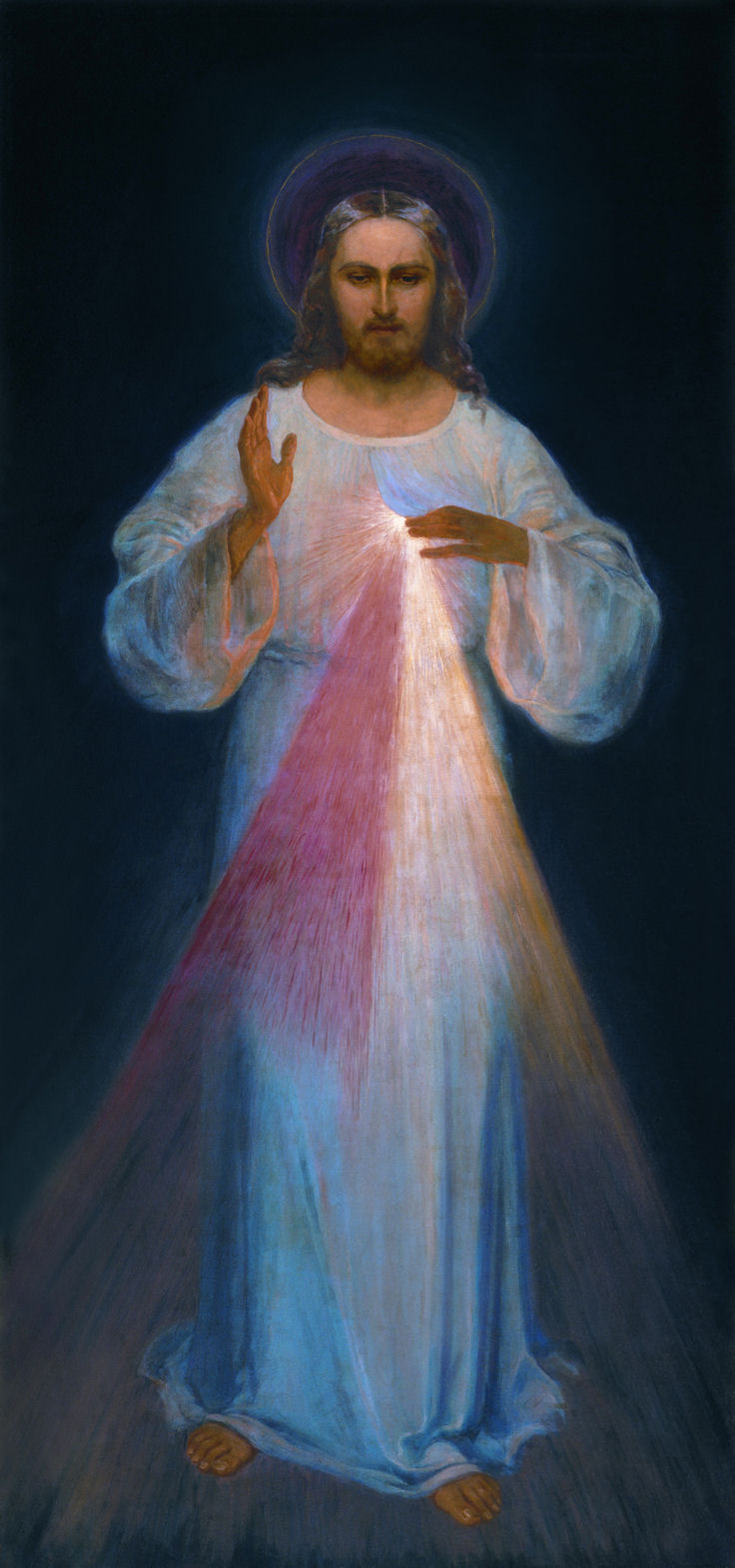
When Jesus Christ manifested to twenty-five-year-old Sister Maria Faustina Kowalska inside her monastic cell in Płock, the defining visual attribute was not a royal crown or a flaming heart, but two enormous, luminous beams emanating from His pierced chest. One beam was translucent and pale; the other was deep, vibrant vermilion. For over three years, neither Faustina nor her confessors understood what these contrasting colors represented. It was only in 1934, under rigorous questioning by Father Michał Sopoćko in Vilnius, that the young nun pressed the Lord for an exact definition, unlocking what theologians recognize as the sacramental engine of the entire Christian economy.
Key Findings & Archival Record
- Primary Theological Revelation: Received in Vilnius, 1934; documented in Diary, paragraph 299.
- The Exact Definition of Christ: “The pale ray stands for the Water which makes souls righteous. The red ray stands for the Blood which is the life of souls.”
- Sacramental Correlation: The pale ray represents Baptism and Confession (justification); the red ray represents the Holy Eucharist (sanctification and divine life).
- Patristic Continuity: Direct correspondence with the Early Church Fathers (Saint John Chrysostom, Saint Augustine) on John 19:34, establishing that the Church was born from the opened side of Christ on Calvary.
1. Scene Lede: The Question in the Vilnius Confessional
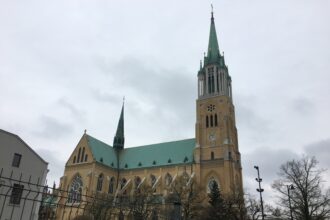
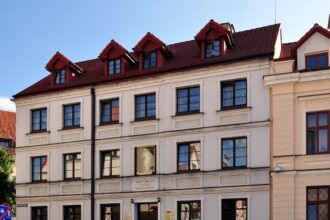
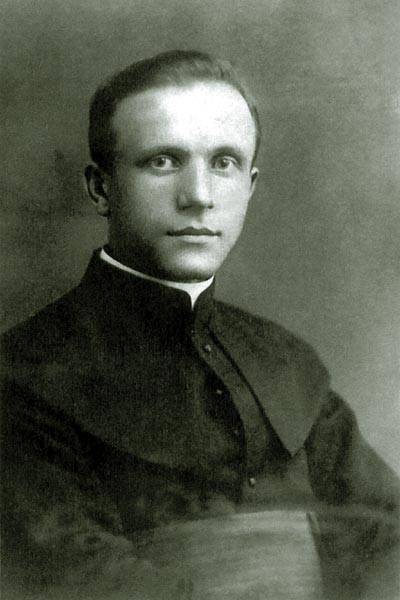
In the spring of 1934, inside the quiet church of Saint Michael in Vilnius, Blessed Father Michał Sopoćko faced an intellectual quandary. As professor of pastoral theology at Stefan Batory University, he was personally funding artist Eugeniusz Kazimirowski to paint the vision Sister Faustina had received during her historic night in Płock. Sopoćko had studied sacred art throughout Europe; he knew that Catholic iconography was strictly governed by liturgical law.
Every element in a church painting had to communicate sound dogma. But what did two strange beams pouring across the void mean? Sopoćko asked Faustina: “Sister, what do these two rays represent? Why is one red and the other pale? Are they national colors of Poland, or do they signify something cosmic?” Faustina could not answer. She was a peasant girl from Głogowiec who had left the secular world following her sudden ballroom vision in Łódź; she possessed no theological terminology. Sopoćko commanded her under holy obedience: “Ask the Lord Jesus during adoration and report His exact words.”
Kneeling before the exposed Blessed Sacrament in the convent chapel at Antokol, Faustina presented the professor’s question to the Lord. The response she heard inside her soul is recorded in entry 299 of her diary:
The nut graph of the Two Rays reveals that Divine Mercy is not a sentimental emotional feeling; it is the sacramental bloodflow of the Living Church. The rays are not decorative light beams; they are the continuous spiritual outpouring of Calvary, mediated directly into the human soul through Baptism, Confession, and the Holy Eucharist.
2. Forensic Exegesis: John 19:34 and the Ruptured Pericardium
To fully appreciate the precision of Faustina’s revelation, one must examine the biblical and physiological record of the Crucifixion. In the Gospel of Saint John, chapter 19, verse 34, the evangelist records a detail found nowhere else in the Synoptic Gospels: “One of the soldiers pierced His side with a lance, and immediately blood and water came out.” John treated this eyewitness observation with such solemn weight that he added in verse 35: “He who saw it has borne witness, his testimony is true.”
Modern forensic pathology confirms the physical reality of John’s account. When a human body undergoes extreme traumatic shock, scourging, and asphyxiation, fluids accumulate in the pericardial sac surrounding the heart (pericardial effusion) and in the pleural cavities of the chest. When the Roman lance penetrated Christ’s right side, piercing the pericardium and the right ventricle of the heart, the clear serous fluid (water) and separated red blood corpuscles surged forth in distinct streams.
In Faustina’s image, this historical physiological event is transfigured into an eternal spiritual stream. Christ’s Heart was not merely wounded; it was torn wide open so that the interior life of God could pour out over an exhausted cosmos. As we demonstrated in our forensic examination of the Holy Face on the Shroud of Turin, the anatomical precision in Faustina’s vision matches the historical wounds of Calvary with mathematical consistency.
3. The Patristic Architecture: How the Church Was Born
Father Sopoćko immediately recognized that Faustina’s dictation restored the classic patristic theology of the Early Church Fathers. Writing in the fourth century, Saint John Chrysostom commented on the piercing of Christ’s side:
“There flowed from His side water and blood. Beloved, do not pass this mystery lightly by; it has a deep and hidden meaning. As Eve was fashioned from the side of Adam as he slept, so the Church was fashioned from the side of Christ as He hung dead on the tree. From the water we have rebirth in Baptism; from the blood we are nourished in the Eucharist.”
Faustina, who had never read a line of Greek patristic theology, articulated the exact doctrine of Chrysostom, Augustine, and Thomas Aquinas. The pale ray represents the cleansing of original sin and personal guilt (Baptism and Reconciliation); the red ray represents the supernatural transfusion of divine energy that sustains eternal life (the Holy Eucharist). Without the pale ray, the soul cannot be cleansed; without the red ray, the cleansed soul cannot live.
4. The Shield of Mercy: Entry 299’s Hidden Covenant
Christ did not end His explanation with sacramental definitions. In the second half of Diary entry 299, He attached an astonishing protective covenant to these two streams of light:
Here Christ introduces the legal dynamic of Divine Mercy. The rays are not merely an aesthetic background; they constitute a supernatural shelter (schronienie). A soul that takes refuge in the sacraments of Confession and the Eucharist is shielded from the inevitable demands of divine justice. As we will see when examining the extraordinary promises of Divine Mercy Sunday, these two rays represent the floodgates through which all temporal and eternal punishments are remitted.
5. Spiritual Reality & Discernment: Living Beneath the Beams
For modern believers navigating guilt, spiritual dryness, or secular disillusionment, the theology of the Two Rays provides an actionable compass.
Three Practical Disciplines of the Rays
1. Washing Before Nourishing: Many Christians struggle with prayer because they attempt to experience the intimacy of the Eucharist (the red ray) while harboring unconfessed sin, bitterness, or hidden deceit. The pale ray must come first. Frequent, honest confession purifies the lens through which God’s life can enter.
2. The 3:00 PM Aspiration: Whenever the clock strikes three in the afternoon, millions whisper the aspiration dictated to Faustina: “O Blood and Water, which gushed forth from the Heart of Jesus as a fount of mercy for us, I trust in You!” This single sentence invokes the full power of Calvary over whatever crisis, fear, or conflict is unfolding in your immediate day.
3. Active Charity as Proof of Trust: Christ explicitly warns that the rays demand deeds of mercy. Staring at an image without forgiving an estranged family member or helping a neighbor in distress turns religion into superstition. The rays must pass through you to illuminate others.
Institutional Bibliography & Archival Records
Kowalska, Saint Maria Faustina. Diary: Divine Mercy in My Soul. Stockbridge, MA: Marian Press, 2005. Entries 299, 414, 420.
Chrysostom, Saint John. Catechesis 3, 13–19: Sources Chrétiennes 50. Paris: Éditions du Cerf, 1957.
Sopoćko, Rev. Michał. The Greatness of the Divine Mercy: Dogmatic Study. Paris: Éditions du Dialogue, 1960.
Barbet, Dr. Pierre. A Doctor at Calvary: The Passion of Our Lord Jesus Christ as Described by a Surgeon. New York: P.J. Kenedy & Sons, 1953.