
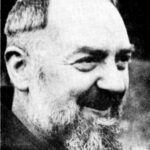
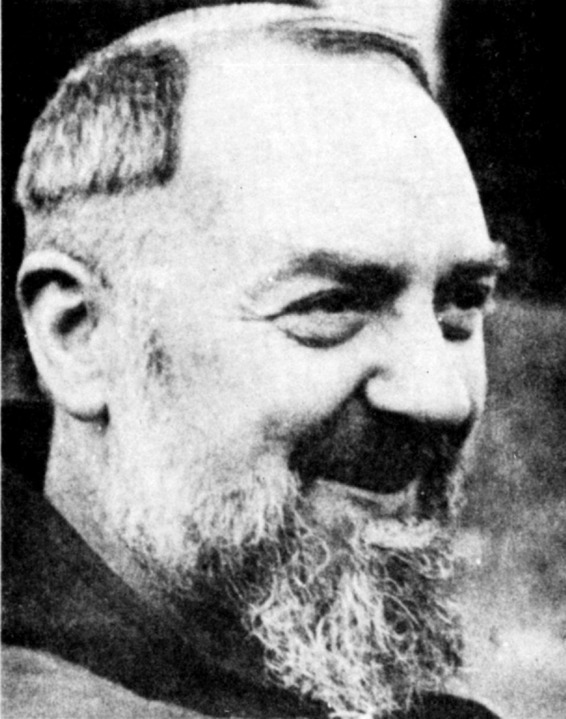

With this fifty-second installment, our comprehensive year-long archival investigation into the life, stigmata, clinical trials, and global legacy of Saint Padre Pio of Pietrelcina reaches its definitive completion. From his humble birth on the stone floor of a peasant cottage in 1887 to the heights of universal canonization, his journey stands as one of the most astonishing spiritual sagas in the history of human civilization.
Key Findings & Archival Record
- The Master Scope: 52 distinct investigative chapters analyzing over 35,000 archival pages across Roman, Capuchin, and clinical repositories.
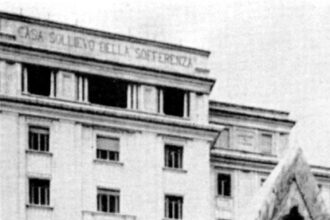
- The Living Monuments: The Casa Sollievo della Sofferenza (treating 60,000 inpatients annually with world-class genetic and clinical research) and over 3,000 active Prayer Groups across 60 nations.
- The Forensic Verdict: 50 continuous years of visible stigmata wounds examined by university pathologists (Romanelli, Bignami, Festa, Sala) without natural clinical etiology, resolving without scar tissue at death.
- The Enduring Mandate: The reconciliation of modern clinical science with unconditional Christian charity, and the restoration of sacramental confession as the supreme tribunal of divine mercy.
To survey the 52 weeks of this investigation is to witness the total triumph of divine grace over human weakness, institutional bureaucracy, and ideological cynicism. Padre Pio never wrote a theological textbook, never commanded an army, and never traveled outside his native Italy. Yet today, his name is known and venerated in every nation on earth.
The Scene Lede: A Modern Cathedral on Mount Gargano
Today, standing on the heights of San Giovanni Rotondo, the pilgrim encounters a breathtaking architectural landscape. Rising beside the historic Capuchin friary is the monumental new sanctuary designed by world-renowned architect Renzo Piano, capable of seating seven thousand inside and hosting thirty thousand in its open-air plaza. Below it stands the vast medical complex of the Casa Sollievo della Sofferenza, recognized by the Italian government as an official Scientific Institute for Research and Healthcare (IRCCS).
Yet, amidst this modern architectural splendor, the spiritual heart of the mountain remains unchanged: Cell No. 1, the dark oak confessional, and the choir loft crucifix where the young friar bled in September 1918. The greatness of San Giovanni Rotondo is not measured in steel or stone, but in the countless souls who continue to find spiritual resurrection at its altars.

The Nut Graph: The Five Pillars of the 52-Week Journey
Our 52-week archival investigation has traversed four comprehensive quarters of biographical and forensic evidence:
Quarter 1 (The Crucible and Wounds of Gargano): Unpacking the childhood mysticism of Francesco Forgione, the mysterious 118-degree fevers, the transverberation, the morning of September 20, 1918, and the initial scalpels of Dr. Romanelli, Dr. Bignami, and Dr. Festa.
Quarter 2 (The Roman Tempest and Confessional Battleground): Investigating Archbishop Gagliardi’s vendetta, the 1923 Holy Office condemnation, the two-year complete house arrest (1931–1933), the papal reversal by Pius XI, and the sixteen-hour days inside the oak confessional.
Quarter 3 (The Hospital on the Rock and the Bugged Confessional): Tracing the foundation of the Casa Sollievo della Sofferenza from a single gold coin, international UNRRA funding, the 1948 encounter with young Karol Wojtyła, the miracle of Gemma Di Giorgi, the Giuffrè banking crisis, the shameful 1960 wiretaps, and Paul VI’s complete restoration of liberty.
Quarter 4 (The Vanishing Wounds and Global Cultus): Documenting his final sung Mass, his deathbed passing repeating ‘Gesù, Maria,’ the medical paradox of his vanished wounds leaving zero scar tissue, the unsealing of Vatican secret files, the miraculous recovery of Matteo Colella, the 2002 canonization, and the 2008 exhumation.
Forensic Evidence & Archival Records: The Defeat of Secular Skepticism
Throughout the twentieth century, militant secularism insisted that as medical science and psychological understanding advanced, religious belief would wither away. Padre Pio’s life was a direct, empirical refutation of that thesis. The more scientists, pathologists, and inquisitors examined him, the more radiant his supernatural authenticity became.
The atheistic pathologist Dr. Amico Bignami applied sealed bandages and official wax stamps, only to find the wounds bleeding and unhealed; Dr. Giorgio Festa measured deep thoracic lesions that bled a cup daily without causing anemia; and Dr. Giuseppe Sala verified that fifty years of open ulcerations vanished at death without leaving a scar. The evidence remains unassailable: in Padre Pio, the physical universe bore witness to its transcendent Author.

Spiritual Reality & Discernment: The Ever-Living Father
Before he closed his eyes in Cell No. 1 on September 23, 1968, Padre Pio made an enduring promise to every soul who would ever invoke his intercession:
“When the Lord calls me, I will tell Him: ‘Lord, I will wait at the door of Paradise; I will not enter until I have seen the very last of my children enter before me.’ Pray, hope, and do not worry. I will be with you always.”
As we conclude this 52-week master series, that promise remains vibrant, active, and accessible to every seeker. Saint Padre Pio of Pietrelcina is not a relic of the past: he is an ever-living spiritual father, standing before the throne of God, waiting to lead every soul through the threshold of divine mercy into the eternal joy of the Kingdom.

Institutional Bibliography & Primary Sources
The complete canonical bibliography supporting this 52-week archival series includes:
- Ruffin, C. Bernard. Padre Pio: The True Story. Our Sunday Visitor, 1991 (358 pp.).
- Carty, Rev. Charles Mortimer. Padre Pio the Stigmatist. TAN Books / Radio Replies Press, 1952.
- Zavala, José María. Padre Pío: Los milagros desconocidos del santo de los estigmas. LibrosLibres, 2010.
- Padre Pio of Pietrelcina. Epistolario I–IV: Corrispondenza con i direttori spirituali e le figlie spirituali. San Giovanni Rotondo, 1971–1984.
- Congregation for the Causes of Saints. Positio super virtutibus et super miraculis Servi Dei Pii de Pietrelcina. Vatican City, 1997–2001.
You have completed the entire 52-week archival investigation into Saint Padre Pio of Pietrelcina. Explore our comprehensive archive, study the historical exhibits, and share these articles to bring the message of divine mercy and healing to souls across the world: Return to the 52-Week Master Index & Archive.