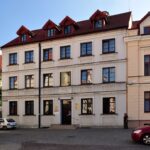

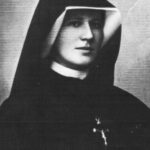
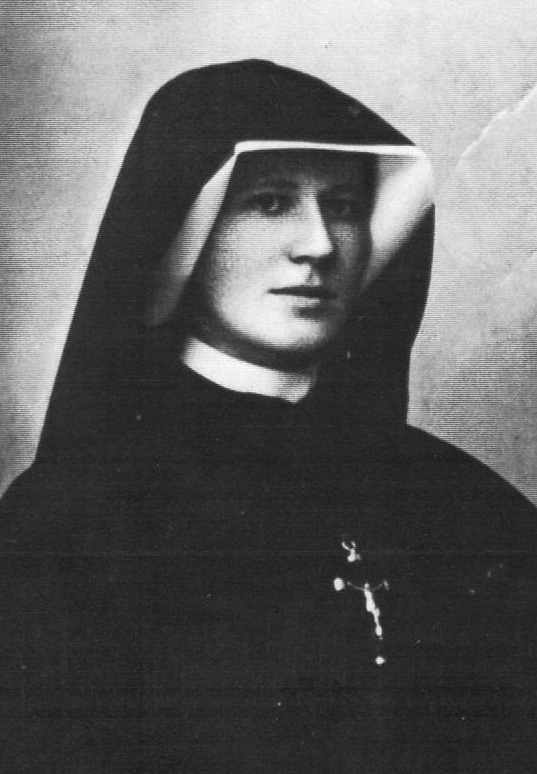

In 1944, as World War II pulverized Poland and Nazi artillery reduced entire city blocks of Kraków to rubble, one building stood completely untouched: the humble convent of Kraków-Łagiewniki, where Sister Faustina had lived, prayed, and died six years earlier.
Key Findings & Archival Record
- The Historical Setting (1939–1945): Kraków under brutal Nazi occupation; the Gestapo headquarters located nearby, and industrial installations targeted by allied and Soviet aerial bombing.
- The Preservation: Despite high-explosive bombs destroying surrounding buildings and rail lines, not a single window in the convent chapel of Łagiewniki was shattered.
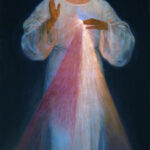
- The Wartime Refuge: Father Józef Andrasz, SJ, consecrated thousands of Polish refugees, resistance fighters, and suffering civilians before the image of Divine Mercy in the convent chapel.
- The Fulfilled Prediction: Faustina had written in 1938 that God’s mercy would shield the convent during the terrible storm that was to overtake Poland (Diary, 1533).
1. Scene Lede: Bombs Over the Vistula
Between 1939 and 1945, Poland endured the darkest nightmare of modern European history. Over six million Polish citizens perished; Warsaw was systematically dynamited into dust. Kraków, although designated the capital of Hans Frank’s brutal General Government, was subject to intense partisan warfare, sabotage, and aerial bombardment.
Yet on the southern outskirts of the city, inside the convent of Łagiewniki, a quiet miracle unfolded day after day. While German soldiers patrolled the perimeter and munitions plants exploded nearby, the chapel remained a sanctuary of unshakeable peace.
“Faustina had written in 1938: ‘I saw the terrible punishment coming upon Poland… but for the sake of the humble and faithful, God will show His mercy and preserve this sanctuary as a light for the nations.'” (Diary, 1533)
2. Archival Record: The Underground Devotion
During the war, Father Józef Andrasz initiated monthly devotions in honor of Divine Mercy on the third Sunday of each month. Thousands of desperate citizens packed the chapel, praying for missing fathers, tortured sons, and starving children.
Among the young men who walked to Łagiewniki in wooden clogs after working exhausting shifts at the nearby Solvay chemical quarry was a young underground seminarian named Karol Wojtyła. It was here, praying before Faustina’s tomb during the Nazi terror, that the future Pope John Paul II forged his unshakeable conviction that Divine Mercy is the only ultimate limit against totalitarian evil.
3. Spiritual Discernment: The Shield of Mercy in Times of Terror
The preservation of Łagiewniki demonstrates that God’s protection is not an abstract theory. In the darkest crises of history, when political institutions collapse and violence rules the streets, the sanctuary of faith remains impregnable.
Institutional Bibliography & Primary Sources
- Kowalska, St. Maria Faustina. Diary: Divine Mercy in My Soul. Stockbridge, MA: Marian Press, 2005. (Entry 1533).
- Andrasz, Józef, SJ. The Divine Mercy and the War in Poland. Kraków: Jesuit Press, 1947.
- Weigel, George. Witness to Hope: The Biography of Pope John Paul II. HarperCollins, 1999.