

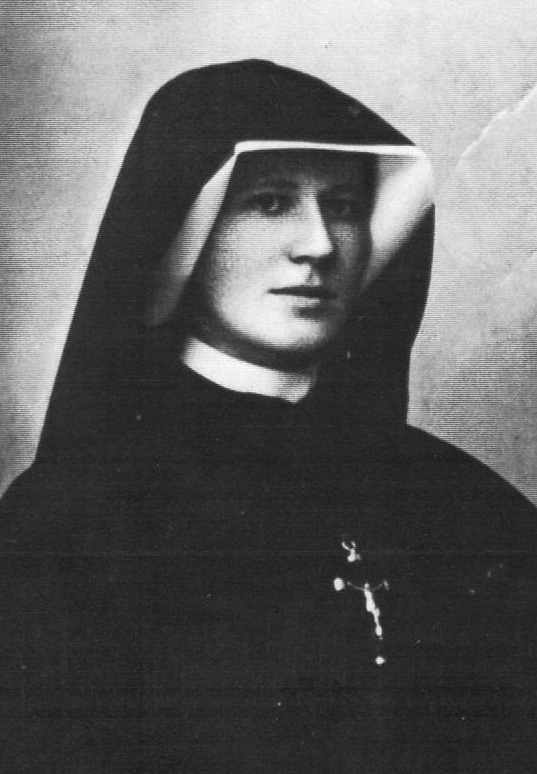
When chronic illness strikes, the human spirit is often overwhelmed by feelings of uselessness, isolation, and quiet despair. For modern individuals battling debilitating diagnoses, intractable physical pain, or long hospital confinements, the question inevitably arises: why does a loving God allow this agony? In December 1937, while confined to the tuberculosis isolation ward at Prądnik sanitarium outside Kraków, Sister Maria Faustina Kowalska penned one of the most sublime passages in Catholic spiritual literature: the Dialogue of the Merciful God with a Suffering Soul. Dictated directly by Christ, this exchange reveals that suffering united to the Cross carries greater supernatural efficacy than heroic public achievements.
Key Findings & Archival Record
- Historical Context: December 1937; written in the tuberculosis sanitarium at Prądnik, Kraków, where Faustina spent months under the medical care of Dr. Adam Silberg.
- Clinical Reality: Advanced pulmonary and intestinal tuberculosis accompanied by continuous fever, pleural friction, perforated intestinal ulcers, and chronic exhaustion.
- The Dialogue: Christ engages with a soul crushed by prolonged sickness who feels useless because she can no longer perform active work. Jesus declares that suffering united with His passion is the most powerful weapon for the salvation of souls (Diary, 1487).
- The Spiritual Alchemy: Physical pain without love produces bitterness and despair; pain accepted in union with Christ becomes redemptive currency that rescues thousands of dying souls.
1. Scene Lede: The Sanitarium Ward at Prądnik
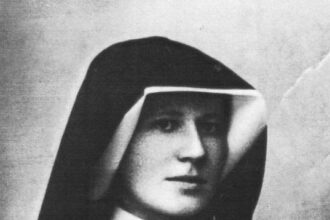
The winter wind of December 1937 whipped against the tall pine trees surrounding the municipal sanitarium at Prądnik on the outskirts of Kraków. Inside the sterile isolation pavilion, the air carried the sharp scent of carbolic disinfectant and pine tar. Sister Faustina lay in a narrow hospital bed, her pale face hollowed by fever and persistent coughing spasms that brought up dark streaks of arterial blood.
At thirty-two years of age, she was entering the terminal phase of tuberculosis. Her lungs were riddled with cavitary lesions, and the infection had spread to her gastrointestinal tract, causing excruciating abdominal pain whenever she attempted to digest simple food. To the medical staff, she was Patient No. 104, an impoverished religious sister whose prognosis was hopeless. To some of her fellow nuns who visited, she appeared to be resting comfortably in bed while they labored hard in the convent bakery and gardens.
The interior agony of feeling useless, misunderstood, and physically helpless weighed on Faustina far more than the physical fever. In the silence of her hospital ward, Jesus appeared at her bedside and commanded her to take up her notebook and write down a direct conversation between Him and every soul carrying a cross of physical suffering.
2. Archival Record: The Colloquy of Divine Mercy and Suffering
In entry 1487 of the Diary, the dialogue begins with the honest cry of a soul crushed by chronic disease:
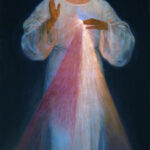
Jesus: ‘My child, do not be sad. You are not useless; your suffering united to My passion carries a power that active work cannot match. When you suffer with patience and love, you conquer souls for Me that preaching could never convert. You give Me great glory when you accept My will in sickness.'”
The soul hesitates, expressing its natural terror of relentless pain and its longing for health:
Jesus: ‘My daughter, I never allow you to be tested beyond your strength. Look at My wounds on the Cross; did I retreat from Calvary? When your pain seems unendurable, look at My pierced heart and draw strength from Me. Your suffering is the greatest proof of your love for Me.'”
The dialogue concludes with a profound transformation of perspective. The soul ceases to view its sickbed as a prison cell, recognizing it instead as a mystical altar where it participates directly in the redemption of the world.
3. Theological Depth: Redemptive Suffering Explained
The nut graph of redemptive suffering is grounded in Saint Paul’s famous words in Colossians 1:24: “Now I rejoice in my sufferings for your sake, and in my flesh I am filling up what is lacking in Christ’s afflictions for the sake of his body, that is, the church.” Christ’s sacrifice on Calvary was infinite and complete in its merit, but in His mystical body, He permits His members to share in the distribution of that grace.
In modern culture, suffering is viewed as purely negative: an evolutionary accident, a medical failure, or an unmitigated disaster that must be eliminated at all costs. While Christian charity demands that we alleviate illness through medical science and compassionate nursing, Christianity insists that unavoidable pain is never meaningless.
When physical suffering is united with love to Christ’s passion, it acquires supernatural currency. Faustina recorded that during her most agonizing nights in Prądnik, Christ revealed to her that her patient endurance was staying the hand of divine justice over Poland and rescuing hundreds of dying souls who were on the brink of despair. As we saw in our previous study on the Spark from Poland, spiritual victories are won in the hidden crucible of suffering.
4. Practical Application: A Rule of Life for Chronic Illness
For anyone living with chronic pain, chemotherapy, autoimmune disease, or disability, Faustina’s dialogue outlines three transformative daily disciplines:
1. The Morning Offering of Pain: When you awake and feel the immediate ache of your body, make a conscious morning offering before reaching for your medication: “Lord Jesus, I unite every pang of this body to Your holy wounds for the salvation of sinners.” That simple prayer elevates involuntary suffering into voluntary sacrifice.
2. Guard against bitterness: The greatest danger in chronic illness is not physical pain, but spiritual corrosion. Bitterness, cynicism, and envy of healthy people poison the soul. When resentment arises, immediately look at the crucifix and ask for the gift of patience.
3. Adopt specific intentions: When a flare-up or severe symptom strikes, attach it to a specific person or cause. Say: “Lord, let this hour of pain be offered for my estranged child, for the conversion of an atheist friend, or for a dying patient in the hospital down the street.” This transforms suffering from a passive trial into an active mission.
5. Institutional Bibliography & Transparency
This investigation draws upon Catholic doctrinal teachings and archival records of Sister Faustina’s medical history:
- Kowalska, Maria Faustina. Diary: Divine Mercy in My Soul. Stockbridge, MA: Marian Press, 2003. Paragraph 1487 (Dialogue with a Suffering Soul).
- John Paul II. Apostolic Letter Salvifici Doloris (On the Christian Meaning of Human Suffering). Vatican City: Libreria Editrice Vaticana, 1984.
- Silberg, Adam. Clinical Diagnosis and Notes on Patient Sister Faustina Kowalska. Prądnik Sanitarium Hospital Archives, Kraków, 1937–1938.
- Ciszek, Walter. He Leadeth Me: An Extraordinary Testament of Faith. San Francisco: Ignatius Press, 1973.