
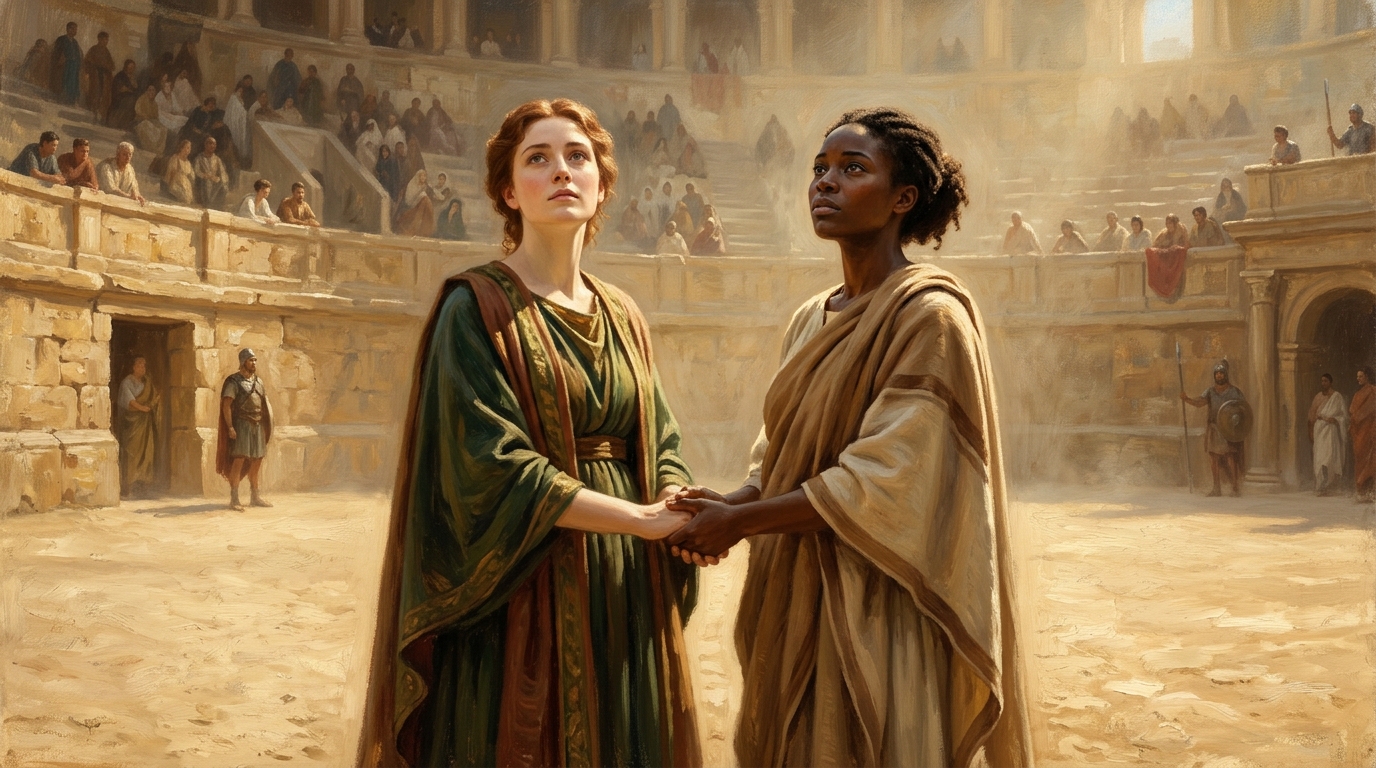

In March 203 AD, within the bustling Roman provincial capital of Carthage in North Africa (modern-day Tunisia), imperial Roman soldiers arrested a small group of young catechumens preparing for Christian baptism. The Roman Emperor Septimius Severus had issued an imperial edict strictly forbidding conversions to Christianity under penalty of death.
Among the prisoners were two remarkable young women who would become eternal symbols of Christian sisterhood and heroic faith: Vibia Perpetua, a well-educated twenty-two-year-old noblewoman of patrician rank nursing an infant son, and Felicity, an enslaved woman who was eight months pregnant. Their recorded ordeal, preserved in the ancient Latin text known as The Passion of Saints Perpetua and Felicity (Passio Sanctarum Perpetuae et Felicitatis), provides the earliest surviving first-person diary written by a Christian woman in world history.
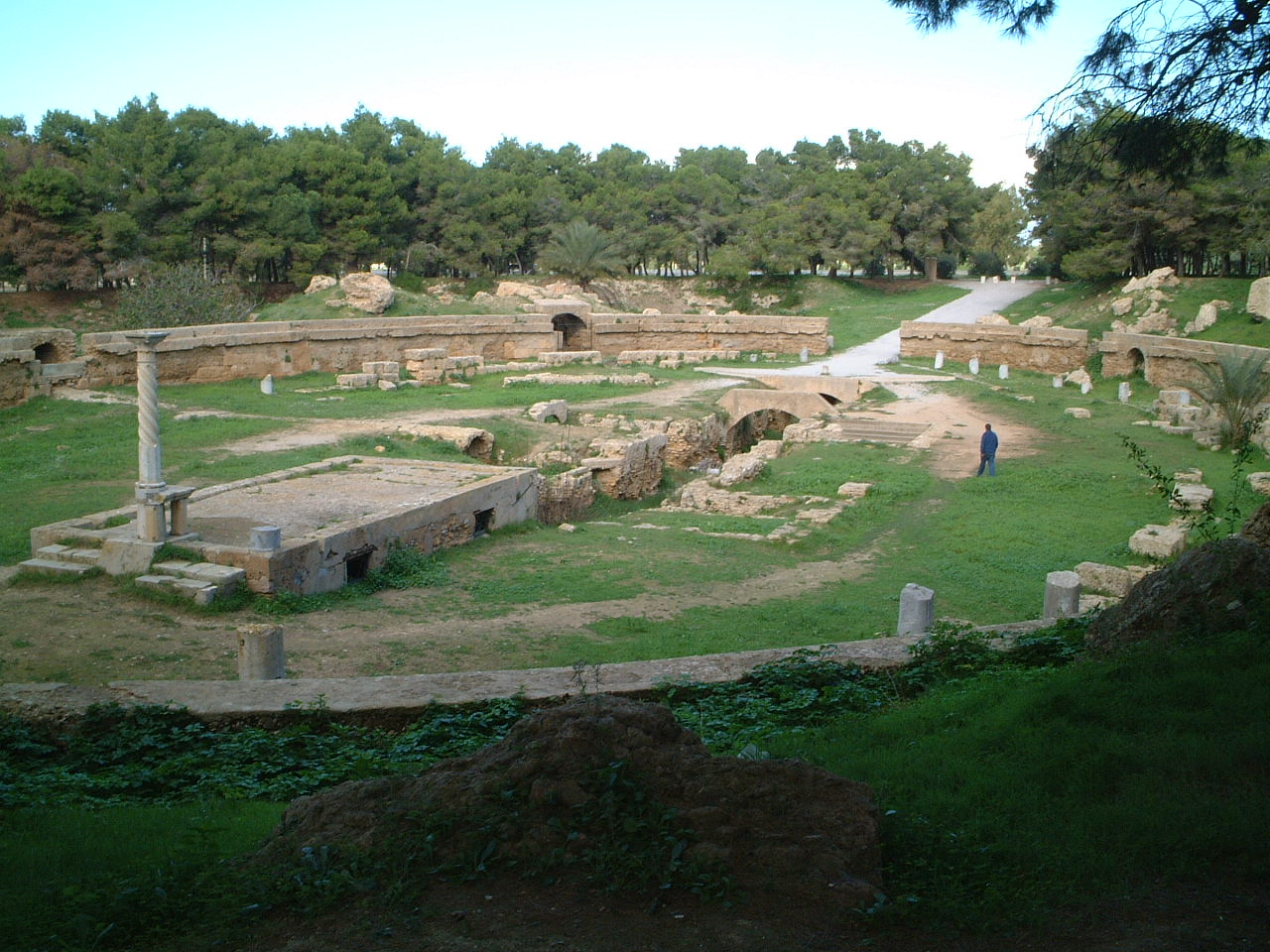
The Diary of Perpetua: The Water Pitcher and the Heavenly Visions
While confined in the suffocating darkness of the military dungeon, Perpetua was visited by her pagan father, who wept bitterly and pleaded on his knees for her to offer sacrifice to the emperor for the sake of her family and newborn baby. Pointing to a clay water vessel resting on the prison floor, Perpetua calmly asked him:
“Father, do you see this vessel lying here, a pitcher, or whatever it may be? Can it be called by any other name than what it is?”
“No,” her father replied.
“Neither can I call myself anything else than what I am: a Christian.”
During her imprisonment, Perpetua received celestial visions that strengthened the catechumens. In one vision, she beheld a golden bronze ladder reaching into the heavens, guarded by a fierce dragon at its foot. By stepping on the dragon’s head in the name of Jesus Christ, she ascended into a vast heavenly garden where the Good Shepherd welcomed her with sweet milk, assuring her of eternal victory.
Felicity’s Delivery and the Supernatural Strength of Grace
Roman law strictly prohibited the execution of pregnant women. Desperately praying that she would not be left behind while her Christian companions entered eternal life together, Felicity and the prisoners joined in urgent intercession. Two days before the scheduled games, Felicity went into labor and gave birth to a healthy baby girl, who was immediately adopted by a faithful Christian woman in Carthage.


As Felicity groaned during labor, a pagan prison guard mocked her, saying: “If you cry out so loudly now, what will you do when you are thrown to the wild beasts in the arena?”
Felicity responded with unforgettable theological clarity: “What I suffer now, I suffer alone. But there, Another will be in me who will suffer for me, because I will be suffering for Him.”
The Roman Amphitheater: Transcendent Courage in the Colosseum
On March 7, 203 AD, on the occasion of the emperor’s son’s birthday games, the martyrs were marched into the Carthage arena. Eyewitnesses recorded that Perpetua walked with a radiant face and steady step, as a bride of Christ, casting down the gaze of the baying crowd with the intensity of her eyes.
When Perpetua and Felicity were struck down by a rabid heifer in the center of the sand, Perpetua immediately rose, gathered her torn tunic to maintain modest dignity, and walked across the sand to take Felicity’s hand, raising her companion to her feet. The two women embraced in the arena with the holy kiss of Christian peace.
When a trembling novice gladiator was assigned to deliver the final blow to Perpetua, his sword struck her collarbone. Seeing the young soldier shaking with fear, Perpetua took his trembling blade with her own hand and guided it steadily to her throat.
A Continuous Chain of Christian Witness
The martyrdom of Perpetua and Felicity profoundly shaped the theology of the early Church. Saint Augustine of Hippo preached annual sermons on their feast day, reminding the faithful that divine grace elevates human weakness above the greatest imperial terrors. Their victory echoes across the centuries in the unwavering confession of modern confessors like the 21 Martyrs of Libya and the unbroken fortitude of Father Walter Ciszek in the Soviet Gulag.
Watch: Perpetua: Early Church Martyr (Documentary Analysis)
Scholarly examination of the Passio Sanctarum Perpetuae et Felicitatis featuring patristic scholars and archaeological reconstructions.
Historical Citations & References
- Tertullian (attributed editor). Passio Sanctarum Perpetuae et Felicitatis (The Passion of Saints Perpetua and Felicity), Carthage, c. 203–209 AD. Latin text preserved in Codex Compendiensis.
- Musurillo, H. (1972). The Acts of the Christian Martyrs. Oxford University Press (Clarendon Press).
- Augustine of Hippo. Sermones 280–282: In Natali Martyrum Perpetuae et Felicitatis. Patrologia Latina, Vol. 38.
- Heffernan, T. J. (2012). The Passion of Perpetua and Felicity. Oxford University Press.