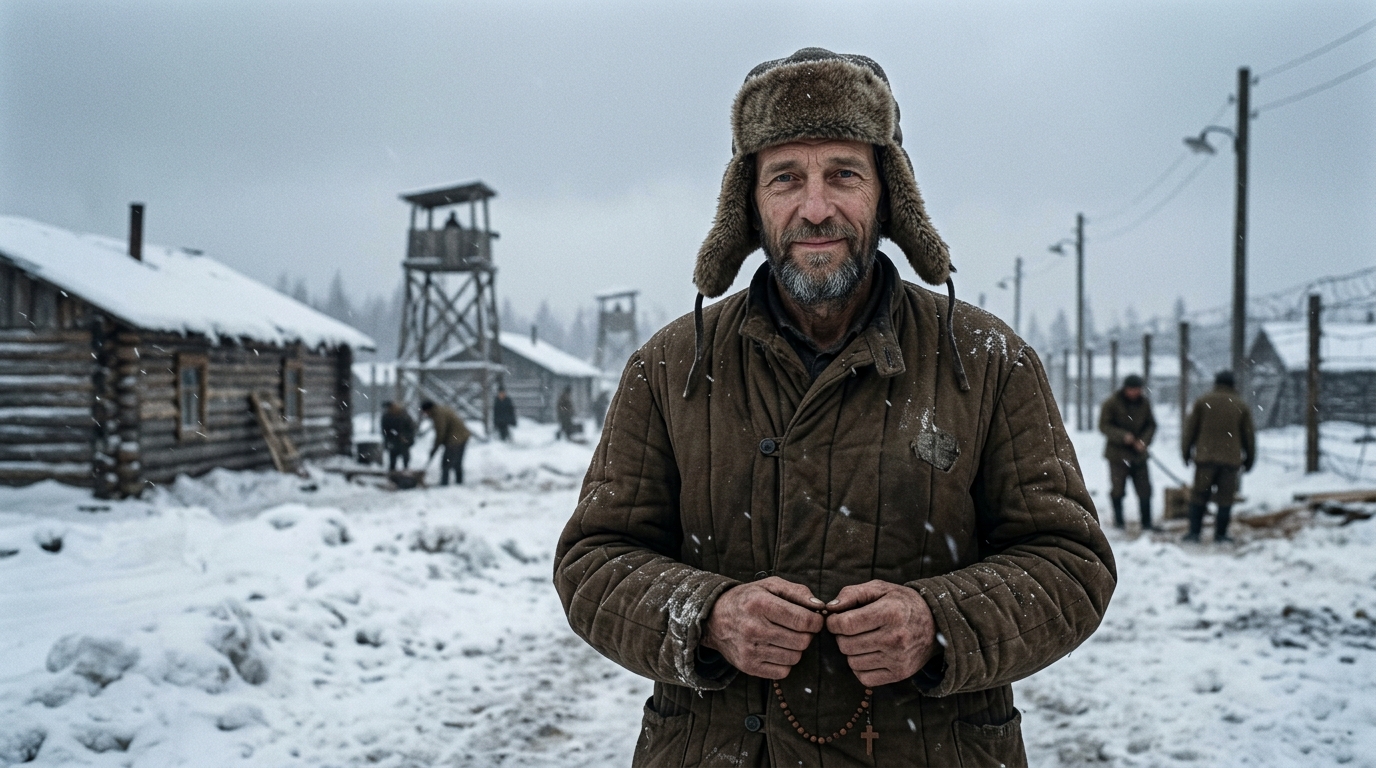

In March 1941, deep within the clandestine turmoil of World War II, a young American Jesuit priest from Shenandoah, Pennsylvania, crossed the Soviet frontier into Ukraine using the forged papers of a Polish worker named Wladimir Lipinski. His mission was perilous: to minister secretly to Christians stripped of their churches, sacraments, and bibles under the state-enforced atheism of Joseph Stalin’s regime.
His name was Father Walter Ciszek, S.J. Within months, the Soviet secret police (NKVD) uncovered his priestly identity. Accused of being an American and Vatican spy, Ciszek was arrested and plunged into an unimaginable ordeal that would span twenty-three years of imprisonment, torture, and forced labor in the frozen reaches of Siberia.
Five Years in Lubyanka: The Dark Night of Solitary Confinement
For five long years, Father Ciszek was confined to Moscow’s infamous Lubyanka Prison, enduring relentless nighttime interrogations under blazing lamps, starvation rations, psychological torture, and mind-altering narcotics designed to force a signed confession of espionage. At one desperate juncture, depleted of physical reserves, he broke down and signed a coerced statement, an event that plunged him into deep spiritual anguish.
Yet it was in that pit of despair that Father Ciszek experienced a decisive spiritual surrender. He realized he had been relying on his own human courage and willpower rather than total abandon to the providence of God. Renouncing all self-reliance, Ciszek resolved to accept every circumstance, every brutal interrogation, and every miserable cell as the direct, loving will of God for that specific moment.
Fifteen Years in the Arctic Gulag of Norilsk
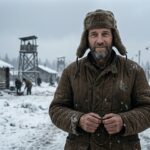
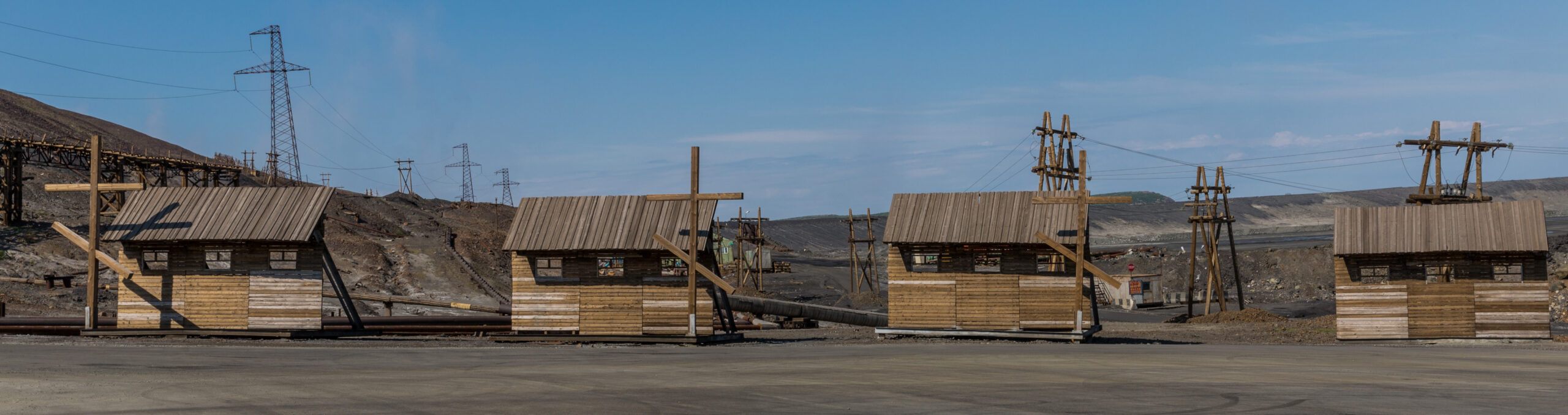
Sentenced to fifteen years of hard labor, Ciszek was dispatched above the Arctic Circle to the notorious penal camp complex of Norilsk. In sub-zero temperatures dropping below minus forty degrees Fahrenheit, he hauled heavy timber, cleared frozen tundra, and shoveled coal in dangerous underground mines alongside political dissidents, murderers, and thieves.
Amidst that icy hell, Father Ciszek transformed the Gulag into a vibrant parish:
- Clandestine Midnight Masses: Using crushed fermented raisins for sacramental wine, dry crusts of black bread for communion wafers, and a tin cup for a chalice, Father Ciszek celebrated Holy Mass in secret at 3:00 a.m. in damp equipment sheds while lookouts guarded the door.
- Sacramental Confessions: Prisoners of all nationalities (Poles, Lithuanians, Russians, and Ukrainians) lined up in the freezing mud to receive absolution and spiritual counsel, discovering divine forgiveness behind barbed wire.
- Supernatural Joy: In his memoirs, Ciszek wrote that he never experienced the presence of God more intimately than when celebrating Mass in those clandestine wooden shacks, where prisoners risked execution to receive the Eucharist.
The Cold War Prisoner Exchange and Return
Presumed dead by his Jesuit brothers and family in the United States since 1947, Father Ciszek’s survival was finally discovered by the U.S. State Department in the early 1960s. On October 12, 1963, in a dramatic Cold War prisoner swap orchestrated by the Kennedy administration at London’s Heathrow Airport, Father Ciszek and an American student were traded for two Soviet spies.
When he landed in New York after twenty-three years behind the Iron Curtain, reporters marveled that he exhibited zero hatred or bitterness toward his captors. He spent his remaining years until his death in 1984 providing spiritual direction at Fordham University, writing his timeless spiritual classics With God in Russia and He Leadeth Me.
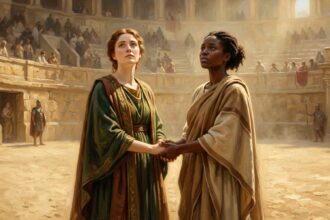

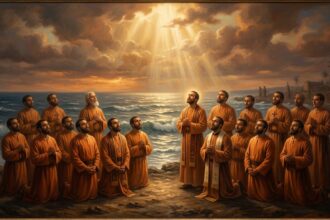
His radical witness of grace under state terror connects deeply with the sacrifice of the 21 Martyrs of Libya and the early Christian courage recorded in the arena accounts of Saints Perpetua and Felicity.
The Core Lesson: The Grace of the Present Moment
Father Ciszek’s life remains a masterclass in Christian trust. He taught that God does not ask believers to conquer imaginary future trials, but to faithfully embrace the real, concrete challenges of the present moment. His cause for beatification was formally opened in Rome, and on March 14, 2012, the Vatican approved his title as Servant of God.
Watch: A Grave in Perm: The Father Walter Ciszek Story
Documentary chronicle of Father Walter Ciszek’s clandestine mission, imprisonment in the Lubyanka, and 23-year survival in Soviet Russia.
Historical Citations & References
- Ciszek, W. J., & Flaherty, D. L. (1964). With God in Russia. McGraw-Hill Book Company.
- Ciszek, W. J., & Flaherty, D. L. (1973). He Leadeth Me: An Extraordinary Testament of Faith. Doubleday & Company.
- The Father Walter Ciszek Prayer League (USA). Canonical Cause for Beatification and Historical Documentation. ciszek.org
- Applebaum, A. (2003). Gulag: A History. Anchor Books.