

Key Findings & Archival Record
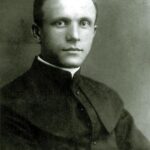
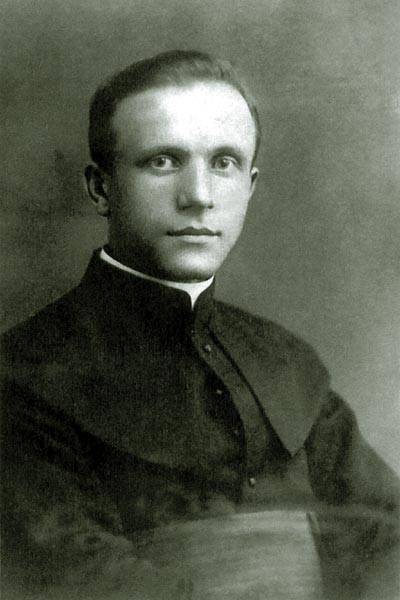
- Historical Figure: Blessed Father Michał Sopoćko (1888–1975), Professor of Pastoral Theology at Stefan Batory University.
- Initial Posture: Deep skepticism, demanding rigorous psychiatric examination before taking Faustina’s claims seriously.
- Critical Contributions: Ordered Faustina to write the Diary, paid artist Eugeniusz Kazimirowski, and spearheaded theological defense in Rome.
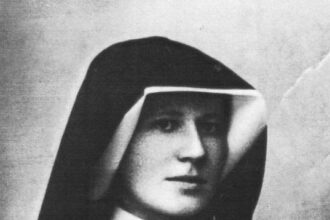
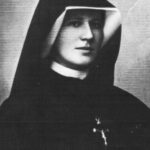
When Sister Maria Faustina Kowalska entered the confessional at the convent in Vilnius in mid-1933, she immediately recognized the priest on the other side of the grille. Months earlier, in a vision at Płock, she had seen an unknown cleric and heard an interior voice: “This is My faithful servant; he will help you fulfill My will on earth.” But the man sitting in that confessional, Father Michał Sopoćko, was far from enthusiastic about becoming the promoter of a private revelation.
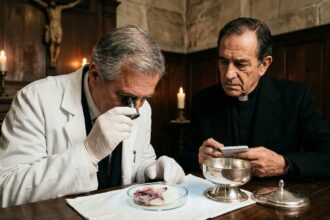
Sopoćko was an intellectual heavy hitter: a military chaplain of the Polish-Bolshevik War, a Doctor of Divinity, and a university lecturer known for precise scholastic discipline. When this uneducated third-grade-educated sister claimed that the Lord was commanding the establishment of a universal liturgical feast and the painting of a mystical image, Sopoćko’s instinct was clinical caution. He suspected religious hysteria, emotional instability, or ascetic exaggeration.
His reluctance proved to be the ultimate safeguarding mechanism for the devotion. Rather than accepting her words on emotional trust, Father Sopoćko implemented a rigorous scientific protocol that would inadvertently preserve the entire historical record for posterity.
The Two Demands: A Psychiatrist and a Notebook
Sopoćko laid down two non-negotiable conditions before he would even consider assisting her. First, he contacted Mother Superior Irene Krzyżanowska and requested a comprehensive psychiatric evaluation by Dr. Helena Maciejewska. Only after the medical report concluded that Sister Faustina possessed exceptional psychological equilibrium did Sopoćko agree to remain her director.
Second, Sopoćko grew exhausted by the lengthy confession sessions wherein Faustina recounted extensive mystical dialogues. Lacking the time during standard parish hours, he gave her a strict command of holy obedience: “Buy a notebook and write down everything you claim to experience, and do not repeat it in the confessional.” That single pastoral directive birthed the 437-page spiritual masterpiece known today as the Diary of Saint Maria Faustina Kowalska.
Financing the Canvas and Weathering the Storm
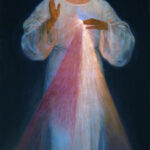
When Faustina had no money to hire an artist, Sopoćko rented a room in his own residential building on Rasų Street in Vilnius for painter Eugeniusz Kazimirowski. Sopoćko paid for the paints, the canvas, and the artist’s living expenses out of his own modest professor’s stipend. He even sat for hours draped in an alb so the painter could accurately replicate the fall of fabric across Christ’s shoulders.
Following Faustina’s death in 1938 and during the dark years of the 1959 Holy Office notification banning the devotion, Sopoćko was subjected to bitter humiliation by fellow clergy. Yet he remained steadfast, insisting until his death in 1975 that the mercy of God was the supreme attribute of the Creator and the only antidote to modern ideological savagery.
Archival Sources & Verification
Sopoćko, Michał. My Wspomnienia o Siostrze Faustynie (My Recollections of Sister Faustina). Paris: Éditions du Dialogue, 1981.
Kowalska, Maria Faustina. Diary: Divine Mercy in My Soul. Marian Press, 2005.
Rożek, Michał. Błogosławiony Ksiądz Michał Sopoćko: Apostoł Miłosierdzia Bożego. Kraków: WAM, 2008.