

Key Findings & Archival Record
- Chronological Period: 1929–1933 (Warsaw, Płock, and early Vilnius periods).
- Primary Spiritual Phenomenon: Severe interior darkness, obsessive scruples, feeling utterly abandoned and condemned by God despite spotless obedience.
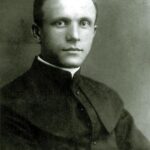
- Ecclesiastical Assessment: Repeatedly dismissed by early confessors as neurotic hallucinations before clinical psychiatric clearance and Fr. Sopoćko’s intervention.
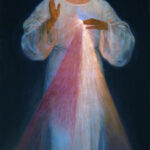
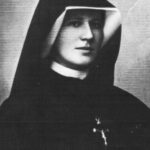
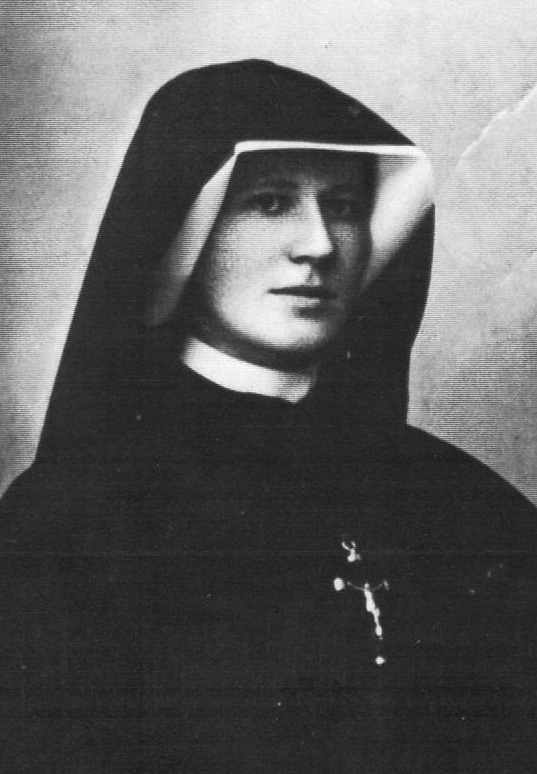
In modern devotional art, Saint Maria Faustina Kowalska is almost universally depicted in quiet serenity, bathed in celestial beams of vermilion and pale light. Yet the historical record preserved in her handwritten notebooks documents an interior trial so severe that she frequently stood on the verge of physical and emotional collapse. Long before the painting hung in Vilnius or the Chaplet circled the globe, the young Polish sister endured what classic Catholic asceticism terms the passive purification of the spirit, a prolonged crucible of obsessive scruples and divine silence.
Between 1929 and 1933, Helen Kowalska experienced what she described as total intellectual blindness. In Diary entry 77, she recorded: “My mind became clouded in a strange way; all truths seemed obscure to me. When others spoke to me about God, my heart was like a stone.” Confession, which had once been a wellspring of consolation, transformed into a torture chamber of scrupulosity. Every passing thought appeared to her as a mortal offense against the Majesty of God, and priest after priest in Warsaw and Płock warned her that she was either falling victim to morbid religious delusions or deliberately seeking attention.
The nut graph of Faustina’s dark night cuts to the heart of modern spiritual anxiety. In an era where clinical anxiety and spiritual desolation are frequently conflated, Faustina’s documented torment reveals that mystical holiness is not immunity from mental anguish, but its redemptive endurance. Her notes demonstrate how divine grace operates beneath the threshold of emotional feeling.
The Laboratory of Scruples: Clinical Panic vs. Supernatural Purification
Historical scrutiny of Faustina’s notebooks reveals a clinical pattern recognized by spiritual directors since Saint John of the Cross. When Christ commanded her in February 1931 to commission the Divine Mercy painting, her immediate internal reaction was not triumphant joy, but acute dread. She possessed neither artistic skill nor financial resources, and her monastic superiors demanded verification that she was not mentally unstable.
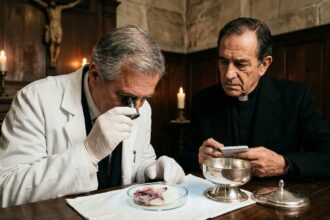
In entry 81, she recorded the crushing weight of institutional isolation: “A certain priest told me: ‘You are deceiving yourself, Sister; God is not working through you. These are hysteric hallucinations.’ I left the confessional in agony, wondering if I had become an enemy of God.” The agony deepened when she was ordered to undergo psychiatric evaluation in Vilnius under Dr. Helena Maciejewska in 1933. Far from confirming madness, the medical examination certified that Faustina was remarkably grounded, lucid, and psychologically healthy, possessing exceptional moral integrity.
The Theological Pivot: Trust as an Act of the Will
The resolution of Faustina’s dark night came when she realized that trust was not an emotional feeling, but an irrevocable act of the human will. Writing during the quiet evening hours in her monastic cell, she recognized that emotional consolations are often crutches that disguise spiritual vanity. When every sensory feeling of God’s presence was stripped away, her confession of “Jezu, ufam Tobie” became a supernatural act of total abandonment.
For modern readers navigating periods of spiritual dryness or depressive desolation, the archival testimony of Saint Faustina establishes that the absence of felt comfort is never proof of the absence of God. Her triumph lay in enduring the furnace of doubt without surrendering her post at the convent gate.
Archival Sources & Verification
Kowalska, Maria Faustina. Diary of Saint Maria Faustina Kowalska: Divine Mercy in My Soul. Stockbridge, MA: Marian Press, 2005.
Sopoćko, Michał. Memoirs and Theological Notes on the Devotion to Divine Mercy. Białystok Archdiocesan Archives, 1958.
Chróściechowski, Julian. The Divine Mercy: The History of the Devotion and the Revelations of Sister Faustina. London: Veritas Foundation, 1965.