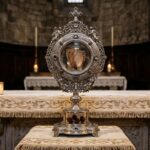

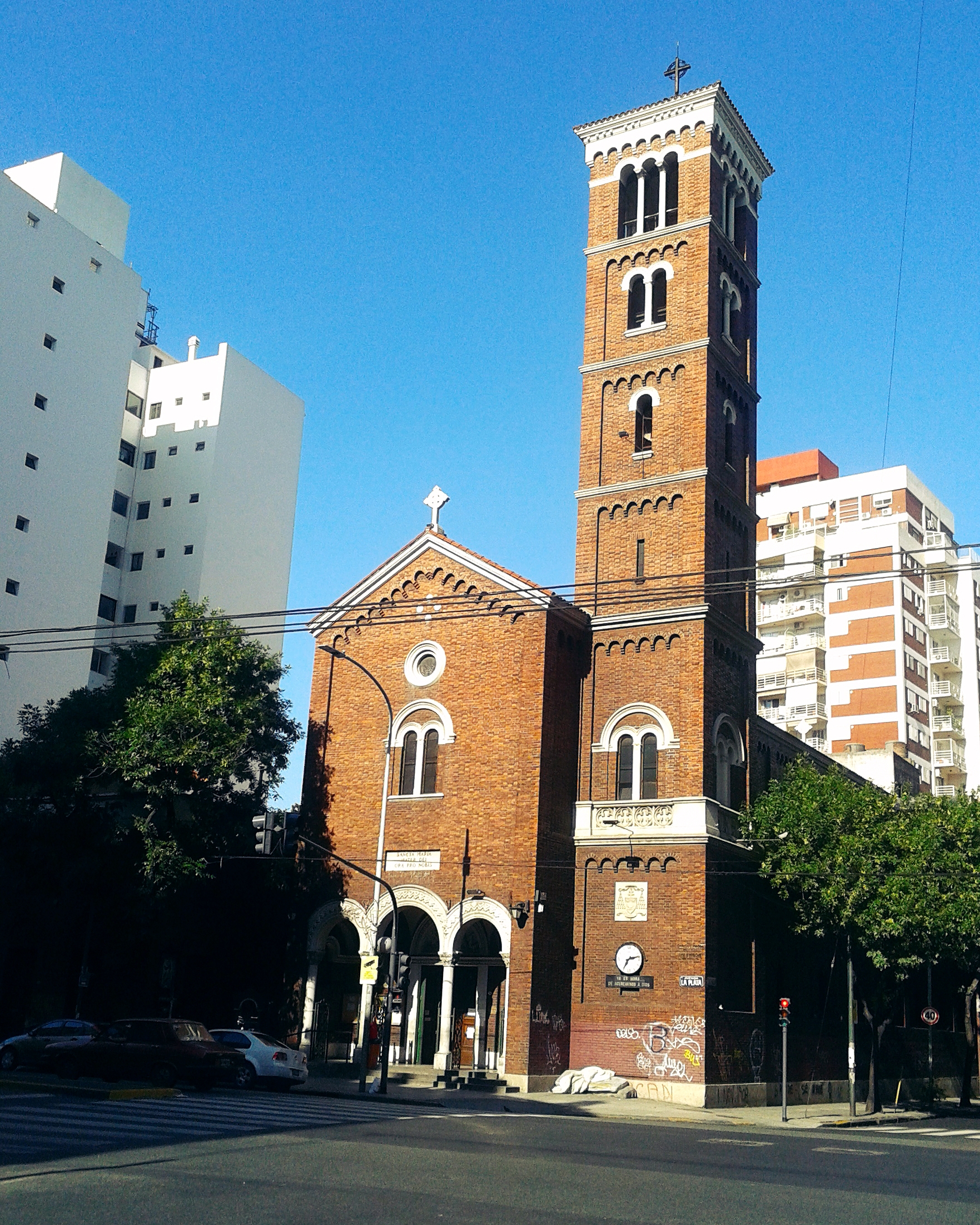
On the evening of August 18, 1996, in the commercial heart of Buenos Aires, Argentina, Father Alejandro Pezet concluded the celebration of Holy Mass at the parish of Santa María y San Roque. As the faithful dispersed, a parishioner approached him to report that a discarded consecrated Host had been abandoned at the base of a candleholder near the rear of the church.
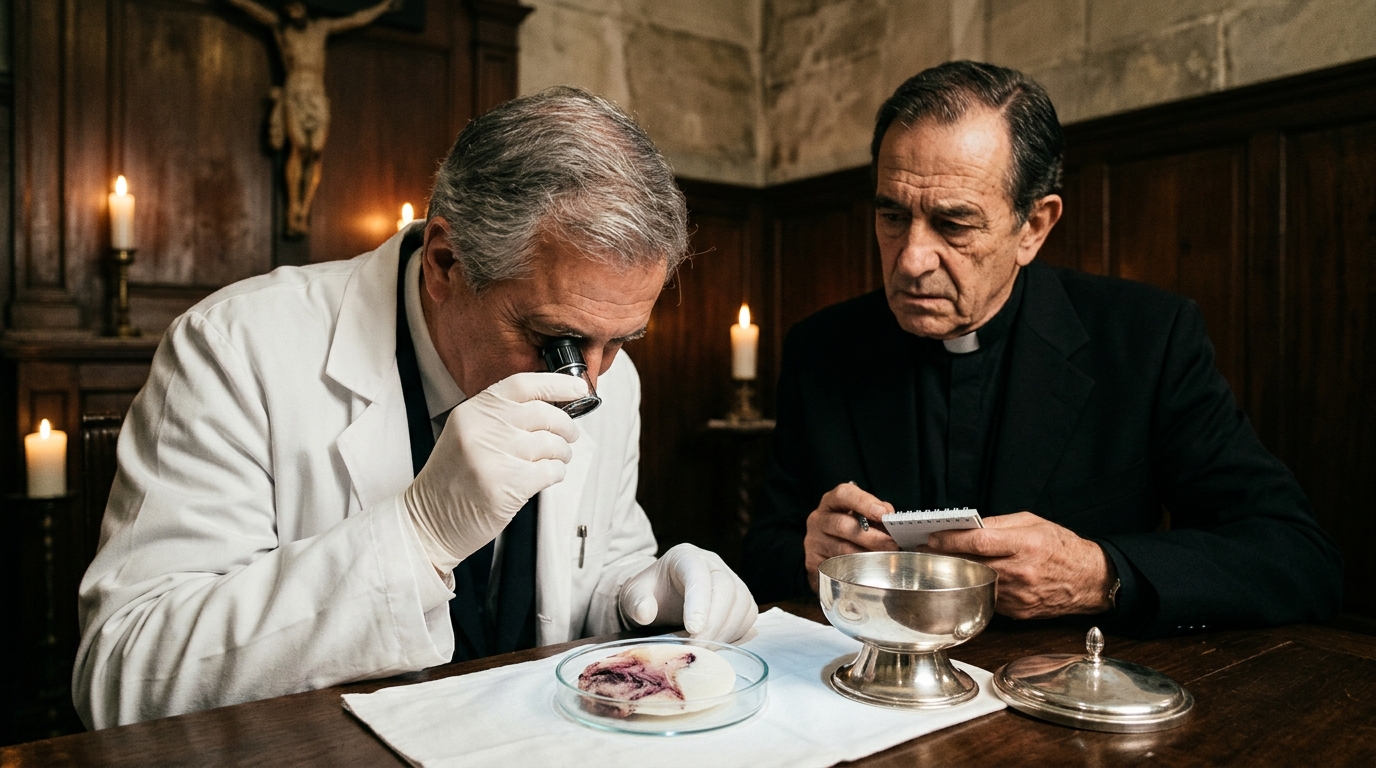
Following strict Catholic liturgical guidelines for the reverent handling of a desecrated Host, Father Pezet placed the host in a container of water and deposited it inside the parish tabernacle to allow it to dissolve naturally. When he opened the tabernacle eight days later on August 26, the priest witnessed an astonishing sight: rather than dissolving into liquid, the host had expanded and transformed into a distinct fragment of bloody flesh, significantly larger than the original communion wafer.
Archbishop Jorge Bergoglio Authorizes a Strict Blind Study
Father Pezet promptly reported the occurrence to his local auxiliary bishop, Monsignor Jorge Mario Bergoglio (who later became Pope Francis). Demonstrating characteristic prudence and pastoral caution, Archbishop Bergoglio instructed that the phenomenon be thoroughly documented with high-resolution photographs and placed under secure ecclesiastical lock while biological changes were monitored.
By 1999, the tissue showed zero signs of natural organic decomposition or putrefaction. Archbishop Bergoglio authorized a formal scientific investigation under the direction of Australian investigative journalist and author Dr. Ricardo Castañón Gómez, a former atheist psychologist who specialized in testing alleged supernatural phenomena across the globe.
Blind Forensic Analysis by World-Renowned Pathologists
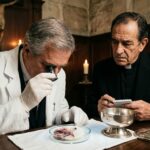
To eliminate confirmation bias, Dr. Castañón sent samples to leading forensic laboratories in the United States and Italy without disclosing where the tissue originated. The experts were instructed to perform histologic, genomic, and pathology tests on unknown biological material:
- Dr. Frederic Zugibe (Chief Medical Examiner of Rockland County, NY): Zugibe, a leading expert on forensic pathology and author of seminal texts on cardiac trauma, examined the slides under high magnification in 2005. Without being informed of its sacramental origin, Zugibe declared: “The analyzed material is a fragment of the heart muscle taken from the left ventricular wall near the valves… The heart muscle is in an inflammatory condition and contains a large number of white blood cells. This indicates that the heart was alive at the moment the sample was taken.”
- Intense Agonal Trauma: Dr. Zugibe further noted that the presence of intact white blood cells infiltrating the myocardial tissue proved the person had suffered intense physical distress and traumatic injury prior to death, stating that white blood cells dissolve within hours of death unless the tissue is alive and pulsating.
- Blood Group AB: Immunological testing established human blood group AB, matching the findings recorded at The Eucharistic Miracle of Lanciano in the 8th century.
- Dr. Robert Lawrence (Forensic Histopathologist): Confirmed the presence of human DNA, human leukocytes, and living myocardial tissue in independent blind evaluations.
Echoes Across Centuries: Carlo Acutis and Modern Science
When informed by Dr. Castañón that the specimen he had just analyzed was originally an ordinary communion wafer made of flour and water that transformed in a parish tabernacle, Dr. Zugibe remarked that science had no biological explanation for how bread could become living, inflamed human myocardium.
This remarkable modern wonder was actively researched and integrated into the global Eucharistic exhibition created by Blessed Carlo Acutis before his untimely passing in 2006. Carlo highlighted the Buenos Aires miracle as contemporary evidence for a technological generation that often struggles to accept the unseen reality of the Sacraments.
A Message for the Modern Skeptic
The Buenos Aires Eucharistic Miracle remains one of the most rigorously examined sacred events in modern history. It challenges the presumption that science and Christian faith are fundamentally incompatible. For believers, the presence of traumatized, living cardiac tissue speaks directly to the profound love and sacrifice of Christ commemorated in every celebration of the Eucharist.


Watch: Dr. Ricardo Castañón Gómez on the Investigation
Dr. Ricardo Castañón Gómez detailing the scientific forensic testing of the Buenos Aires Eucharistic miracle samples.
Historical Citations & References
- Castañón Gómez, R. (2007). Cuando la Palabra Se Hace Carne: Estudio Científico de Milagros Eucarísticos. Grupo Internacional para la Paz, Editorial Spínola.
- Zugibe, F. T. (2005). The Crucifixion of Jesus: A Forensic and Pathological Study. M. Evans & Company.
- Archdiocese of Buenos Aires. Ecclesiastical Commission on Alleged Eucharistic Wonders. Official Diocesan Records (1996–2005).
- Catholic Medical Association (USA). Linoli and Zugibe: Forensic Pathology in Eucharistic Miracle Investigations. The Linacre Quarterly. cathmed.org