



- Time & Location: March 7, 203 AD, Roman Amphitheatre of Carthage, North Africa (modern Tunisia).
- Primary Archival Record: Preserved in the Passio Sanctarum Perpetuae et Felicitatis, recognized by historians as the earliest surviving first-person diary written by a Christian woman.
- Historical Significance: Patrician noblewoman Vibia Perpetua and enslaved mother Felicity stood united against imperial edicts of Emperor Septimius Severus, demonstrating the radical egalitarian fraternity of early Christianity.
In March 203 AD, within the bustling Mediterranean capital of Carthage, Roman military centurions forced open the doors of a private home, arresting a small circle of young catechumens preparing for Christian baptism. Emperor Septimius Severus had issued a severe imperial decree outlawing conversions to Christianity under penalty of public execution in the provincial amphitheatre.
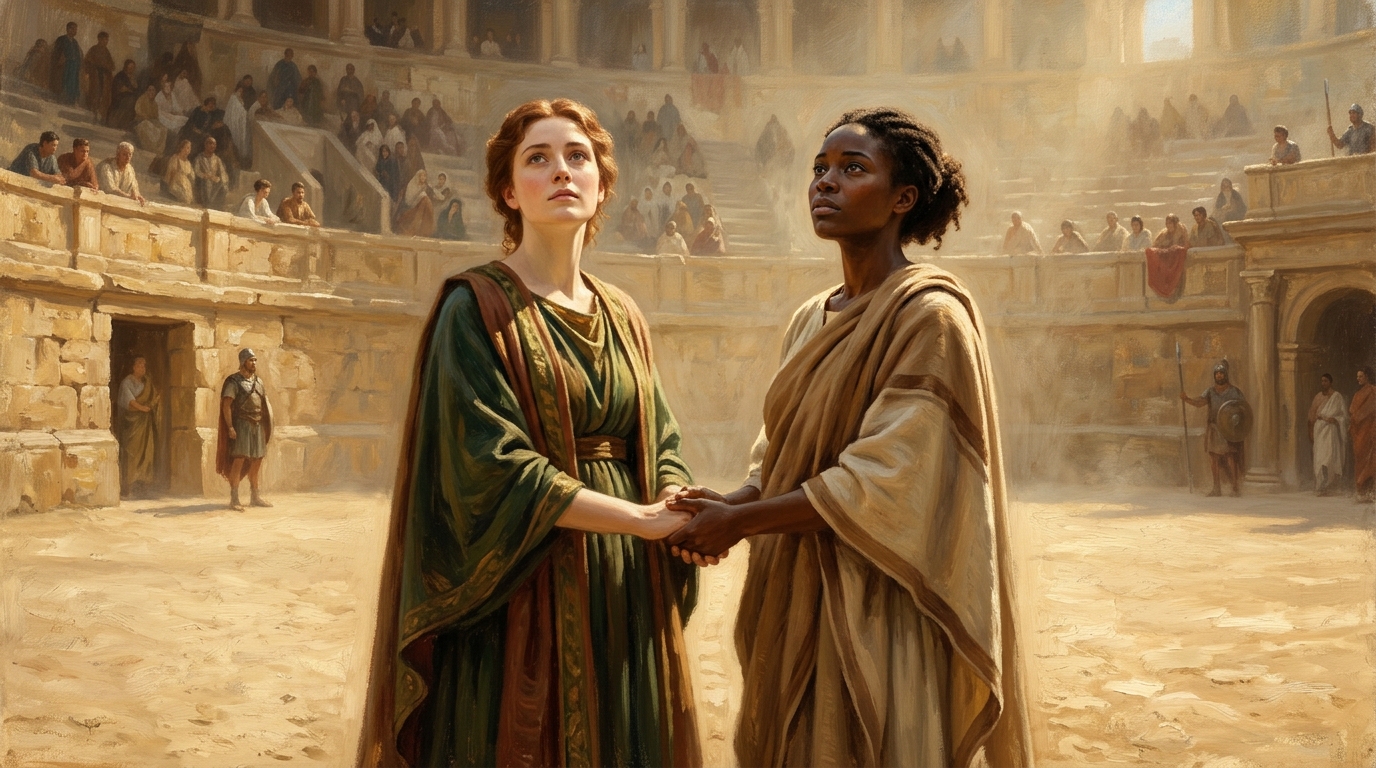
Among the condemned were two young women whose bond would dismantle Rome’s rigid social caste: Vibia Perpetua, a twenty-two-year-old patrician noblewoman nursing an infant son, and Felicity, an enslaved woman who was eight months pregnant. Their firsthand testimonies, preserved in the ancient Latin manuscript The Passion of Saints Perpetua and Felicity, provide world literature with its earliest surviving prison diary penned by a woman.
For modern readers navigating cultural pressures and searching for moral clarity, the prison diary of Perpetua offers a stunning psychological portrait of conviction, revealing how early Christians drew on heavenly visions and sacramental sisterhood to overcome imperial terror.
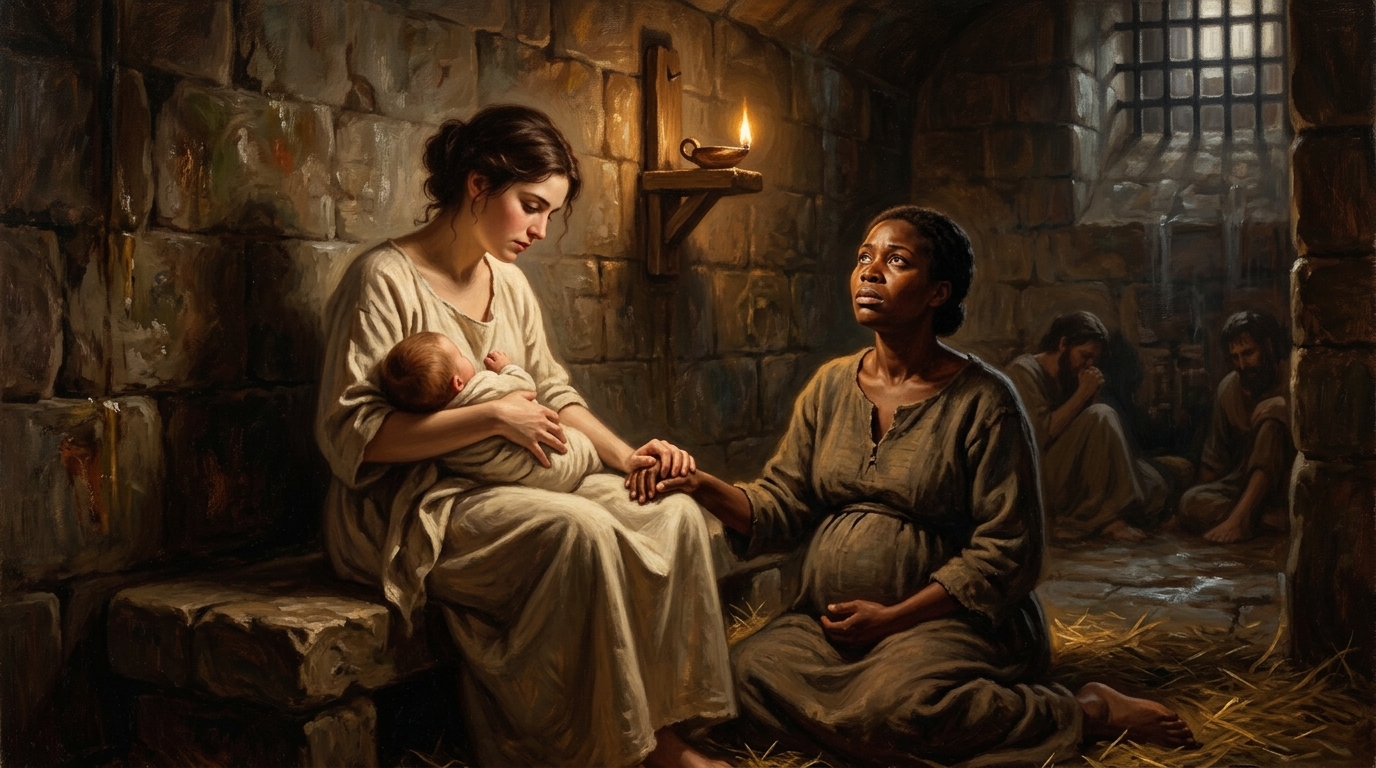
The Diary of Perpetua: The Water Vessel and Celestial Ladders
In the stifling, pitch-black military dungeon where heat and overcrowding threatened her nursing infant, Perpetua was visited by her pagan father. Weeping openly, he knelt and begged her to renounce her faith to save her noble family name and child. Pointing to a clay water vessel resting in the corner of the cell, Perpetua asked calmly:
“Father, do you see this vessel lying here, a pitcher, or whatever it may be? Can it be called by any other name than what it is?”
“No,” her father replied.
“Neither can I call myself anything else than what I am: a Christian.”
While awaiting trial before the Roman procurator Hilarianus, Perpetua experienced prophetic dreams. In one vision, she beheld a golden bronze ladder stretching from earth into heaven, bordered on both sides with iron blades, lances, and hooks. At its base lay an enormous serpent. Stepping on the monster’s head in the name of Jesus Christ, she climbed into an immense celestial garden where a white-haired Shepherd welcomed her, offering her a curds of sweet milk that tasted sweeter than honey.


Felicity’s Childbirth: Grace in the Midst of Labor
Roman imperial law strictly forbade the execution of pregnant women. Terrified that she would be held back while her companions went to their heavenly crown, Felicity joined the catechumens in earnest prayer. Two days before the scheduled military festival, Felicity gave birth in the dungeon to a healthy baby girl, who was immediately adopted and raised by a Christian woman in Carthage.
As she cried out during the pains of delivery, a Roman jailer scoffed: “If you suffer so much now, what will you do when you are thrown to the wild beasts?”
Felicity answered with timeless theological profundity: “What I suffer now, I suffer alone. But there, Another will be in me who will suffer for me, because I will be suffering for Him.”
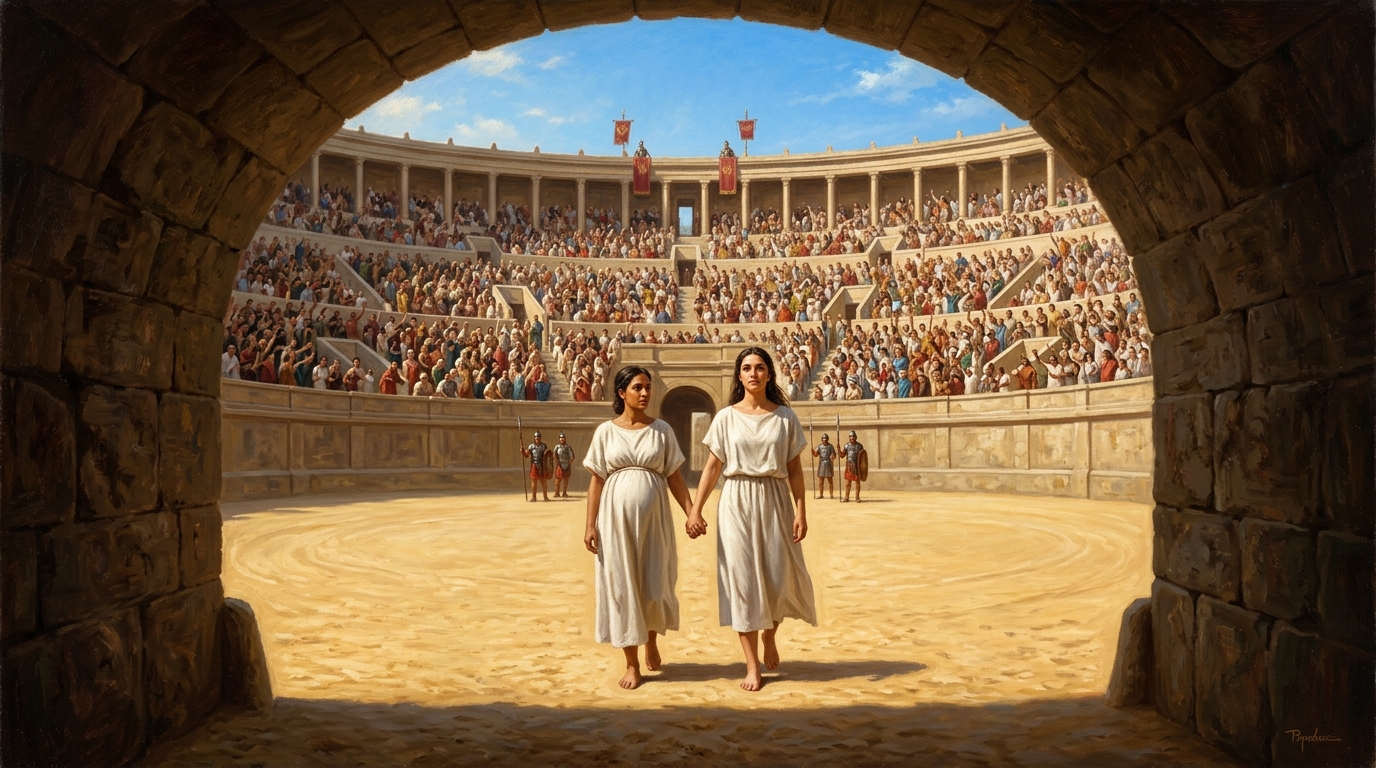
The Roman Arena: Transcendent Peace in Carthage
On March 7, 203 AD, the martyrs were led into the amphitheatre before thousands of shouting spectators. Perpetua walked with a calm step and shining gaze, singing psalms. Stripped and exposed to a wild heifer, the two young women were attacked but immediately helped each other to their feet, Perpetua pinning up her disheveled hair because it was not fitting for a martyr to die with hair unkempt, looking as though she were mourning.
When the gladiator approached to deliver the final sword stroke, his hand shook violently with fear. Perpetua took his trembling blade with her own fingers and guided it to her throat. Their unshakeable witness so moved the Roman centurion Saturus and prison overseer Pudens that both subsequently embraced the Christian faith.
Historical Citations & References
- Amat, J. (1996). Passion de Perpétue et Félicité suivi des Actes. Sources Chrétiennes No. 417, Éditions du Cerf, Paris.
- Musurillo, H. (1972). The Acts of the Christian Martyrs: Introduction, Texts and Commentary. Oxford University Press.
- Heffernan, T. J. (2012). The Passion of Perpetua and Felicity. Oxford University Press.
- Tertullian of Carthage. (c. 207 AD). De Anima, chapter 55 (Early patristic citations of Perpetua’s diary).