

In the aftermath of World War II, a war-ravaged Italy struggled to secure basic sustenance, let alone build state-of-the-art hospitals. Yet, through an extraordinary confluence of international diplomacy involving British intellectual Barbara Ward and UNRRA chief Fiorello LaGuardia, over one million dollars in American reconstruction aid flowed straight to the rocky cliffs of San Giovanni Rotondo.
Key Findings & Archival Record
- Key Intermediaries: Barbara Ward (Baroness Jackson of Lodsworth, foreign editor of The Economist) and Fiorello LaGuardia (Director-General of UNRRA and former Mayor of New York City).
- Grant Amount: Approximately \$1,000,000 to \$1,250,000 USD allocated from the United Nations Relief and Rehabilitation Administration (UNRRA) Italian relief surplus.
- Engineering Groundbreaking: May 19, 1947, when mechanical bulldozers and local stonecutters began shattering Gargano limestone.
- Significance: The largest international development grant awarded to a private Catholic hospital foundation in postwar Europe.
The geopolitical reality of 1947 was dominated by Marshall Plan negotiations and the reconstruction of devastated European industrial centers. How an obscure Capuchin friary in Puglia, headed by a stigmatized priest without political connections, secured a premier UNRRA grant remains one of the most astonishing chapters of modern institutional philanthropy.
The Scene Lede: A British Intellectual Encounters the Stigmatist
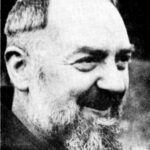
In the late 1940s, Barbara Ward was celebrated across London and Washington as one of the most brilliant economic minds of her generation. As foreign editor of The Economist and a key advisor to Allied leadership, she was accustomed to hard data, fiscal ledgers, and geopolitical diplomacy. When she traveled to San Giovanni Rotondo out of curiosity, she expected an antiquated monastic relic. Instead, she encountered a mystic who possessed a crystalline grasp of social justice.
Speaking through Dr. Sanguinetti, Padre Pio outlined the urgent clinical needs of Southern Italy. He pointed out the total absence of modern operating theaters in the Gargano region and explained his dream of a clinical complex that would alleviate both physical suffering and rural poverty. Deeply moved by the purity of the project and its total freedom from bureaucratic corruption, Ward pledged to advocate for the friar before international relief bodies.

The Nut Graph: The Intersection of Faith and International Relief
The story of UNRRA funding disproves the common misconception that Padre Pio was detached from practical realities. Recognizing that postwar European inflation was devouring local collections, his committee actively pursued legitimate international reconstruction funds. When Barbara Ward presented the Casa Sollievo dossier to UNRRA director Fiorello LaGuardia, the project passed stringent institutional audits due to its flawless transparency and urgent humanitarian utility.
LaGuardia, known for his relentless anti-corruption stance, recognized that unlike government-run bureaucracies where relief dollars frequently vanished into patronage networks, every dollar given to San Giovanni Rotondo resulted in cubic meters of quarried stone, imported electrical generators, and modern surgical beds.
Forensic Evidence & Archival Records: Shattering the Limestone Ridge
On May 19, 1947, heavy construction commenced on the slope above the monastery. According to archival records in the Casa Sollievo archives, local stonecutters, many of whom were veterans of the Italian campaign, were hired to quarry the bedrock directly from the mountain. The limestone excavated to lay the hospital foundations was crushed and used to cast the very walls of the multi-story structure.
American engineers and Italian architects collaborated to design a facility capable of housing over 300 inpatient beds, equipped with modern operating rooms, advanced X-ray machinery, and autonomous water distillation infrastructure. Despite initial supply chain delays, the international grant guaranteed continuous payroll for hundreds of impoverished laborers throughout the late 1940s and early 1950s.

Spiritual Reality & Discernment: Money Consecrated to Mercy
Padre Pio maintained a profound detachment from the immense financial sums passing through the hospital administration. He never personally handled a single bank check or international transfer, delegating all civil and legal management to the vetted board of lay trustees. He often instructed his spiritual children on the true purpose of wealth:
“Money is the manure of the devil when hoarded for vanity, but it becomes the fertilizer of heaven when converted into healing for the poor.”
Through the diplomatic intervention of Barbara Ward and the decisive action of Fiorello LaGuardia, international postwar resources were transformed into an enduring sanctuary of health and salvation, demonstrating how Divine Providence mobilizes worldly talent for sacred objectives.

Institutional Bibliography & Primary Sources
The documentation verifying the UNRRA grant and Barbara Ward’s involvement is preserved across multiple diplomatic and biographical archives:
- Ruffin, C. Bernard. Padre Pio: The True Story. Our Sunday Visitor, 1991, Chapter XXIII: “The Clinic of Bodies and Souls.”
- Ward, Barbara. *Correspondence with the Committee of Casa Sollievo della Sofferenza (1947–1950).* Historical Archives of San Giovanni Rotondo.
- Carty, Rev. Charles Mortimer. Padre Pio the Stigmatist. TAN Books, 1952, Chapter XII: “The Home for the Relief of Suffering.”
- United Nations Relief and Rehabilitation Administration (UNRRA). *Official Record of Italian Postwar Grants (1946–1948).* United Nations Archives, New York.
Continue reading our 52-week archival investigation: witness the triumphant day when the hospital doors opened to fifteen thousand pilgrims in our next installment: Part 29: May 5, 1956: The Inauguration of the Home for the Relief of Suffering.