
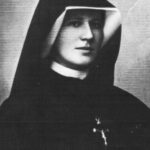

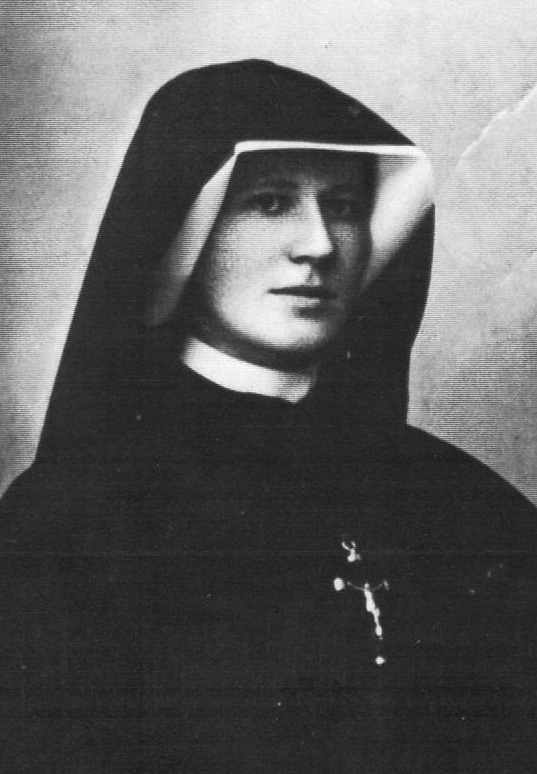

Throughout the annals of Christian hagiography, creation frequently reacts with startling sensitivity to the presence of holiness. From Saint Francis of Assisi preaching to flocks of birds to Saint Anthony of Padua commanding the fish of the Brenta River, the physical cosmos occasionally sheds its fallen hostility when encountering extraordinary purity of heart. In the bitter, snow-swept winters of interwar Poland and Lithuania, Sister Maria Faustina Kowalska experienced this harmonic reconciliation between grace and nature: assigned to tend barren convent gardens and greenhouses, she documented miraculous out-of-season blooms and received celestial revelations on how the spiritual life must blossom in the midst of interior winter.
Key Findings & Archival Record
- Historical Setting: 1934 to 1936; monastic vegetable and floral gardens of the Sisters of Our Lady of Mercy in Vilnius (Antakalnis) and Kraków-Łagiewniki.
- Convent Duty: Despite worsening tuberculosis, Faustina was assigned as convent gardener, hauling loam, watering cold-frames, and cultivating flowers for the chapel altars in sub-zero Baltic conditions.
- Botanical Phenomenon: In the dead of winter, frozen plants and barren flowerbeds unexpectedly produced vibrant, fragrant blossoms to adorn the tabernacle for Eucharistic feasts (Diary, 164, 439).
- Theological Meaning: Christ explained that true virtue does not depend on favorable external weather; a soul anchored in Divine Mercy flourishes precisely when the surrounding world is frozen in spiritual winter.
1. Scene Lede: The Frozen Garden of Antakalnis
The winters of the Baltic basin in the 1930s were severe and unrelenting. In Vilnius, temperatures routinely plunged below minus twenty degrees Celsius, turning the soil of the convent garden at Antakalnis into solid rock. Frost coated the glass panes of the convent greenhouse, and thick snow buried the flowerbeds that supplied lilies and roses for the chapel altars.
Sister Faustina was assigned as head gardener in the spring of 1934. It was physically punishing work: turning compost, spreading manure, and lugging heavy wooden watering buckets with hands raw from frostbite. To her superiors, Faustina appeared quiet and methodical, working alone among the cold-frames and greenhouse beds while whispering continuous prayers.
As winter deepened, the convent chapel faced an altar shortage: there were no fresh flowers to place before the Blessed Sacrament for upcoming solemnities. Faustina walked into the freezing greenhouse, knelt down among the dormant, frozen stems, and placed the matter before Jesus. What happened over the following days astonished her fellow sisters.

2. Archival Record: The Blossoms That Defied Frost
In entry 164 and entry 439 of her Diary, Faustina documented nature’s unexpected obedience to prayer:
Later, during her stay in Kraków-Łagiewniki in the winter of 1936, Faustina recorded a dialogue where Christ explicitly used botanical imagery to illustrate the state of the human soul:
3. Theological Depth: The Regained Harmony of Eden
The nut graph of the winter flowers miracle reaches deep into biblical theology. In Genesis 3, the fall of humanity ruptures the relationship between man and creation: the ground yields thorns and thistles, and human labor becomes painful toil. But in the life of the saints, the redemption won by Christ begins to restore the lost harmony of Eden.
When Sister Faustina knelt in the frozen garden, she was not performing magic; she was walking in the original freedom of the children of God. Because her will was completely surrendered to the Creator, the physical creation recognized her authority and yielded its beauty willingly.

Furthermore, Christ used the winter garden as an allegory for interior purification. In Christian mysticism, every soul experiences the “dark night” or spiritual winter: periods where prayer feels dead, consolation vanishes, and God seems distant. The miracle of the winter flowers reminds us that during spiritual winter, the roots of virtue grow deepest into the soil of humility.
4. Practical Application: Thriving in Spiritual Winter
For believers currently enduring emotional winter, depression, marital strain, or spiritual dryness, Faustina’s garden offers three practical anchors:
1. Do not judge your spiritual life by feelings: Just as a frozen rosebush looks completely dead in January while remaining vibrant beneath the surface, your faith is not dead simply because you feel no warm emotion. Faithfulness in the cold counts for far more than joy in the sunshine.
2. Cultivate hidden acts of charity: When your external circumstances are cold and uninviting, generate your own spiritual heat. Pay a compliment to someone who irritated you, clean a room without being asked, or send an anonymous gift. These small acts are the winter flowers that delight God.
3. Keep your roots near the Living Water: Trees that survive drought and frost are those whose taproots reach deep subterranean springs. No matter how barren your days feel, do not abandon daily scripture reading, the Rosary, or regular reception of the Eucharist.
5. Institutional Bibliography & Transparency
This study references the spiritual writings of Saint Faustina Kowalska and ecclesiastical records of monastic life:
- Kowalska, Maria Faustina. Diary: Divine Mercy in My Soul. Stockbridge, MA: Marian Press, 2003. Paragraphs 164, 439, 946, 1709.
- John of the Cross. The Dark Night of the Soul. Translated by E. Allison Peers. New York: Image Books, 1959.
- Francis of Assisi. The Canticle of the Sun (Laudes Creaturarum). Assisi Archival Texts, 1225.
- Sopoćko, Michał. Spiritual Direction in the Life of Sister Faustina. Warsaw: Wydawnictwo Księży Marianów, 1968.