
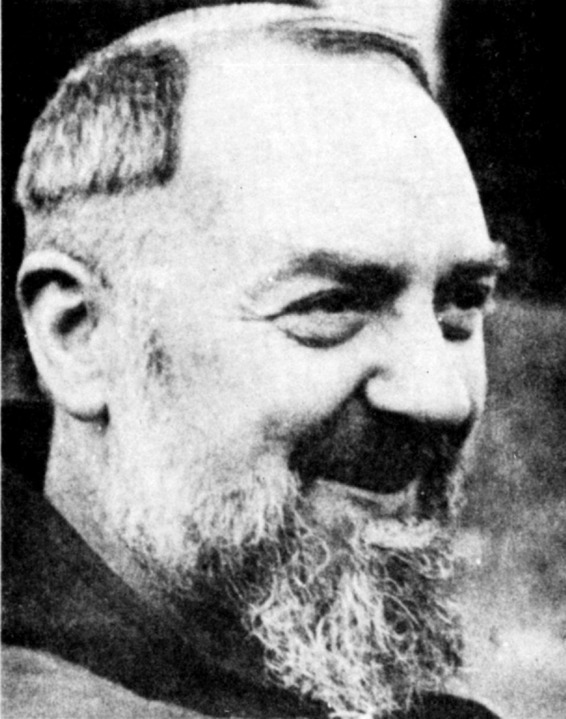

On Sunday, June 16, 2002, the Eternal City was submerged beneath an ocean of three hundred thousand pilgrims. The crowd filled St. Peter’s Square, overflowed down the entire length of the Via della Conciliazione, and packed the squares across the Tiber. Before this historic assembly, an eighty-two-year-old Pope John Paul II raised his voice to proclaim the poor Capuchin friar of Pietrelcina a saint of the universal Church.
Key Findings & Archival Record
- The Historic Date: Sunday, June 16, 2002, starting at 10:00 AM under radiant Roman sunshine.
- The Attendance: Over 300,000 pilgrims present in Rome, with another 100,000 watching via giant video screens at San Giovanni Rotondo, setting the all-time attendance record for a papal canonization.
- The Solemn Formula: Pronounced in Latin by Pope John Paul II: “Ad honorem Sanctae et Individuae Trinitatis… Beatum Pium de Pietrelcina Sanctum esse decernimus et definimus…”
- The Guests of Honor: Matteo Pio Colella (the healed child) and his family presented the offertory gifts directly to the Holy Father at the papal altar.
The canonization of Saint Pio of Pietrelcina was not merely a liturgical ceremony; it was the ultimate historical vindication of a man who had been condemned, restricted, wiretapped, and investigated for half a century by the very curial apparatus that now bowed before his image.
The Scene Lede: A Sea of Faces in St. Peter’s Square
From midnight, pilgrims wrapped in blankets slept on the cobblestones around the Vatican to secure a place near the basilica. By 7:00 AM, the massive Bernini colonnades were jammed with hundreds of thousands of believers holding green banners of the Padre Pio prayer groups, Italian flags, and portraits of the stigmatist. The temperature in Rome climbed past 35°C (95°F), requiring firefighters to spray water over the crowd.
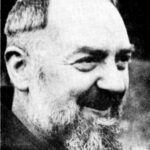
When the massive tapestry depicting Padre Pio smiling in his brown Capuchin habit was unfurled from the central loggia of St. Peter’s, an immense roar of acclamation shook the square. Choirs sang the Christus Vincit, and bells throughout the city of Rome tolled in festive harmony.

The Nut Graph: The Fulfilled Circle of 1948
Watching John Paul II proclaim the solemn formula, historians recalled the young twenty-seven-year-old Polish priest who had knelt in the dark San Giovanni confessional in April 1948. Fifty-four years later, that same Polish priest, now bent with age and Parkinson’s disease, exercised the fullness of papal infallibility to enroll his confessor into the canon of saints.
In his homily, delivered with intense personal emotion, John Paul II articulated the spiritual essence of the new saint:
“Padre Pio was a generous dispenser of divine mercy, making himself available to all by welcoming them, by directing them spiritually, and especially by administering the sacrament of Penance. The Ministry of the confessional, which is one of the distinguishing features of his apostolate, attracted innumerable crowds of the faithful to the monastery of San Giovanni Rotondo.”
Forensic Evidence & Archival Records: The Miracle Child at the Altar
The climax of the liturgical action occurred during the Offertory procession. Walking briskly up the marble steps of the papal altar was nine-year-old Matteo Pio Colella, perfectly healthy, accompanied by his mother Maria Pia and his father Dr. Antonio Colella. Two years earlier, every vital organ in the child’s body had failed, and his clinical death was minutes away.
As the Holy Father bent down to kiss the recovered boy, the entire assembly wept. Matteo stood before the world as a living, breathing proof of divine intervention: an empirical witness that the supernatural power of God was not confined to biblical history, but actively breaks into our contemporary world.

Spiritual Reality & Discernment: The Universal Saint
The canonization established Saint Pio as a universal patron for our troubled era. In an age marked by existential anxiety, moral relativism, and the loss of the sense of sin, Saint Pio’s life stands as an uncompromising sign of contradiction.
He showed that authentic love requires sacrifice, that true healing requires repentance, and that the greatest tragedy in human life is not physical sickness, but the loss of God’s grace. His feast day was established on September 23, the anniversary of his holy death, ensuring that his message of divine mercy would echo across every parish on earth.

Institutional Bibliography & Primary Sources
The canonization homily, decrees, and official Vatican records are preserved in primary publications:
- Pope John Paul II. *Homily for the Canonization of Saint Pio of Pietrelcina (June 16, 2002).* Acta Apostolicae Sedis, Vol. XCIV.
- Congregation for the Causes of Saints. *Litterae Decretales quibus Beato Pio de Pietrelcina Sanctorum honor decernitur.* Vatican City, 2002.
- Ruffin, C. Bernard. Padre Pio: The True Story. Our Sunday Visitor, 1991 (2002 Canonization Edition).
- L’Osservatore Romano. *Special Canonization Issue: Saint Pio of Pietrelcina.* June 17, 2002.
Continue reading our 52-week archival investigation: explore the dramatic forensic inspection conducted forty years after his burial in our next installment: Part 49: The 2008 Exhumation: Forensic Inspection Forty Years Post-Mortem.