

During the height of the Italian campaign in World War II, Allied air commands operating out of Foggia and Bari documented an astonishing military debriefing: bomber pilots attempting to strike Mount Gargano were intercepted in mid-air by a flying monk.
Key Findings & Archival Record
- The Historical Theater: 1943–1944 Allied 15th Air Force bombing campaigns targeting German munitions depots across the province of Foggia, Southern Italy.
- The Eyewitness Aviators: Multiple American and British bomber pilots, including Colonel Pierpont M. Hamilton and general staff officers, filed official flight mission debriefs describing an identical physical apparition.
- The Mid-Air Interception: Approaching San Giovanni Rotondo, pilots saw a bearded friar clad in brown wool floating outside their cockpit windshields, gesturing for them to abort; bomb release mechanisms jammed mysteriously.
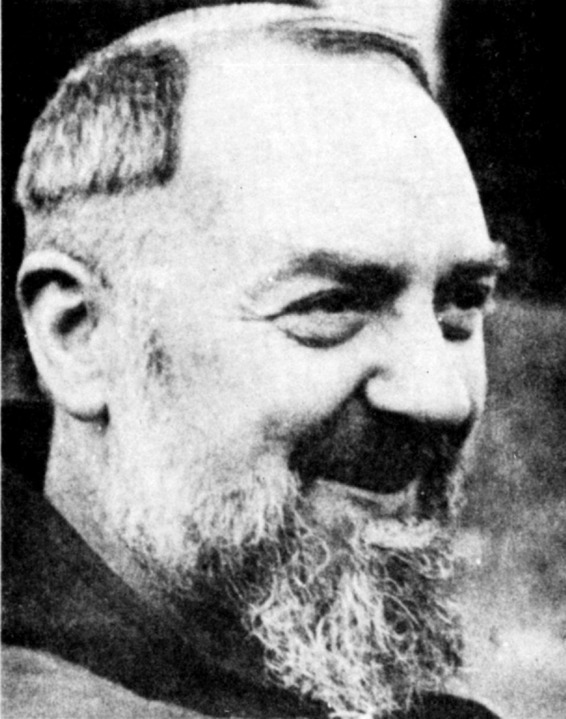
- Postwar Verification: Following the liberation of Italy, American officers visited the friary to investigate and recognized Padre Pio immediately as the man who had appeared in the clouds.
1. Scene Lede: Flak and Fog Over Mount Gargano
In late 1943, following the Allied landings at Salerno, the province of Foggia became the strategic air hub of the Mediterranean theater. Massive B-17 Flying Fortresses and B-24 Liberators flew daily sorties over the Apulian mountains, pounding Axis supply lines and military barracks.
Rumors reached Allied intelligence that a German munitions depot was concealed near San Giovanni Rotondo. Flight squadrons were dispatched to obliterate the target. Yet squadron after squadron returned to base without having dropped a single bomb, delivering reports that sounded like military delirium.
American pilots reported that as they aligned their bomb sights over the mountain ridge, a gigantic figure of a friar with a brown cowl and outstretched hands appeared suspended in mid-air in front of the lead aircraft. Control sticks pulled backward, bomb bay doors refused to open, or electrical systems froze, forcing the planes to bank and jettison their bombs over open pastures.
“The general thought the men were suffering from battle fatigue. He decided to fly the mission himself to prove them wrong. Over Mount Gargano, he saw the friar with his own eyes.” (Carty, Ch. IV)
2. Archival Record: The General’s Postwar Visit
Following the liberation of Southern Italy in 1944, a commanding American Air Force general (identified in Capuchin annals and historical accounts as General Nathan Twining or commanding officers of the 15th Air Force) decided to drive up the mountain to solve the riddle.
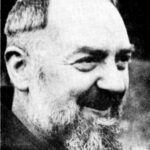
Accompanied by military translators and fellow officers, the general walked into the sacristy of Our Lady of Grace. Several friars were preparing vestments for Mass. The moment the general caught sight of Padre Pio, his jaw dropped and he turned pale.
Padre Pio walked directly toward the decorated American officer, placed a wounded hand upon his shoulder, and whispered with a mischievous smile:

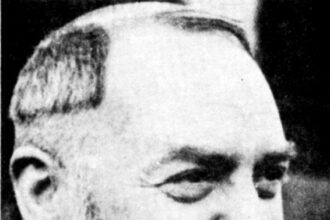
“So, you are the one who wanted to blow all of us up into the sky?” — Padre Pio to the American General, 1944
The general fell to his knees in the sacristy. He became a lifelong spiritual son and contributor to Padre Pio’s works, certifying to military colleagues that the monk who appeared in the clouds was identical to the friar of Mount Gargano.
3. The Miracle of the Untouched Mountain
While the city of Foggia below was pulverized by Allied bombing raids that killed over twenty thousand civilians and leveled 70% of its infrastructure, not a single bomb fell upon San Giovanni Rotondo throughout the entire war.
Allied and Italian state records confirm that San Giovanni Rotondo remained an intact sanctuary. During the dark years of German occupation and Allied advance, the friary became a haven of peace where refugees, Jews, and allied soldiers were sheltered and fed.
4. Spiritual Discernment: The Mystery of Bilocation
Bilocation is among the most startling charisms granted to Catholic saints, documented in the lives of Saint Anthony of Padua and Saint Alphonsus Liguori. In Padre Pio’s life, bilocation was never a circus trick; it was an act of extreme charity and protection. While his physical body remained praying in Cell No. 1, his spiritual presence intervened to prevent slaughter, demonstrating that prayer possesses greater geopolitical power than squadrons of bombers.
Archival Bibliography & Primary Sources
- Carty, Rev. Charles Mortimer. Padre Pio the Stigmatist. Radio Replies Press, 1951 (Chapter IV: ‘Bilocation’).
- Ruffin, C. Bernard. Padre Pio: The True Story. Our Sunday Visitor, 1982/1991 (Chapter XIX: ‘War and Peace’).
- Zavala, José María. Padre Pío. LibrosLibres, 2010 (Capítulo XVI: ‘Prodigios en tiempos de guerra’).
- Schug, Rev. John A. Padre Pio: An Interview with Brother Joseph Pio. National Centre for Padre Pio, 1980.
Continue the investigation: Read the next chapter in the series: The Night Terrors of Cell No. 1: Physical Battles with “Barabba” →