
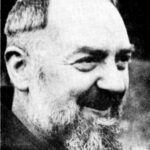
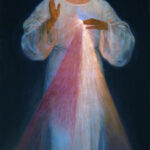

The famous bleeding wounds of Padre Pio did not appear unannounced. Six weeks before the pierced palms of Mount Gargano, a terrifying mystical phenomenon struck the thirty-one-year-old priest: the transverberation, the piercing of the physical heart by a flaming dart.
Key Findings & Archival Record
- Date & Setting: Evening of August 5 to August 7, 1918, while hearing the confessions of student friars at Our Lady of Grace, San Giovanni Rotondo.
- The Phenomenon: Appearance of a celestial figure wielding a long, blade-tipped javelin that emanated visible flames, plunging it directly into Pio’s heart.
- Primary Testimony: Detailed under obedience in a sworn letter to Father Benedetto on August 21, 1918 (Epistolario I, Entry 1063).
- Physical Aftermath: A continuous, internal tearing pain in the pericardium accompanied by profuse weeping, fever, and a literal bleeding puncture in the chest wall.
1. Scene Lede: The Confessional at Dusk
On the evening of Monday, August 5, 1918, Padre Pio was hearing the weekly confessions of young Capuchin students in the church of Our Lady of Grace. The church was dim; the summer heat was cooling across the Apulian plain; and the routine was ordinary.
Suddenly, the ambient physical surroundings disappeared from his consciousness. An unearthly visitor stood before the confessional veil. In a confidential letter to his spiritual director Father Benedetto written two weeks later, Pio described the terrifying encounter with surgical precision:
“While hearing the confessions of the boys on the evening of the 5th, I was suddenly terrified by the sight of a celestial personage… He had in his hand a kind of weapon, like a long iron javelin with a very sharp blade, from which fire seemed to burst out. He hurled this weapon into my soul with all his might.” (Epistolario I, 1063)
2. Archival Record: The Tearing of the Heart
The blow was not merely a psychological impression; it was an excruciating biological trauma. Pio collapsed in the confessional, gasping for breath, feeling his chest torn open from within. He managed to crawl to his cell, where he lay between life and death for forty-eight hours.
In his letter of August 21, he recorded that the pain was so severe that death would have been a relief:
“I barely had the strength to groan. I felt that I was dying. I told the boy to leave because I could no longer continue. This agony continued uninterrupted until the morning of the 7th. I cannot tell you what I suffered… Even my internal organs were shaken and torn by the impact.” (Epistolario I, 1064)
This experience, historically termed *transverberatio cordis*, mirrors the famous experiences of Saint Teresa of Ávila (1559) and Saint John of the Cross. But in Padre Pio’s case, it served as the physical bridge to the visible marks that would follow exactly forty-four days later.
3. The Theological Mystery: The Wounded Healer
The transverberation transformed Padre Pio into a living victim of divine love. The wound in his side was not an arbitrary affliction; it was the theological seat of mercy. From the pierced heart of Christ on Golgotha flowed blood and water; from the pierced heart of Padre Pio would flow a half-century ministry of reconciliation that reconciled thousands of broken souls to God.
Archival Bibliography & Primary Sources
- Ruffin, C. Bernard. Padre Pio: The True Story. Our Sunday Visitor, 1982/1991 (Chapter XI: ‘The Stigmata’).
- da Pobladura, Melchiorre, ed. Epistolario I. San Giovanni Rotondo, 1984 (Letters 1063 & 1064).
- Carty, Rev. Charles Mortimer. Padre Pio the Stigmatist. TAN Books, 1951.
- Festa, Dr. Giorgio. Misteri di Scienza e Luci di Fede. Rome, 1938.
Continue the investigation: Read the next chapter in the series: September 20, 1918: The Wounds in the Screaming Choir Loft →