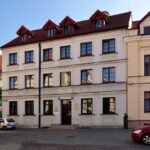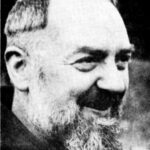
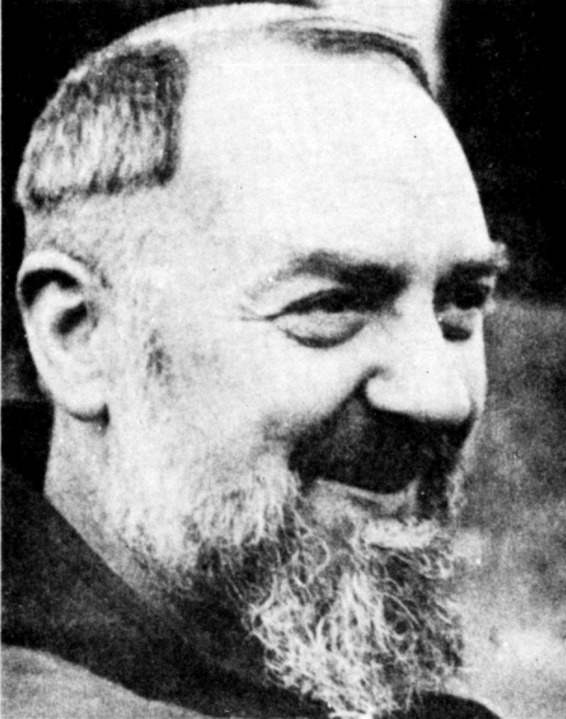

In October 1911, an exhausted, newly ordained twenty-four-year-old priest named Padre Pio arrived at the Capuchin friary of Venafro. For three weeks, his cell became a battleground where physicians, superiors, and demons collided in an extraordinary clinical record.
Key Findings & Archival Record
- Location & Dates: October to November 1911 at the friary of Saint Francis in Venafro, Molise.
- Complete Inedia: For twenty-one consecutive days, Padre Pio was totally incapable of keeping food or liquids down, vomiting everything except the Blessed Sacrament, which was his sole sustenance.
- Clinical Transcription: Friary guardian Padre Agostino and local physician Dr. Nicola Fazio stood beside his bed taking verbatim notes during alternating cycles of demonic violence and rapturous celestial ecstasies.
- Linguistic Phenomenon: An uneducated peasant priest with rudimentary Italian and no foreign training, Pio was documented speaking fluent, literary French and classical Greek during ecstatic trance.
1. Scene Lede: The Bedside in the Shadows
The Capuchin community of Venafro was convinced that the frail young priest in Room 5 was breathing his final breaths. Padre Pio lay prostrate under coarse wool blankets, emaciated, pale as chalk, and running high fevers. Every teaspoon of water or broth offered to him by friars was instantly rejected by his convulsing stomach.
Yet at dawn, when the superior brought the Holy Host, a startling transformation occurred. The dying priest sat upright, received the Sacrament with deep adoration, and sank into total stillness. For hours, his pulse became faint, his eyes remained fixed on an invisible point on the ceiling, and his face radiated an unearthly luminosity.
Padre Agostino, his spiritual director, recognized that this was no ordinary illness. Taking up pen and paper, he sat beside the bed in the candlelight, transcribing the ecstatic dialogues word for word:
“Padre Pio was conversing familiarly with Jesus, the Virgin Mary, his Guardian Angel, Saint Francis, and Saint Clare… His face was transfigured with joy, smiling, weeping tears of tenderness, and pleading for sinners.” (Agostino Diary, Nov 1911)
2. Archival Record: The Claws of “Barabba”
The sublime trances at Venafro were matched by terrifying nocturnal assaults. The moment the heavenly visions ended, the friars heard crashes, screams, and the sound of iron chains dragging across the stone floor of Room 5.
Demonic entities, whom Pio contemptuously nicknamed “Barabba” or “the filthy beasts,” appeared in visible, horrific forms: snarling black dogs, hideous horned figures, and mockingly beautiful women trying to shatter his vow of chastity. When these apparitions failed to break his resolve, they resorted to physical battery. Friars entering his room found the young priest thrown out of bed, bruised, bleeding from the mouth, and covered in scratches.
Dr. Nicola Fazio, summoned to examine the physical wounds, reported to the provincial:
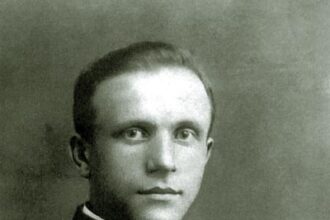
“The patient exhibits contusions, abrasions, and tissue trauma that cannot be self-inflicted by a man who cannot even lift his own arms to drink broth. What is happening in this cell surpasses natural pathology.” — Dr. Nicola Fazio, Medical Report, Venafro
3. The Xenoglossy Phenomenon: Greek and French Without Study
Perhaps the most intellectually striking event at Venafro was the documented appearance of xenoglossy, the supernatural ability to speak and understand languages one has never studied.
Padre Agostino and visiting scholars noted that during his ecstasies, Padre Pio answered theological queries in fluent classical Greek and modern French. When questioned afterward in his normal waking state, Pio confessed that he knew neither language, reciting only the standard Latin formulas of the Roman Missal. When asked how this was possible, Pio answered simply:
“The Guardian Angel translates everything for me; when God speaks, the soul understands without need of grammar.” (Ruffin, Ch. VI)
4. Spiritual Discernment: The Reality of the Invisible Battle
The Venafro episodes demonstrate that Christian mysticism is not passive escapism, but a front-line spiritual war. The devil attacked Padre Pio with ferocious vengeance precisely because his vocation was destined to rip thousands of souls out of hell through the confessional. For believers confronting acute spiritual oppression or temptation, Pio’s triumph at Venafro confirms that the Sign of the Cross and total surrender to the Eucharist render evil entirely powerless.
Archival Bibliography & Primary Sources
- Ruffin, C. Bernard. Padre Pio: The True Story. Our Sunday Visitor, 1982/1991 (Chapter VI: ‘Strange Events at Venafro’).
- da San Marco in Lamis, Padre Agostino. Diario: Memorie spirituali di Padre Pio. San Giovanni Rotondo: Edizioni Padre Pio, 1975.
- Carty, Rev. Charles Mortimer. Padre Pio the Stigmatist. Radio Replies Press, 1951.
- Zavala, José María. Padre Pío. LibrosLibres, 2010 (Capítulo XVII).
Continue the investigation: Read the next chapter in the series: The Peasant Conscript (1915-1918): Private Forgione in the Royal Italian Army →