
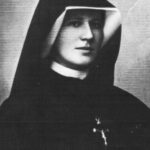


Holiness in the Christian tradition is rarely forged on dramatic public stages; it is hammered out in obscurity over greasy flagstones, boiling cauldrons, and the unrelenting drudgery of daily monastic duties. For Sister Maria Faustina Kowalska, her spiritual elevation did not exempt her from hard physical labor. Assigned as a second-class coadjutrix sister to convent kitchens across Warsaw, Płock, and Vilnius, she spent years scrubbing massive cast-iron pots, peeling bushels of vegetables, and tending wood-fired cooking hearths. One evening, exhausted by physical weakness and weeping over a boiling cauldron of potatoes she could not lift, Faustina experienced an extraordinary intervention that permanently reframed the theology of manual labor.
Key Findings & Archival Record
- Historical Setting: Circa 1929 to 1930; convent kitchen of the Congregation of the Sisters of Our Lady of Mercy, Warsaw and Płock houses.
- Physical Reality: Faustina suffered from early, undiagnosed pulmonary tuberculosis, resulting in severe chronic fatigue, joint weakness, and respiratory distress while carrying industrial kitchen cauldrons.
- The Phenomenon: Unable to lift and drain a massive pot of boiling potatoes, Faustina prayed in childlike obedience. When she lifted the pot again, it was weightless, and upon removing the lid, the boiled potatoes had supernaturally turned into an overflowing bundle of exquisite red roses (Diary, 25, 65).
- Theological Mandate: Christ demonstrated that obedience in humble, unseen service carries immense spiritual weight in the economy of salvation.
1. Scene Lede: The Scalding Cauldron in the Scullery
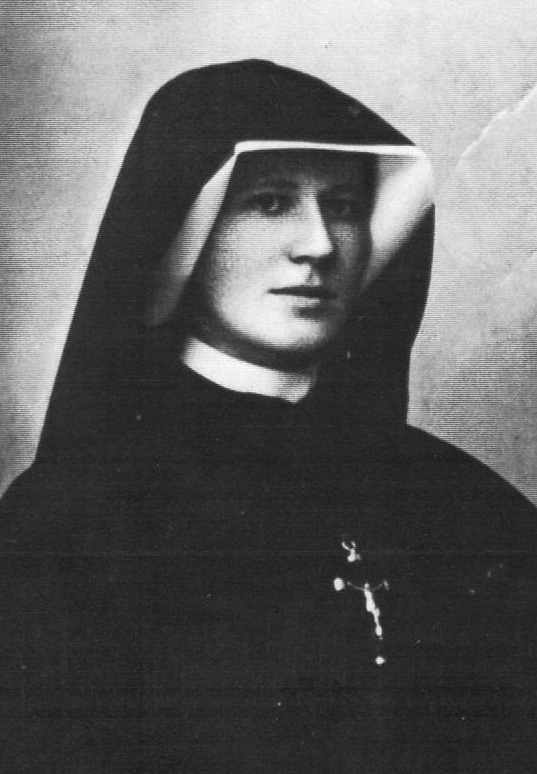
The monastic scullery was heavy with humid steam, the bitter smell of wood ash, and the sharp bite of lye. In the religious life of the 1930s, the sisters of the Congregation of Our Lady of Mercy were divided into two categories: the first choir sisters, who engaged primarily in administrative tasks and directed the rehabilitation of troubled young women, and the second-class coadjutrix sisters, who performed all manual labor. Sister Faustina, the daughter of an impoverished peasant carpenter from Głogowiec, belonged to the second class.
Her routine began before dawn. After morning meditation in the chapel, she entered the kitchen, hauling heavy sacks of potatoes, chopping firewood, and stirring massive iron pots designed to feed dozens of sisters and boarding students. While she possessed an iron interior will, her physical body was already deteriorating. Tuberculosis, the silent respiratory scourge that would claim her life at age thirty-three, was gradually weakening her lungs and depleting her physical reserves.
On this particular afternoon, the kitchen assignment called for boiling a massive cauldron of potatoes. The cauldron was cast iron, holding several gallons of boiling water and dense root vegetables. To prepare dinner, the boiling water had to be drained off while retaining the scalding potatoes inside. Faustina gripped the heavy iron handles with rough dishcloths, attempting to tip the vessel over the drainage sink. Her wrists gave way, her breath caught in her chest, and the pot settled back heavily onto the cast-iron stove. The physical task was entirely beyond her strength.
2. Archival Record: The Weight That Turned into Roses
Humiliated by her physical inability and fearful of incurring reprimands from the senior kitchen sisters for delaying the monastic meal, Faustina stepped back into the pantry corner. In tears, she turned her heart directly to God. She did not ask for public acclaim or relief from vows; she simply asked for the physical strength to fulfill her assigned obedience.
In entry 25 and entry 65 of her Diary, Faustina documented the startling event that followed her quiet plea:
The nut graph of this miracle cuts through sentimentality. Christ did not eliminate Faustina’s kitchen assignment, nor did He transfer her to an easier office. The next morning, she returned to the exact same kitchen flagstones, peeling potatoes and hauling firewood. The miracle of the roses was not an escape from reality; it was an ocular revelation of how God views obedience performed without grumbling.
3. Theological Depth: The Sanctification of Drudgery
In modern career culture, dignity is closely associated with status, compensation, and public visibility. Manual labor, domestic maintenance, and administrative routines are often perceived as wasted time. Yet the mystical tradition of the Church, exemplified by Saint Benedict’s rule of Ora et Labora (Prayer and Work) and Brother Lawrence’s practice of the presence of God among pots and pans, insists that God dwells among the humblest utensils.

When Jesus transformed the weight of the potato cauldron, He revealed two fundamental spiritual principles:
First, the supernatural weight of obedience: In Diary entry 65, Christ explained that actions performed out of self-will, even if grand in human estimation, possess little merit before heaven. Conversely, the smallest duty performed under obedience becomes an act of intense worship:
Second, the preservation of humility: Had Faustina been elevated immediately to a public teacher or mystic, pride could have crept in. By keeping her assigned to peeling potatoes, scrubbing latrines, and answering the convent door, Divine Providence shielded her from spiritual vanity. As we explored in our investigative analysis of the cell in Płock, it was precisely an unlettered kitchen nun that Christ selected to transmit the message of Divine Mercy to the modern world.
4. Discernment: Practical Lessons for Daily Work
For modern readers navigating demanding workplaces, domestic responsibilities, or caregiving routines, Faustina’s potato cauldron offers three clear, actionable disciplines:
1. Consecrate the routine: Before opening an email inbox, washing dishes, or stepping onto a construction site, make a deliberate interior offering. Silently say: “Lord, I offer this hour of work for the conversion of sinners and the relief of suffering souls.” That single intention converts mundane effort into spiritual gold.
2. Reject grumbling: Complaining drains spiritual energy and closes the soul to grace. When a task feels burdensome, resist the urge to vocalize resentment. Instead, remember the cauldron in Warsaw and ask for the grace to carry the load with quiet cheerfulness.
3. Trust divine assistance in weakness: God does not demand that we possess infinite human energy; He asks only that we acknowledge our limits and ask for His strength. When exhaustion threatens to overwhelm, turn to Christ with the simplicity of Faustina: “Jesus, I trust in You.”
5. Institutional Bibliography & Transparency
This investigation draws upon the primary Polish critical edition of Saint Faustina Kowalska’s spiritual writings and historical monastic registers:
- Kowalska, Maria Faustina. Diary: Divine Mercy in My Soul. Stockbridge, MA: Marian Press, 2003. Paragraphs 25, 42, 65, 1312.
- Chmielewski, Czesław. Sister Faustina’s Monastic Path: Historical Realities of the Congregation of Our Lady of Mercy (1925–1938). Kraków: Wydawnictwo Apostolstwa Modlitwy, 1998.
- Sopoćko, Michał. Memoirs and Theological Notes on Sister Faustina Kowalska. Białystok Archdiocesan Archives, 1962.
- Vatican Congregation for the Causes of Saints. Positio Super Virtutibus: Maria Faustina Kowalska. Rome: Typis Polyglottis Vaticanis, 1992.