
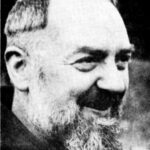

In April 1920, the founder of Milan’s Catholic University of the Sacred Heart, Father Agostino Gemelli, arrived unannounced at San Giovanni Rotondo. His brief encounter with Padre Pio ignited the most damaging ecclesiastical conflict of the twentieth century.
Key Findings & Archival Record
- The Inquisitor: Father Agostino Gemelli, O.F.M. (1878–1959), medical doctor, experimental psychologist, founder of Milan’s Catholic University, and trusted consultant to the Holy Office.
- The Jurisdictional Standoff: Gemelli traveled to Mount Gargano claiming a private visit, but immediately demanded a formal clinical examination of the stigmata without written authorization from the Holy Office.
- The Friar’s Refusal: Strictly obeying Capuchin superiors and canon law, Padre Pio refused to remove his gloves: “Show me the written decree from the Holy Office, and I will gladly strip myself naked.”
- The Retaliatory Dossier: Furious at being rebuffed, Gemelli returned to Rome and submitted a scathing psychiatric brief branding Pio as a “hysterical, self-mutilating psychopath,” initiating a twenty-year Vatican freeze.
1. Scene Lede: The Clash of the Two Franciscans
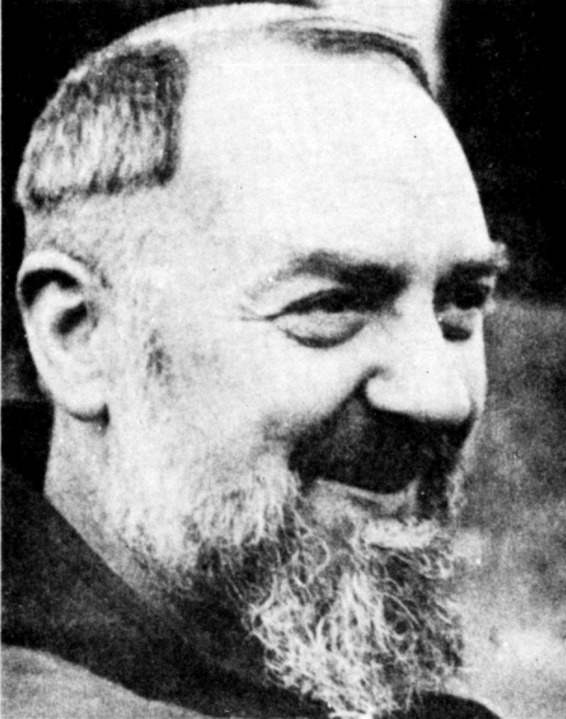
On the morning of April 18, 1920, an automobile carrying Father Agostino Gemelli ground to a halt outside the friary of Our Lady of Grace. Gemelli was one of the most powerful and brilliant intellectuals in Catholic Europe: a former Marxist physician converted to the Franciscan order who combined rigorous laboratory science with deep institutional influence in Rome.
Gemelli had come to debunk what he viewed as peasant superstition embarrassing the Church in the modern age. Entering the friary parlor, Gemelli met thirty-two-year-old Padre Pio. After brief pleasantries, Gemelli announced his intention: he had come to examine the stigmata with clinical instruments.
Padre Pio looked at him calmly and asked whether he possessed written credentials from the Supreme Sacred Congregation of the Holy Office. Gemelli confessed that he did not, asserting that his personal reputation and academic standing were sufficient.
Padre Pio folded his bandaged hands into his sleeves and shook his head:
“Father, without a written order from the Holy Office, my superiors have strictly forbidden me under holy obedience to show my wounds to anyone. Bring me the decree from Rome, and I will strip off my habit at once.” (Ruffin, Ch. XV)
2. Archival Record: The Psychological Smear
Gemelli felt humiliated. A world-famous university rector and papal advisor had been dismissed by an uneducated southern friar. Departing in fury without ever having inspected the physical lesions, Gemelli returned to Rome and composed an official psychological memorandum for the Holy Office.
Although he had never laid a finger on the wounds, Gemelli asserted with clinical authority:
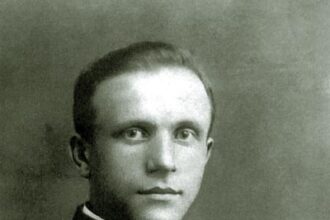
“Padre Pio is a man of limited intelligence, neurotic, narcissistic, and suffering from acute religious hysteria. The lesions are self-inflicted through caustic chemicals, sustained by subconscious autosuggestion and exploited by greedy friars.” — Father Agostino Gemelli, Report to the Holy Office, 1920
Because of Gemelli’s immense prestige in Roman dicasteries, his report became the primary foundation for the subsequent hostile decrees issued by the Holy Office over the next decade.
3. The Irony of Forensic Rebuttal
The tragedy of Gemelli’s audit was its total disregard for objective empirical method. Where secular physicians such as Dr. Luigi Romanelli and Dr. Amico Bignami spent weeks conducting physical trials, occlusive bandage tests, and surgical measurements, Gemelli spent less than thirty minutes in conversation before producing a definitive psychiatric verdict.
Years later, secular Italian doctors openly mocked Gemelli’s diagnosis, pointing out that “hysterical autosuggestion” had never once in human history produced five open, arterial, symmetrical punctures that bled continuously for half a century without developing gangrene or scarring.
4. Spiritual Discernment: Obedience Above Reputation
Padre Pio knew that refusing Gemelli would trigger an avalanche of Roman hostility. Yet he chose holy obedience over personal vindication. He did not compromise canon law to flatter an influential prelate. For believers navigating workplace politics, ecclesiastical friction, or unfair accusations, Pio’s posture remains luminous: perform your duty in silence, obey legitimate authority, and leave your defense entirely in the hands of Divine Providence.
Archival Bibliography & Primary Sources
- Ruffin, C. Bernard. Padre Pio: The True Story. Our Sunday Visitor, 1982/1991 (Chapter XV: ‘The Raging Tempest’).
- Congregation for the Doctrine of the Faith. Relazione Gemelli su Padre Pio da Pietrelcina. Archivio Segreto Vaticano, 1920.
- Carty, Rev. Charles Mortimer. Padre Pio the Stigmatist. Radio Replies Press, 1951.
- Zavala, José María. Padre Pío. LibrosLibres, 2010.
Continue the investigation: Read the next chapter in the series: Quarter 1 Retrospective: The Anatomy of the Stigmata →