
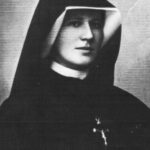
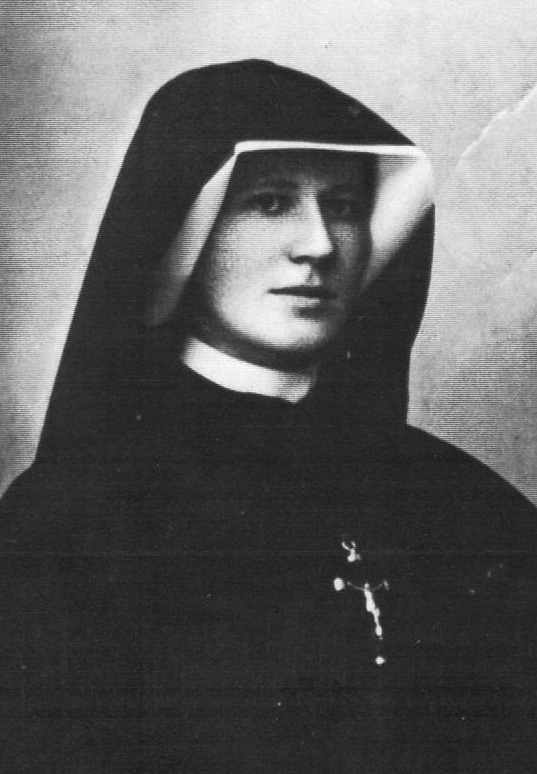

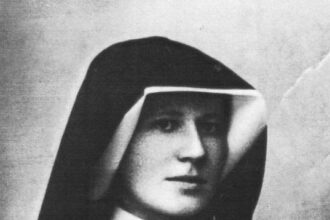
When Sister Maria Faustina Kowalska died in total obscurity in 1938, her convent obituary was a single brief paragraph. Today, nearly a century later, her writings have reached over one billion believers, her image hangs in cathedrals from Seoul to São Paulo, and her message has defined modern Catholic history.
Key Findings & Archival Record
- The Journey: From an impoverished limestone hut in Głogowiec to the altars of Saint Peter’s Basilica in Rome.
- The Monumental Output: 1,828 numbered diary entries written in pencil and fountain pen, surviving Nazi raids, Soviet purges, and a 20-year Vatican prohibition.
- The Canonization: Proclaimed the First Saint of the Great Jubilee 2000 by Pope John Paul II on April 30, 2000.
- The Enduring Message: God’s mercy is the only power capable of putting a limit on human evil and despair.
1. Scene Lede: Saint Peter’s Square, April 30, 2000
On April 30, 2000, under a brilliant Italian spring sun, Saint Peter’s Square was packed with hundreds of thousands of pilgrims. Pope John Paul II, frail and battling Parkinson’s disease, stepped to the microphone to proclaim the first saint of the third millennium.
His voice rang out across Rome: “By this act I intend today to pass on this message to the third millennium. I pass it on to all people, so that they will learn to know ever more fully the true face of God and the true face of man.”
“Sister Faustina wrote in her final notebook entry: ‘O Jesus, make my heart like unto Yours, or rather transform it into Your own, that I may sense the needs of other hearts, especially those who are sorrowful and suffering.’ (Diary, 1828)”
2. Archival Record: The Defeat of Obscurity
Consider the complete triumph of Divine Providence: totalitarian regimes tried to bury her; academic skeptics tried to dismiss her; Rome itself banned her writings for two decades. Yet today, every Easter Octave is celebrated as Divine Mercy Sunday across the universal Church.
The uneducated peasant nun who was laughed at when she picked up a paintbrush proved that God’s foolishness is wiser than human wisdom, and God’s weakness is stronger than human strength.
3. Spiritual Discernment: Jesus, I Trust in You
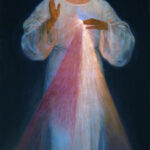
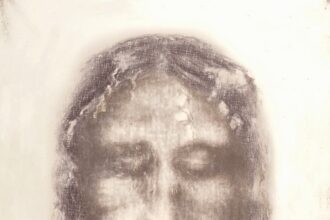
The entire spiritual legacy of Saint Faustina can be distilled into five simple syllables inscribed beneath the image: Jesus, I trust in You.
When the doctor gives bad news; when bills pile up; when guilt attacks your conscience; when the world around you seems to descend into chaos: look upon His face, breathe deeply, and say those five words. In them lies the victory that overcomes the world.
Institutional Bibliography & Primary Sources
- Kowalska, St. Maria Faustina. Diary: Divine Mercy in My Soul. Stockbridge, MA: Marian Press, 2005. (Final entry 1828).
- John Paul II, Pope. Homily at the Canonization of Saint Faustina Kowalska, Vatican, April 30, 2000.
- Różycki, Rev. Ignacy. The Essential Features of the Divine Mercy Devotion. Rome, 1979.