
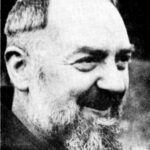
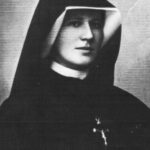

In October 1919, Dr. Giorgio Festa, a prominent surgeon in private practice in Rome, was commissioned by the Capuchin Minister General to conduct an independent anatomical audit. His meticulous surgical measurements provided the definitive clinical documentation of Padre Pio’s thoracic wound.
Key Findings & Archival Record
- Medical Examiner: Dr. Giorgio Festa (d. 1940), former surgeon of the Fatebenefratelli Hospital in Rome and member of the Royal Italian Medical Academy.
- The Thoracic Lesion: Located in the left fifth intercostal space, measuring seven centimeters in length and three centimeters in width, shaped in the form of a cruciform transverse cut.
- Hemorrhagic Enigma: The thoracic wound discharged between 150 and 200 milliliters of arterial blood every twenty-four hours without producing clinical anemia or hematological collapse.
- Forensic Olfactory Discovery: Festa became the first clinical examiner to formally document the persistent, sweet fragrance of violets, roses, and lilies emanating from the blood-soaked linens.
1. Scene Lede: The Scalpel and the Linen Handkerchief
Dr. Giorgio Festa entered the cell of Padre Pio on October 28, 1919, carrying surgical probes, sterile linen compresses, and calipers. While previous examiners had focused primarily on the hands, Festa directed his surgical eye to the mysterious wound of the chest wall.
Lifting the coarse woolen habit, Festa observed the left thorax. In the fifth intercostal space directly over the heart, he found an incision shaped like an inverted cross. At nine o’clock that evening, Festa placed a clean, starched white handkerchief directly against the lesion, bandaged the chest, and waited ten hours.
At seven o’clock the following morning, Festa removed the dressing. What he found astonished him:
“The handkerchief was saturated completely with fresh arterial blood and serous fluid, as was a second cloth Padre Pio had placed above it during the night… The quantity was enormous, yet the friar’s pulse was strong, regular, and without the slightest sign of circulatory shock.” (Dr. Giorgio Festa, Clinical Memoir, 1919)
2. Archival Record: The Paradox of Vital Hemodynamics
In standard surgical pathology, a daily chronic blood loss of nearly a cup of blood over weeks produces severe iron deficiency anemia, hypotension, pallor, and progressive physical collapse. Padre Pio, however, maintained an energetic schedule, rising at 3:30 AM, hearing confessions for hours, and celebrating Mass with robust vocal tone.
Festa noted that Pio’s arterial pressure remained stable at 125/75 mmHg, his mucous membranes were well-perfumed, and his red blood cell counts showed zero evidence of chronic hemolytic exhaustion. Festa wrote:
“Padre Pio loses blood continuously from five wounds, yet he generates blood with equal speed without receiving extra nourishment. He eats less than an infant, yet his vascular system maintains an inexplicable hemodynamic equilibrium.” — Dr. Giorgio Festa
3. The Discovery of the Odor of Sanctity
During his 1920 follow-up audit, Dr. Festa encountered the phenomenon that would become legendary: the *odor of sanctity* (*osmogenia*). Blood and decaying serum inevitably smell of iron and decomposing proteins. Yet when Festa examined the cloths removed from Pio’s side, he was struck by an intense, sweet fragrance:
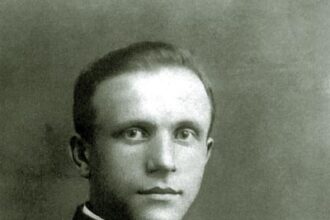
“The fragrance was unmistakable: fresh violets, lilies, and sweet almonds. It was not a volatile artificial perfume; it lingered on my hands, my instruments, and inside my medical bag for weeks after returning to Rome.” (Festa, Misteri di Scienza, 1938)
Festa took a piece of the blood-stained gauze back to Rome in a sealed glass tube. Colleagues at the Roman Surgical Clinic who were unaware of its origin remarked immediately upon opening the drawer: “Who spilled perfume in the surgical laboratory?”
4. Spiritual Discernment: The Scent of the Wounded Savior
Dr. Festa’s surgical audit demonstrated that the stigmata was not a grotesque deformity, but a sacred reality. The sweet perfume emanating from arterial wounds was a sensory signpost pointing beyond physical biology. For Christians facing chronic pain or spiritual darkness, Festa’s findings affirm that when suffering is embraced in union with God, it loses its stench of decay and is transformed into a fragrant offering of grace.
Archival Bibliography & Primary Sources
- Festa, Dr. Giorgio. Misteri di Scienza e Luci di Fede: Le Stimmate di Padre Pio da Pietrelcina. Rome: Ferri, 1938.
- Ruffin, C. Bernard. Padre Pio: The True Story. Our Sunday Visitor, 1982/1991 (Chapter XII: ‘Holiness or Hysteria?’).
- Carty, Rev. Charles Mortimer. Padre Pio the Stigmatist. Radio Replies Press, 1951 (Chapter XI).
- da Pobladura, Melchiorre, ed. Epistolario I. San Giovanni Rotondo, 1984.
Continue the investigation: Read the next chapter in the series: The Perfume of the Gargano: Chemical Hyperosmia and the Odor of Violets →