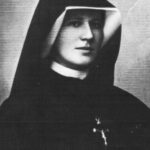
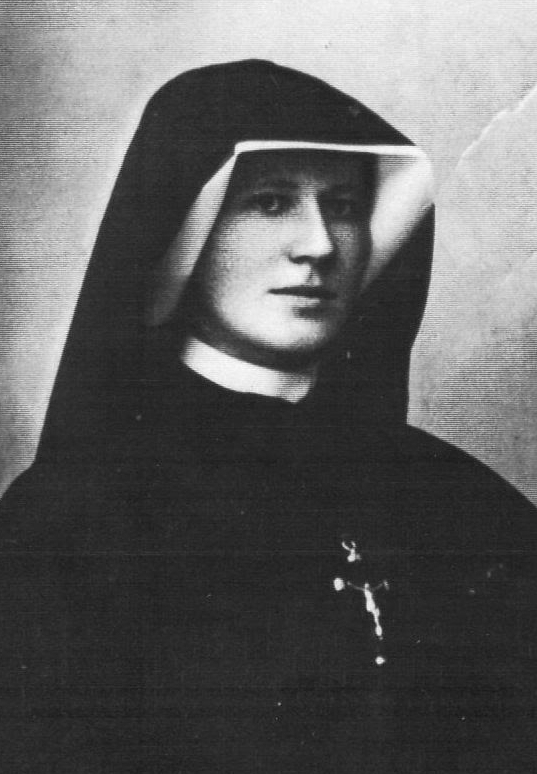

Few readers of the 1,828 numbered entries of Divine Mercy in My Soul know that the original manuscript was burned to ashes in a convent stove in 1934. Tricked by an evil spirit posing as an angel, Faustina cast her notebooks into the fire, only to be commanded by her confessor to rewrite every word under holy obedience.
Key Findings & Archival Record
- The Incident (July 1934): While Father Sopoćko was away from Vilnius, a spirit appeared to Faustina disguised as an angel of light, commanding her to burn the diary to avoid vanity.
- The Destruction: Believing she was practicing humility, Faustina threw the entire first notebook into the stove, reducing hundreds of handwritten pages to ash.
- The Confessor’s Reaction: Upon his return, Father Sopoćko was horrified; he commanded her under holy obedience to reconstruct the entire work from memory.
- The Consequence: The current “Notebook I” is that very reconstruction, explaining why early entries jump chronologically between 1924 and 1934.
1. Scene Lede: Smoke in the Vilnius Stove
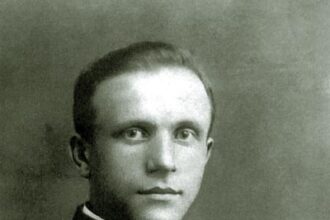
In late July 1934, Father Michał Sopoćko departed Vilnius for several weeks on academic business. In his absence, Sister Faustina continued writing down her spiritual notes as he had instructed her under obedience.
One evening, a radiant apparition appeared in her cell. The spirit bore the serene countenance of an angel and spoke with apparent piety: “Burn these pages. What you are writing is born of vanity; it will only bring ridicule upon the Church and pride to your soul. Burn them immediately.”
Thinking she was performing a heroic act of monastic humility, Faustina took the thick manuscript down to the convent kitchen stove, fed the handwritten pages into the flames, and watched the words turn to ash.
“When Father returned to Vilnius, I told him what I had done. He told me: ‘You have done wrong; you were deceived by an evil spirit. Now, under holy obedience, you must rewrite everything that was destroyed.'”
2. Archival Record: The Agony of the Reconstruction
Father Sopoćko’s demand was a monumental penance. Faustina had to sit for hours in her cold room, after long days of manual labor, racking her memory to reconstruct years of mystical locutions, visions, and prayers.
On July 28, 1934, she began writing on a fresh blank sheet of paper: “Vilnius, July 28, 1934. + First Notebook. Be adored, O Most Holy Trinity, now and for all time… I am to write down the encounters of my soul with You, O God… I have received this order through him who is for me Your representative here on earth.” (Diary, 5–6).
This explains the unique literary structure of the published *Diary*: Notebook I contains retrospective accounts of her childhood, the dance vision of 1924, and the Płock apparitions of 1931, interspersed with real-time reflections from 1934.
3. Spiritual Discernment: The Deceit of False Humility
The burning of the diary reveals one of Satan’s most insidious strategies: counterfeiting virtue. The devil could not tempt Faustina with worldly ambition or greed; instead, he tempted her with false humility.
True humility does not mean destroying the mission God entrusted to you; true humility means submitting to legitimate spiritual authority even when the assignment feels overwhelming.
Institutional Bibliography & Primary Sources
- Kowalska, St. Maria Faustina. Diary: Divine Mercy in My Soul. Stockbridge, MA: Marian Press, 2005. (Entries 5–6, 583).
- Sopoćko, Blessed Michał. Memoirs of Sister Faustina. Archdiocesan Archives, MS 1948.