
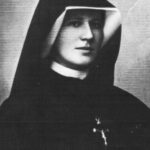

Among the thousands of pilgrims drawn to Mount Gargano in the 1920s, none left a more permanent material imprint than Adelia Maria Pyle: a wealthy Presbyterian socialite from New York City who gave up her fortune to become Padre Pio’s spiritual daughter.
Key Findings & Archival Record
- The Heiress: Adelia Maria “Mary” Pyle (1888–1968), daughter of James Tolman Pyle, wealthy manufacturer of Pearline soap in New York; companion to educational reformer Maria Montessori.
- The Conversion (1923): Traveled to San Giovanni Rotondo out of curiosity; met Padre Pio in the sacristy; converted to Catholicism; received conditional baptism; and took the Third Order Franciscan habit.
- The Philanthropic Engine: Pyle used her inheritance to build a large pink stone villa near the convent, providing free lodging for poor pilgrims, and funded the construction of the new Capuchin seminary and local roads.
- Lifelong Ministry: Served as the convent organist, translator for English-speaking pilgrims, and trusted confidante to Padre Pio for forty-five years until her death in April 1968.
1. Scene Lede: From Fifth Avenue to Mount Gargano
In October 1923, an elegant American woman in fashionable Parisian attire climbed out of a horse-drawn carriage in front of the dusty Capuchin friary. Mary Pyle had grown up in the elite salons of New York City and Europe. Educated in fine arts, fluent in four languages, and heir to a soap manufacturing empire, Mary had spent years searching for spiritual peace across philosophy, theosophy, and Protestantism.
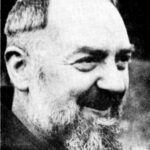
While traveling through Italy with Dr. Maria Montessori, friends urged her to visit an extraordinary friar in the southern mountains. Mary agreed, expecting to see a curious ascetic. But the moment Padre Pio walked out of the sacristy and fixed his gaze upon her, her worldly defenses melted.
He smiled warmly and addressed her in Italian:
“Mary, Mary! You have traveled a long road, but you have finally arrived home.” (Ruffin, Ch. XIX)
Mary knelt on the stone floor, weeping tears of profound relief. She made the decision that stunned high society in New York: she would never return to Fifth Avenue. She would spend the rest of her life on Mount Gargano.
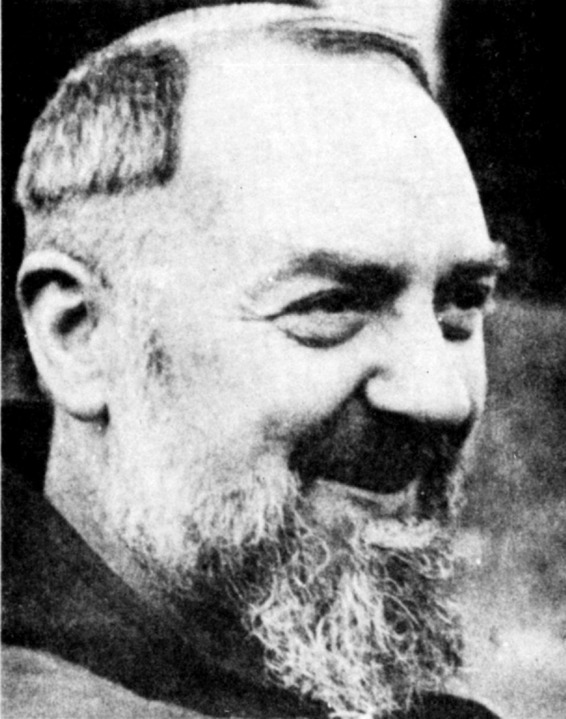
2. Archival Record: The Brown Habit and the Pink Villa
Mary Pyle embraced the spirituality of Saint Francis with total commitment. Discarding her silk gowns, she clothed herself in a simple brown wool tunic with a white cord of the Secular Franciscan Order. She had her long hair cut short and lived with the austerity of a monastic sister.
Yet her inheritance remained a powerful tool of charity. Seeing that poor pilgrims from distant provinces slept in fields and cold alleys because San Giovanni had no hotels, Mary purchased land at the foot of the friary hill and constructed a large, two-story pink stone villa.
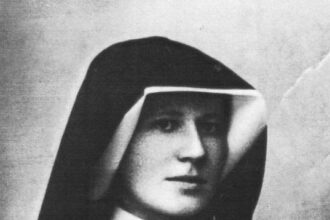
The house became an open hospice. Any traveler who came to see Padre Pio was welcomed with a warm bed, hot soup, and medical attention, completely free of charge. Padre Pio affectionately called her house *”the inn of the good Samaritan.”*
“Mary Pyle was the mother of the mountain. She spent millions of lire paving roads, building the seminary in Pietrelcina, and feeding starving families during the dark years of the Second World War.” — Carty, Ch. I
3. The Passing of a Spiritual Daughter (April 1968)
For forty-five years, Mary played the harmonium at Padre Pio’s daily Masses. When Allied soldiers flooded Southern Italy in 1944, Mary served as translator and hostess, introducing thousands of young American, British, and Canadian airmen to the stigmatist.
In April 1968, eighty-year-old Mary suffered a series of strokes and was admitted to Padre Pio’s hospital, Casa Sollievo della Sofferenza. When friars asked the elderly Padre Pio if he wished to visit her sickbed, Pio closed his eyes and whispered:
“No, I am praying to the Lord to take her home to Heaven with the angels… She will go ahead of me, and soon we will meet again in Paradise.” (Ruffin, Ch. XXVI)
Mary Pyle died peacefully on April 26, 1968. Exactly five months later, Padre Pio followed her into eternity.
4. Spiritual Discernment: Wealth Consecrated to Grace
Mary Pyle’s life provides modern Christians with a compelling model of stewardship. Wealth is neither inherently evil nor an absolute good; it is a moral tool. Mary Pyle did not allow her fortune to isolate her in luxury; she liquidated her earthly empire to build the kingdom of God. Her legacy affirms that when resources are placed unconditionally at the feet of Christ, they yield an eternal harvest.
Archival Bibliography & Primary Sources
- Ruffin, C. Bernard. Padre Pio: The True Story. Our Sunday Visitor, 1982/1991 (Chapters XIX & XXVI).
- Pyle, Mary. Un’americana a San Giovanni Rotondo: Memorie di Mary Pyle. Edizioni Padre Pio, 1972.
- Carty, Rev. Charles Mortimer. Padre Pio the Stigmatist. Radio Replies Press, 1951.
- Zavala, José María. Padre Pío. LibrosLibres, 2010.
Continue the investigation: Read the next chapter in the series: Sixteen Hours in the Oak Box: The Daily Routine of a Confessor →