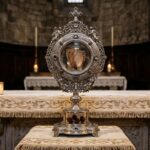
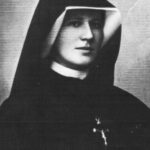
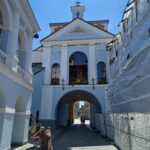
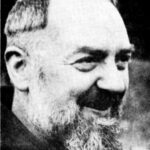

On Friday morning, September 20, 1918, the choir loft of the rustic church of Our Lady of Grace became the epicenter of twentieth-century religious history. Collapsed before a seventeenth-century wooden crucifix, Padre Pio received the five open bleeding wounds of Christ.
Key Findings & Archival Record
- Date & Time: Friday, September 20, 1918, between 9:00 AM and 10:00 AM during post-Mass thanksgiving in the upper choir loft.
- The Vision: A blood-dripping celestial figure appeared above the altar rails, casting luminous rays into Pio’s palms, feet, and left flank.
- Anatomical Nature: Symmetrical, transfixing punctures roughly two centimeters in diameter passing completely through the palms; identical punctures through the feet; deep transverse cut in the left thorax.
- Fifty-Year Duration: The lesions bled approximately one cup of fresh blood every twenty-four hours for half a century without infection, suppuration, or cicatrization until vanishing at death.
1. Scene Lede: The Blood on the Wooden Floor
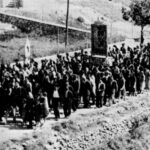
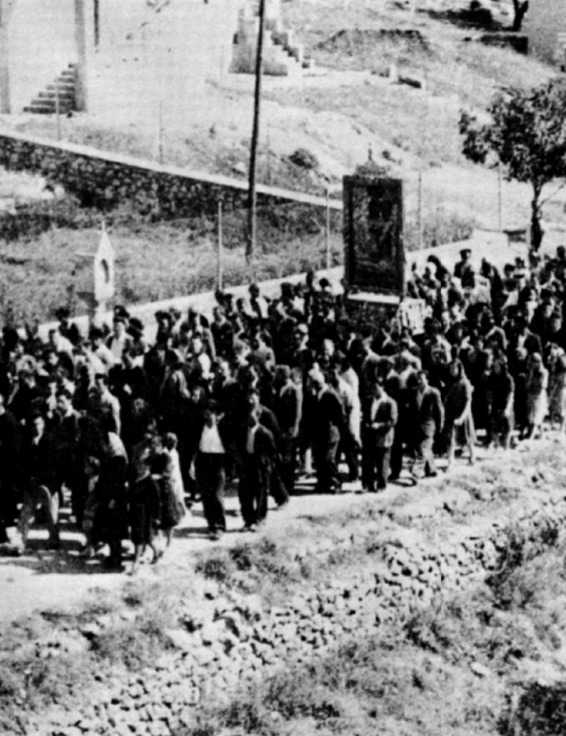
The townspeople of San Giovanni Rotondo had walked down the stony path after early morning Mass. In the high choir loft above the main entrance, thirty-one-year-old Padre Pio knelt alone in the wooden choir stalls, making his thanksgiving before a carved cypress-wood crucifix dating from the seventeenth century.
Without warning, a terrifying supernatural presence filled the upper sanctuary. Writing to Father Benedetto on October 22, 1918, under the strict command of religious obedience, Pio recorded the moments of physical trauma:
“I was in the choir making my thanksgiving after Mass when suddenly a great trembling overtook me… I saw before me a mysterious personage whose hands, feet, and side were dripping with blood. The sight terrified me… When he disappeared, I realized that my hands, feet, and side were pierced and pouring out blood.” (Epistolario I, 1092)
2. Archival Record: The Agony of Secrecy
Padre Pio’s immediate reaction was not triumphalism, but acute embarrassment and shame. He dragged himself across the choir floorboards, leaving streaks of blood on the wood. Reaching his cell, he bound his hands and feet with cotton cloths and prayed desperately that God would take away the visible marks:
“Lord, I accept the suffering, I accept the pain, but take away these visible signs! They cause me an indescribable, unbearable confusion.” — Letter to Father Benedetto, 1918
His fellow friars quickly noticed the blood soaking through his sleeves and sandals. When his superior Padre Paolino da Casacalenda demanded to see his hands, Pio wept bitterly as he pulled off the bandages. Paolino saw clean, circular lesions that seemed to pierce right through the palms, covered by reddish-brown crusts that oozed fresh arterial blood.
3. The Biological Paradox
Pathologists would spend decades marveling at the biological paradox of September 20, 1918. An open wound in the humid Mediterranean climate of Puglia, wrapped in coarse wool and exposed to dust, should have developed bacterial infection within forty-eight hours. Within a week, gangrene would normally follow.
Yet for fifty years, Pio’s wounds never showed a trace of pus, swelling, or necrosis. The skin surrounding the lesions remained pale and healthy, while the wounds emitted the distinct fragrance of fresh violets and roses. It was a biological impossibility: a living, open wound that defied every known law of cellular decay.

Archival Bibliography & Primary Sources
- Ruffin, C. Bernard. Padre Pio: The True Story. Our Sunday Visitor, 1982/1991 (Chapter XI: ‘The Stigmata’).
- da Pobladura, Melchiorre, ed. Epistolario I. San Giovanni Rotondo, 1984 (Letter 1092).
- Carty, Rev. Charles Mortimer. Padre Pio the Stigmatist. Radio Replies Press, 1951 (Chapter XI).
- Zavala, José María. Padre Pío. LibrosLibres, 2010 (Capítulo IV).
Continue the investigation: Read the next chapter in the series: The First Scalpel: Dr. Luigi Romanelli’s Clinical Report (May 1919) →