
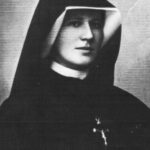

At 10:45 on the chilly autumn night of Wednesday, October 5, 1938, inside the modest infirmary cell of the convent of Our Lady of Mercy in Kraków-Łagiewniki, Poland, thirty-three-year-old Sister Maria Faustina Kowalska drew her final labored breath. She died as she had lived: completely unnoticed by the outside world, without material wealth, without titles, and having published not a single line of print. Her fellow sisters gently washed her emaciated body, wrapped her in the dark wool habit of the second choir, and folded her cold hands around a worn wooden rosary. Yet within that silent cell lay six dense school notebooks containing 1,828 handwritten entries that would soon survive world war, totalitarian censorship, and an official Vatican freeze to conquer the hearts of over one billion believers.
Key Findings & Archival Record
- Date & Time of Death: Wednesday, October 5, 1938, at 10:45 PM; Kraków-Łagiewniki, Poland.
- Physical Cause: Pulmonary and intestinal tuberculosis, compounded by extreme exhaustion and ascetic mortification, at the age of 33 years, 1 month, and 10 days (matching the earthly lifespan of Jesus Christ).
- Final Recorded Words: Turning her gaze to the crucifix and whispering: “My Jesus, mercy…”
- The Archival Legacy: Six notebooks written under holy obedience to Father Michał Sopoćko, left behind in the care of Mother Superior Irene Krzyżanowska, forming the spiritual classic Divine Mercy in My Soul.
1. Scene Lede: The Autumn Night at Łagiewniki
The first days of October 1938 brought cold, drizzling rains to southern Poland. In the convent infirmary at Kraków-Łagiewniki, Sister Faustina had reached the absolute limits of physical endurance. Her lungs were destroyed by tuberculosis, and her intestinal tract was so perforated that she could barely swallow a spoonful of clear broth without excruciating pain. Yet her face, as recorded in the eyewitness memoirs of Sister Amelia Socha and Sister Euphemia Traczyk, radiated an unearthly, luminous peace.
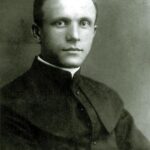
On the morning of October 5, Father Józef Andrasz, SJ—her faithful Kraków confessor who shared spiritual direction with Father Michał Sopoćko—came to her bedside. He heard her final confession and administered the Viaticum (the final Holy Communion). Faustina smiled and whispered: “Father, the Lord Jesus is taking me today.” Andrasz gave her the last blessing and departed.
As evening settled, several sisters gathered around her bed to recite the prayers for the dying and the Chaplet of Divine Mercy. Around 10:00 PM, Faustina whispered to Sister Amelia: “The Lord Jesus is not taking me just yet; you may go and rest, Sisters.” Only the infirmarian, Sister Euphemia, and Sister Amelia remained nearby. At 10:45 PM, Faustina lifted her eyes toward the crucifix on the wall, closed her eyes, and slipped quietly into eternity without a spasm or a gasp.
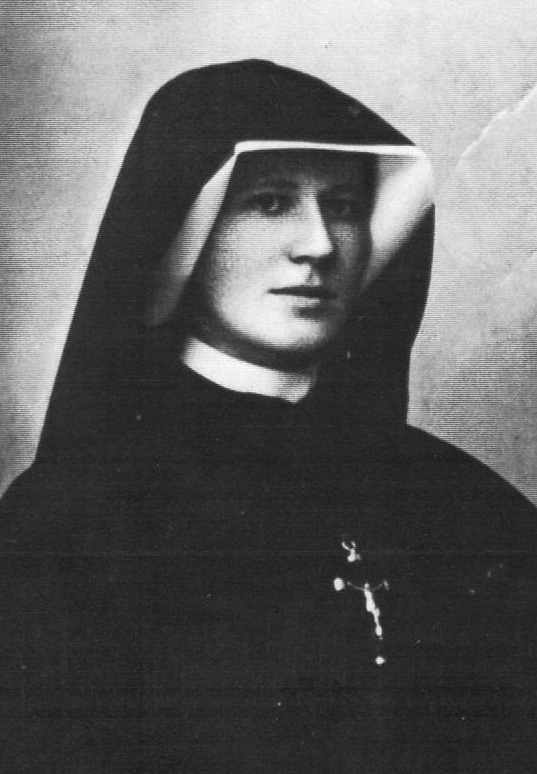
The nut graph of October 5, 1938 exposes the complete inversion of worldly power. When the dictators of the twentieth century died—Hitler in a burning Berlin bunker, Stalin choking in a pool of his own urine in a dacha—they left behind smoking ruins and mass graves. When this penniless thirty-three-year-old peasant nun died in an obscure convent infirmary, she left behind a spiritual empire of hope that would outlive the Reich and the Soviet Union combined.
2. The Archival Funeral: Obscurity Before the Explosion
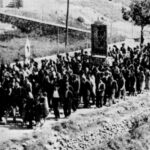
On Friday, October 7, 1938—the Feast of Our Lady of the Rosary—Faustina’s funeral Mass was celebrated in the convent chapel. Only a small group of sisters, a few convent schoolgirls, and local priests attended. Father Sopoćko, detained by his academic duties in Vilnius, could not make the journey to Kraków.
Her plain pine coffin was carried into the convent cemetery in the garden of Łagiewniki and lowered into the wet Polish earth. To all outward appearances, Helen Kowalska—the girl who had fled the ballroom in Łódź and stood weeping before the canvas in Vilnius—had disappeared into monastic oblivion.
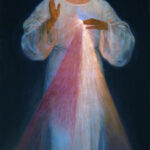
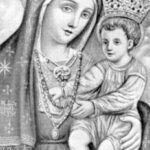
Eleven months later, on September 1, 1939, German panzers smashed across the Polish frontier, igniting World War II. In the catastrophic inferno that followed, as millions of Poles faced the gas chambers of Auschwitz and the mass executions of the Gestapo, the convent at Łagiewniki became an emergency sanctuary of hope. The sisters began sharing copies of Faustina’s handwritten prayers, the 3:00 PM Hour of Mercy, and small reproductions of the Divine Mercy image. In the face of total annihilation, Faustina’s message became Poland’s spiritual armor.
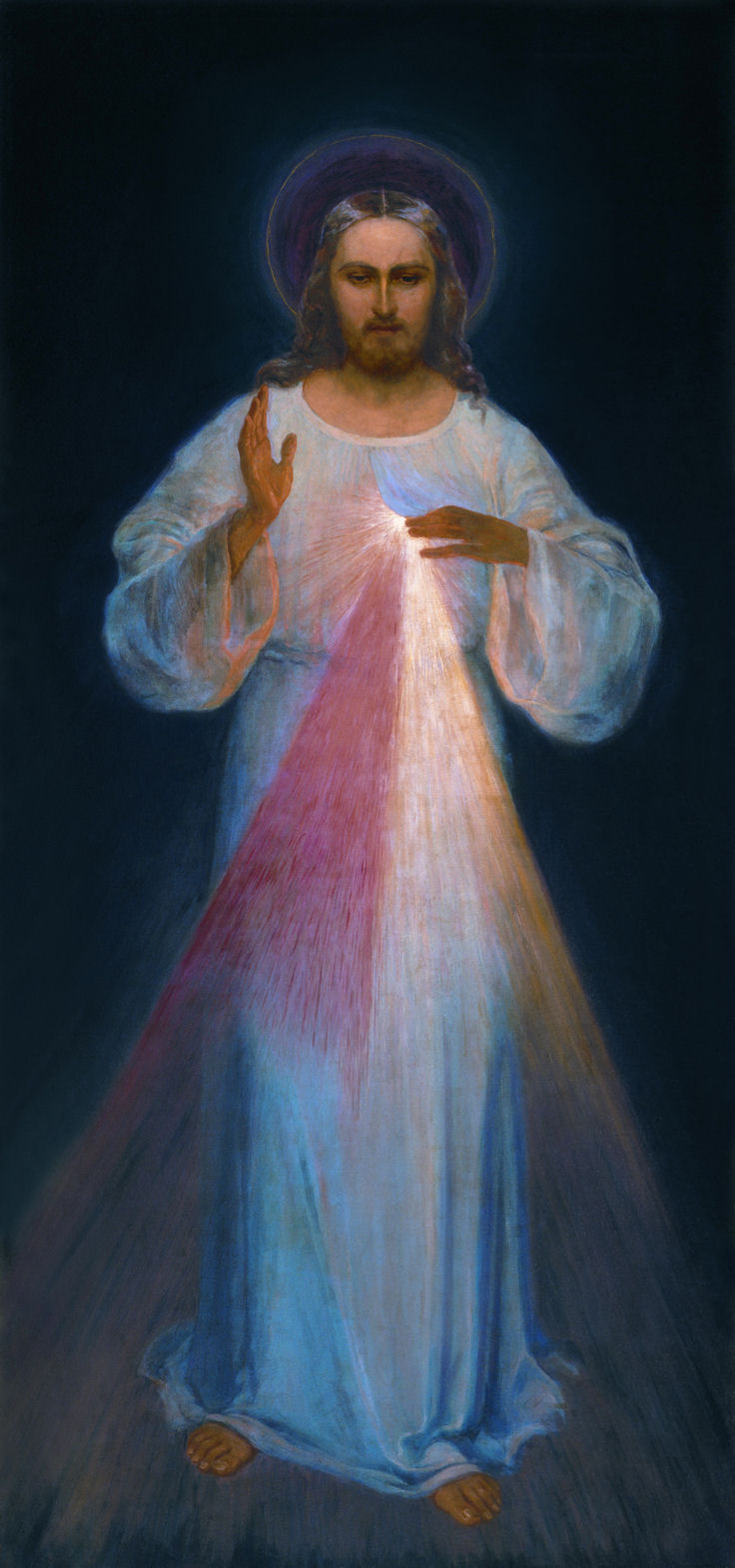
3. The Fulfilled Prophecy: “My Mission Begins at My Death”
In entry 281 of her diary, Faustina had written with absolute, serene certainty about what would happen after her death:
Her words proved astonishingly prophetic. Despite the twenty-year Holy Office freeze between 1959 and 1978, her message emerged triumphant. Today, her diary is translated into more than forty languages, millions of copies circulate globally, and every year on Mercy Sunday, hundreds of millions of faithful across six continents invoke the five words inscribed on the canvas: Jesus, I trust in You.
4. Spiritual Reality & Discernment: The Anatomy of a Fruitful Life
As we conclude this deep-dive investigation into the life, death, and legacy of Saint Faustina Kowalska, her deathbed in Łagiewniki leaves an eternal blueprint for modern seekers.
Three Final Principles of the Life of Grace
1. Earthly Obscurity is No Barrier to Eternal Significance: You do not need political power, massive financial wealth, or social media influence to change history. Faustina was an uneducated kitchen sister; her power lay entirely in her unconditional obedience to God’s will.
2. The Fruitfulness of Suffering: Faustina died at thirty-three, consumed by painful tuberculosis. Yet she offered every cough, every fever, and every sleepless night as redemptive currency for dying souls. When united with the Cross, your personal pain is never wasted.
3. The Final Word is Mercy: In a world that often feels fractured, violent, and unforgiving, Saint Faustina’s dying whisper remains the ultimate beacon: no human misery can exhaust the infinite ocean of God’s mercy. Trust Him, and your soul will never perish.
Institutional Bibliography & Archival Records
Kowalska, Saint Maria Faustina. Diary: Divine Mercy in My Soul. Stockbridge, MA: Marian Press, 2005. Entries 281, 1820–1828.
Krzyżanowska, Mother Irene. Recollections on the Death of Sister Faustina. Kraków Convent Archives, 1946.
Andrasz, Rev. Józef, SJ. Wspomnienia o Siostrze Faustynie Kowalskiej. Kraków: Wydawnictwo Apostolstwa Modlitwy, 1950.
Congregation of the Sisters of Our Lady of Mercy. Official Diary and Cemetery Records of the Łagiewniki Motherhouse (October 1938). Kraków, Poland.