
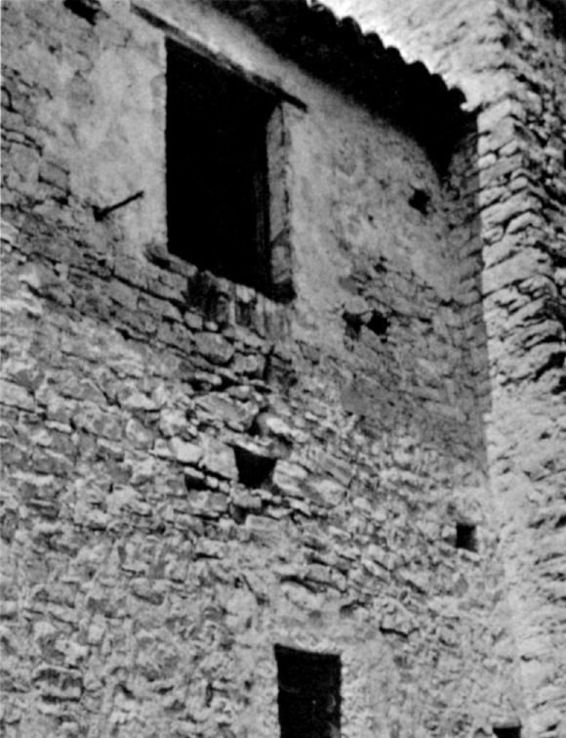

On the winter evening of January 9, 1940, in a cold cell within the friary of San Giovanni Rotondo, Padre Pio emptied his woolen habit pocket onto a small table. Before three distinguished physicians, he laid down a single, solitary French ten-franc gold coin and declared that on the barren limestone ridge above them would rise a world-class temple of medical science and spiritual consolation.
Key Findings & Archival Record
- Inception Date: January 9, 1940, in Cell No. 1 and adjacent consultation room, San Giovanni Rotondo.
- Founding Committee Members: Dr. Guglielmo Sanguinetti (general practitioner), Dr. Mario Sanvico (pharmacist), and Carlo Kisvarday (humanitarian agronomist).
- Initial Capital: Exactly one 10-franc gold coin, donated by an anonymous French pilgrim and handed over by Padre Pio.
- Institutional Mandate: The foundation of the Casa Sollievo della Sofferenza (Home for the Relief of Suffering), designed to synthesize cutting-edge clinical science with complete spiritual care.
To modern healthcare administrators, launching an advanced surgical hospital with a single coin worth less than a few dollars would appear as clinical madness. Yet, to those who understood the ascetic Capuchin, this modest offering represented the seed of a spiritual enterprise destined to defy every economic and geopolitical barrier of wartime Italy.
The Scene Lede: A Cold Cell on the Gargano Ridge
Outside the friary, freezing Adriatic winds swept across the barren karstic plateaus of Mount Gargano. Italy stood on the precipice of World War II, facing acute material scarcity, medical deprivation, and impending national disaster. Inside the monastic enclosure, Dr. Guglielmo Sanguinetti, a former skeptic who had abandoned a lucrative medical practice in Tuscany to live near the stigmatist, sat across from Dr. Mario Sanvico and Carlo Kisvarday.
Padre Pio looked at the small gathering of professionals and reached into the pocket of his rough habit. Withdrawing the small gold piece, he set it firmly upon the wooden surface. As recorded in C. Bernard Ruffin’s historical documentation, the friar spoke with quiet certainty: “My work has begun. This is the first stone.”

The Nut Graph: The Theological Vision of Suffering
Padre Pio refused to view bodily sickness merely as an isolated biochemical failure. For decades, he had witnessed impoverished Southern Italian peasants succumbing to tuberculosis, malaria, and traumatic injuries without access to sterile surgical suites or professional compassion. He insisted that clinical medicine without love degenerated into veterinary mechanics, while charity without modern medical science remained powerless before virulent pathology.
The Casa Sollievo della Sofferenza was conceived not as an ordinary hospice, but as a cathedral of modern medicine. In it, the sick person was to be received not as an administrative case number, but as the person of Jesus Christ Himself. Every doctor and nurse was charged with becoming an instrument of divine consolation, supported by the most advanced radiological, surgical, and diagnostic instruments engineering could provide.
Forensic Evidence & Archival Records: Organizing Amid World War II
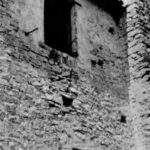
Archival minutes from the early meetings of the hospital committee reveal meticulous organization despite the chaos of wartime Europe. Dr. Sanguinetti drafted the clinical prospectus, while Kisvarday coordinated logistical surveys of the steep, rocky slopes adjacent to the friary. The terrain was notoriously difficult: a solid mass of karstic limestone devoid of municipal water lines, electricity, or paved access roads.
Between 1940 and 1946, as Allied and Axis forces clashed across the Italian peninsula, thousands of spontaneous micro-donations poured into the monastery. Soldiers, postal workers, widows, and overseas emigrants mailed banknotes, postal money orders, and family rings to Padre Pio’s desk. Every lira was scrupulously cataloged without administrative overhead, stored toward the day when construction machinery could finally shatter the mountain rock.

Spiritual Reality & Discernment: The Multiplication of Loaves
When critics protested that launching a multi-million dollar medical complex in an isolated mountain village during wartime was financial suicide, Padre Pio responded with unshakable supernatural realism. He reminded his spiritual children that Divine Providence does not calculate according to human actuarial tables:
“If it were my work, it would have died at its birth. But because it is God’s work, neither poverty nor war nor human malice will ever prevent it from rising.”
This single coin ignited a global philanthropic movement. The little hospital committee laid the groundwork for an international relief campaign that would soon capture the attention of post-war reconstruction leaders across the Atlantic, demonstrating that authentic faith produces tangible, structural compassion.

Institutional Bibliography & Primary Sources
The historical facts surrounding the January 9, 1940 committee and the founding of the hospital are established by primary documentation:
- Ruffin, C. Bernard. Padre Pio: The True Story. Our Sunday Visitor, 1991, Chapter XXIII: “The Clinic of Bodies and Souls.”
- Carty, Rev. Charles Mortimer. Padre Pio the Stigmatist. TAN Books / Radio Replies Press, 1952, Chapter XII: “The Home for the Relief of Suffering.”
- Sanguinetti, Dr. Guglielmo. Memorie sulla fondazione della Casa Sollievo della Sofferenza. Friary Archives, San Giovanni Rotondo.
- Zavala, José María. Padre Pío: Los milagros desconocidos del santo de los estigmas. LibrosLibres, 2010.
Continue reading our 52-week archival investigation: explore how an influential British economist and post-war international agencies secured vital capital in our next installment: Part 28: The Postwar Miracle: Barbara Ward, Fiorello LaGuardia, and UNRRA Funds.