

In the silent early morning hours of Monday, September 23, 1968, inside Cell No. 1 of the Capuchin friary, an eighty-one-year-old mystic fought his final battle for breath. Surrounded by his attending physician Dr. Giuseppe Sala, his personal assistant Father Pellegrino Funicelli, and his religious brothers, Padre Pio whispered two sacred names over and over into the night: ‘Gesù, Maria… Gesù, Maria.’ At exactly 2:30 AM, he gently inclined his head and expired.
Key Findings & Archival Record
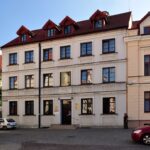
- Time of Transit: 2:30 AM on September 23, 1968, in Cell No. 1, Friary of Our Lady of Grace, San Giovanni Rotondo.
- Eyewitnesses Present: Father Pellegrino Funicelli (personal assistant), Father Carmelo (provincial superior), Dr. Giuseppe Sala (physician), Dr. Giovanni Gusso, and nursing brothers.
- Sacramental Preparation: Sacramental confession renewed, Anointing of the Sick administered, and plenary indulgence imparted.
- Last Words: Repeated with growing softness until his final breath: “Gesù, Maria… Gesù, Maria…”
The death of a saint is never an ordinary medical event; it is the culmination of a lifelong transfiguration. The eyewitness records preserved by Father Pellegrino Funicelli provide a minute-by-minute account of how Padre Pio crossed the threshold of eternity.
The Scene Lede: Midnight in Cell No. 1
Shortly after midnight on September 23, Padre Pio called Father Pellegrino to his bedside. He asked for the time and requested that his assistant hear his sacramental confession. Kneeling beside the iron bedstead, Father Pellegrino heard the old friar’s final confession and imparted absolution. Padre Pio then asked: “My son, if today the Lord calls me, ask the brothers to forgive me for all the trouble I have caused them, and ask them to pray for my soul.”
At 1:00 AM, feeling suffocated by acute asthma, Padre Pio asked to sit in his worn leather armchair. Father Pellegrino helped him out of bed and dressed him in his brown woolen habit. Sitting upright, the friar asked to step out onto the small veranda overlooking the friary garden. Leaning heavily on Father Pellegrino’s arm, he walked five steps, looked up at the star-filled southern Italian sky, and murmured: “How beautiful are the works of God.”

The Nut Graph: The Final Breath and the Holy Names
Returning to his armchair, Padre Pio’s breathing grew shallow and rapid. His skin turned cold and ashen. Realizing the end was near, Father Pellegrino summoned Dr. Giuseppe Sala and Dr. Giovanni Gusso from the hospital, along with Father Guardian and the provincial superior. Dr. Sala immediately administered heart-stimulating injections and adjusted the oxygen mask, but the friar’s pulse was rapidly slipping away.
Surrounded by kneeling friars chanting the prayers for the dying, Padre Pio held his olive-wood Rosary tightly between his fingers. He did not cry out in agony or fear. With rhythmic serenity, his lips moved to form two names:
“Gesù, Maria… Gesù, Maria… Gesù, Maria…”
His voice became progressively fainter. At exactly 2:30 AM, with a quiet, imperceptible exhalation, his head tilted gently toward his right shoulder. His pulse ceased. Saint Padre Pio had gone home.
Forensic Evidence & Archival Records: The First Immediate Post-Mortem Inspection
Minutes after certifying death, Dr. Giuseppe Sala and Dr. Gusso, assisted by the friars, began the reverent task of preparing the body. Removing the brown woolen socks from his feet, the undershirt from his chest, and examining his hands under surgical illumination, the physicians witnessed a physiological marvel that left them speechless.
The stigmata had completely vanished. The deep, penetrating circular wounds that had punctured his hands for fifty years were gone. The side wound that Dr. Festa had measured at seven centimeters was entirely closed. In their place was pure, intact, newborn skin, without a single scar, fissure, or discoloration. Dr. Sala documented this astonishing medical reality in his immediate clinical post-mortem protocol.

Spiritual Reality & Discernment: The Transfigured Cross
Why did the wounds vanish at the exact moment of death? In Christian theology, the stigmata are earthly instruments of co-redemptive suffering, granted to unite the mystic with the mortal Passion of Jesus Christ. In Heaven, there is no more suffering, no more blood, and no more tears.
By causing the lesions to disappear entirely without leaving even scar tissue, God provided an undeniable sign: the stigmata were not natural chronic ulcers, hysterical self-inflicted wounds, or skin necrosis. When their supernatural purpose ended, the physical body returned to pristine wholeness. The cross of Calvary had given way to the glory of the Resurrection.

Institutional Bibliography & Primary Sources
The definitive transcripts and medical logs of Padre Pio’s passing are verified in canonical archives:
- Funicelli, Padre Pellegrino. Padre Pio tra cielo e terra: Testimonianza dell’ultimo assistente. Edizioni Padre Pio da Pietrelcina, 1999.
- Sala, Dr. Giuseppe. *Protocollo clinico del decesso del Servo di Dio Padre Pio da Pietrelcina (23 Settembre 1968).* Archives of Casa Sollievo della Sofferenza.
- Ruffin, C. Bernard. Padre Pio: The True Story. Our Sunday Visitor, 1991, Chapter XXVI: “Give Me the Obedience to Die.”
- Zavala, José María. Padre Pío: Los milagros desconocidos del santo de los estigmas. LibrosLibres, 2010.
Continue reading our 52-week archival investigation: examine the clinical autopsy records and the forensic puzzle of the vanished lesions in our next installment: Part 43: The Vanishing Lesions: Dr. Giuseppe Sala’s Deathbed Inspection.