
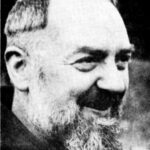

As our investigation concludes its first quarter, we step back from individual episodes to synthesize the definitive medical, biographical, and forensic record of Padre Pio’s stigmata between 1918 and 1920.
Key Findings & Archival Record
- The Chronological Arc: From childhood in Pietrelcina and novitiate fevers at Morcone (Weeks 1–2), through the Venafro trances and WWI conscription (Weeks 3–4), culminating in the 1918 transverberation and visible stigmata (Weeks 5–6).
- The Secular Clinical Consensus: Verified independently by Dr. Luigi Romanelli (Barletta Hospital), Dr. Amico Bignami (University of Rome), and Dr. Giorgio Festa (Rome Academy of Surgery).
- The Unsolved Pathology: An open wound system discharging ~200ml of arterial blood daily for 50 years without infection, tissue necrosis, gangrenous degeneration, or circulatory anemia.
- The Institutional Paradox: While secular medicine certified the biological mystery, church politics and hostile audits (Father Gemelli) initiated the long ecclesiastical persecution of Quarter 2.
1. Scene Lede: The Biological Enigma of Mount Gargano
Between 1918 and 1920, the windswept Capuchin monastery of San Giovanni Rotondo became the most scrutinized square mile in Catholic Christendom. Inside a simple whitewashed cell, an obscure southern peasant priest bore five physical wounds that directly confronted the philosophical materialism of the twentieth century.
Over thirteen weeks of archival examination, we have traced the biological and historical facts: the sudden onset on September 20, 1918; the shattered mercury thermometers registering 48°C; the eight-day sealed wax test conducted by an atheist university professor; and the surgical measurements of a deep pectoral incision bleeding fresh arterial blood without causing physical anemia.
Modern clinical medicine recognizes only four ways a chronic wound behaves: it heals by granulation (cicatrization); it becomes infected by pathogens; it undergoes gangrenous necrosis; or it kills the host through blood loss or sepsis. Padre Pio’s wounds did none of these things.
2. Archival Record: The 4-Pillar Clinical Summary
Across thirteen weeks, the empirical evidence establishes four undeniable clinical pillars:
- Symmetry and Transfixion: The wounds in the hands and feet were perfectly symmetrical. The lesions penetrated completely from front to back, allowing light to pass through the tissues under examination.
- Absence of Suppuration: For half a century, the wounds never secreted pus, never developed bacterial infection, and never exhibited perimeter edema or inflammation.
- Failure of Occlusive Healing: When sealed under sterile bandages with wax stamps by Dr. Bignami for eight days, the wounds did not granulate, but continued to bleed fresh arterial blood.
- Hyperosmia (The Perfume): The blood and bandages emitted the persistent, natural fragrance of fresh violets and lilies, verified independently by dozens of physicians and scientists.
3. The Crucible Ahead: Entering Quarter 2
As we transition into Quarter 2 (Weeks 14 to 26), the nature of the trial shifts from clinical scalpels to ecclesiastical firestorms. The fame of the wounded friar provoked intense jealousy among regional prelates, leading to Archbishop Pasquale Gagliardi’s bitter vendetta, armed town barricades in San Giovanni Rotondo, secret Vatican espionage, and two years of solitary confinement under Pope Pius XI.
“The cross is the signature of God’s chosen vessels. When the world stops questioning the flesh, the enemy attacks through the sanctuary itself.” (Epistolario I)
4. Spiritual Discernment: The Living Crucifix
Quarter 1 proves that Padre Pio was not a manufactured myth of mid-century popular media. He was a living biological paradox who subjected his body to the most aggressive scientific skepticism of his era. For modern believers facing an increasingly cynical world, his wounded palms stand as an eternal monument: truth does not fear examination, and the supernatural reality of God remains alive in our midst.
Archival Bibliography & Primary Sources
- Ruffin, C. Bernard. Padre Pio: The True Story. Our Sunday Visitor, 1982/1991 (Chapters I–XIII).
- Carty, Rev. Charles Mortimer. Padre Pio the Stigmatist. Radio Replies Press, 1951.
- Festa, Dr. Giorgio. Misteri di Scienza e Luci di Fede: Le Stimmate di Padre Pio da Pietrelcina. Rome: Ferri, 1938.
- da Pobladura, Melchiorre, ed. Epistolario I: Corrispondenza con i direttori spirituali. San Giovanni Rotondo, 1984.
Continue the investigation: Read the next chapter in the series: The Archbishop’s Vendetta: Pasquale Gagliardi and the War on Mount Gargano →