

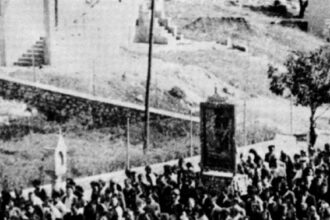
On Saturday, May 5, 1956, sixteen years after tossing a single gold coin onto a table, Padre Pio stepped before a microphone on the marble steps of the Casa Sollievo della Sofferenza. Before an assembly of fifteen thousand doctors, ecclesiastical dignitaries, and emotional pilgrims, the elderly Capuchin consecrated one of Southern Europe’s most sophisticated medical institutions.
Key Findings & Archival Record
- Inauguration Date: May 5, 1956, beginning at 9:00 AM with a solemn Pontifical Mass celebrated by Cardinal Giacomo Lercaro of Bologna.
- Attendance: Over 15,000 pilgrims, 250 accredited international physicians, numerous Italian cabinet members, and delegates from across the Holy See.
- Initial Capacity: 350 inpatient beds, fully equipped radiological suites, laboratories, central oxygen supply, and pediatric clinics.
- Famous Inaugural Address: Padre Pio delivered his definitive programmatic speech, identifying the hospital as “a clinic of bodies and souls; where Jesus Christ is recognized in the sick.”
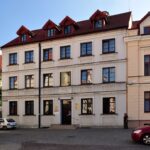
The dedication of May 5, 1956, silenced every cynic who had dismissed the mountain hospital as an illusion. Rising five stories in gleaming white Trani limestone against the dark slopes of Monte Castellana, the complex stood as tangible proof of what faith, surgical excellence, and uncompromised sacrifice could accomplish.
The Scene Lede: A Sunlit Morning on the Gargano
From the early dawn hours, the narrow mountain pass leading into San Giovanni Rotondo was gridlocked with buses, private vehicles, and thousands of barefoot pilgrims making the ascent. In the plaza before the new hospital, red damask hung from balconies, and Italian state flags fluttered alongside the papal colors. Cardinal Giacomo Lercaro, Archbishop of Bologna, presided over the liturgical blessing, flanked by dozens of bishops and prelates.
When Padre Pio emerged, supported by his fellow Capuchins, an overwhelming silence fell across the vast crowd. Wearing his festive vestments, his hands concealed within his characteristic wool gloves, he looked up at the monumental stone pediment engraved with the hospital’s title. Tears welled in the old friar’s eyes as he approached the podium.

The Nut Graph: The Magna Carta of Christian Medicine
The speech Padre Pio delivered that morning remains the Magna Carta of Christian healthcare. Speaking with intense moral gravity, he defined the hospital’s purpose in terms that rejected both cold clinical utilitarianism and sentimental piety:
“The Home for the Relief of Suffering is complete. I thank the benefactors from all parts of the world who have cooperated. This is the creature that Providence, helped by you, has created; I present it to you. Behold the temple of prayer and science, where the human race meets Christ in suffering.”
He insisted that the hospital must never be a place of sterile isolation. The patient was not an object to be analyzed, but a brother or sister in whom the mystery of the Passion was actively lived out. True medical treatment required the finest scientific diagnostics coupled with deep spiritual solidarity.
Forensic Evidence & Archival Records: Clinical Architecture of the Facility
Contemporary medical journals throughout Europe praised the hospital’s structural sophistication. Archival reports from the Italian Ministry of Health recorded that the facility incorporated design elements rarely seen in southern Italy at the time: cross-ventilated patient wings, central piped oxygen systems, specialized sterilization autoclaves, and an independent electrical generation plant designed to prevent power failures during delicate surgeries.
Dr. Guglielmo Sanguinetti, who had sacrificed his personal comfort to oversee the construction, died suddenly shortly before the inauguration, worn out by labor. Padre Pio openly wept for his faithful physician, declaring that Sanguinetti had laid down his very life for the sick, becoming a foundation stone of the institution.

Spiritual Reality & Discernment: The Work of Prayer Groups
Crucially, Padre Pio did not view the building as an end in itself. He proclaimed that the hospital was only the physical arm of a much larger spiritual engine: the Gruppi di Preghiera (Prayer Groups). Established in response to Pope Pius XII’s call for worldwide spiritual renewal, these lay prayer groups provided the continuous prayer support and financial backing that sustained the clinic without state subsidies.
By connecting thousands of prayer cells across five continents to the hospital’s daily operations, Padre Pio created a self-sustaining ecosystem where intercessory prayer and medical science acted in complete synergy. The Casa Sollievo was proof that modern technology achieves its highest dignity when placed at the service of Divine Charity.

Institutional Bibliography & Primary Sources
The events and inaugural addresses of May 5, 1956, are preserved across historical records:
- Padre Pio of Pietrelcina. Inaugural Discourse of the Casa Sollievo della Sofferenza, May 5, 1956. Published in *La Casa Sollievo della Sofferenza*, Bollettino Ufficiale, Vol. I, No. 1.
- Ruffin, C. Bernard. Padre Pio: The True Story. Our Sunday Visitor, 1991, Chapter XXIII: “The Clinic of Bodies and Souls.”
- Lercaro, Giacomo Cardinal. Homily for the Inauguration of the Home for the Relief of Suffering. Archdiocese of Bologna Archives.
- Carty, Rev. Charles Mortimer. Padre Pio the Stigmatist. TAN Books, 1952 (1956 Supplement).
Continue reading our 52-week archival investigation: discover the historic 1948 encounter between Padre Pio and a young Polish priest destined to become Pope in our next installment: Part 30: The Young Polish Professor (1948): Karol Wojtyła Kneels at the Altar.