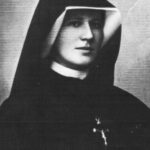

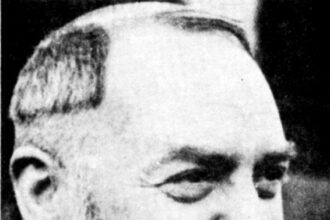
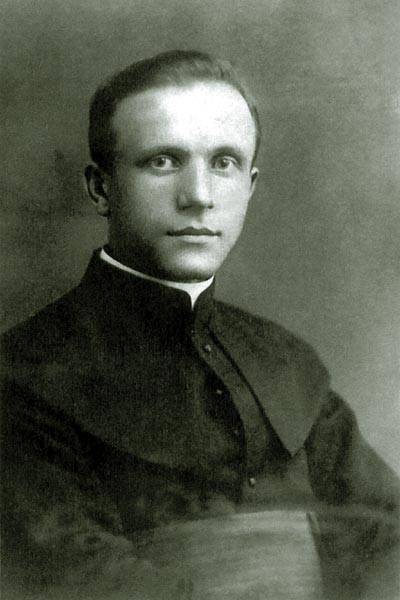
In the mild early summer of June 1934, inside a sunlit painter’s atelier on Rasų Street in Vilnius, an academic master named Eugeniusz Kazimirowski cleaned his hog-bristle brushes, stepped back from a tall linen easel, and waited for a verdict. Beside him, Father Michał Sopoćko sighed with relief after months of posing in a white priest’s alb. But sitting in the corner, twenty-eight-year-old Sister Maria Faustina Kowalska looked upon the finished masterpiece of the Divine Mercy, covered her face with her rough, calloused hands, and burst into uncontrollable, bitter weeping.
Key Findings & Archival Record
- Location & Timeframe: January 2 to June 1934; Rasų Street 6, Vilnius, Lithuania.
- Key Personalities: Artist Eugeniusz Kazimirowski (1873–1939); Spiritual Director Blessed Father Michał Sopoćko; Mystic Sister Maria Faustina Kowalska.
- The Conflict: Kazimirowski was an academic realist; Faustina was attempting to translate uncreated heavenly light into mortal earth pigments, resulting in constant friction, repainting, and her eventual tearful breakdown.
- Christ’s Reassurance: “Not in the beauty of the color, nor of the brush lies the greatness of this image, but in My grace.” (Diary, 313).
1. Scene Lede: The Studio on Rasų Street
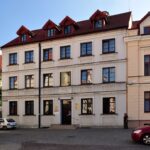
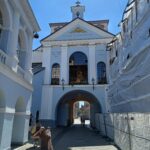
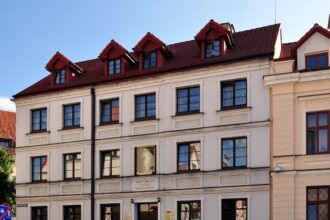
Vilnius in the interwar era was a city of soaring Baroque spires, narrow cobblestone streets, and intellectual vigor. On Rasų Street, nestled against the Bernardine gardens, stood a two-story masonry building where Father Michał Sopoćko leased living quarters. In the same building, on the second floor, worked an accomplished academic painter named Eugeniusz Kazimirowski. A graduate of the fine arts academies of Kraków, Munich, and Paris, Kazimirowski was known for formal portraits, landscapes, and meticulous academic realism.
When Father Sopoćko commissioned him to paint Christ as described in Faustina’s 1931 Płock apparition, Kazimirowski viewed it as a prestigious ecclesiastical contract. Sopoćko paid for the materials, rent, and the artist’s living expenses out of his own modest academic salary. But the project soon proved to be the most frustrating assignment of Kazimirowski’s career.
Every week, accompanied by her superior Mother Irene Krzyżanowska, Sister Faustina walked across the city from the convent in Antokol to Kazimirowski’s studio. She would sit quietly in a wooden chair, inspecting every brushstroke. Sopoćko himself posed for hours draped in a white priest’s alb so Kazimirowski could capture the realistic drape of Christ’s tunic. Yet every time the artist mixed his paints, Faustina shook her head in dissatisfaction. The eyes were too severe; the tilt of the head was incorrect; the hands were too stiff; the luminosity of the Two Rays was too muddy.
2. Archival Record: The Cry Before the Tabernacle
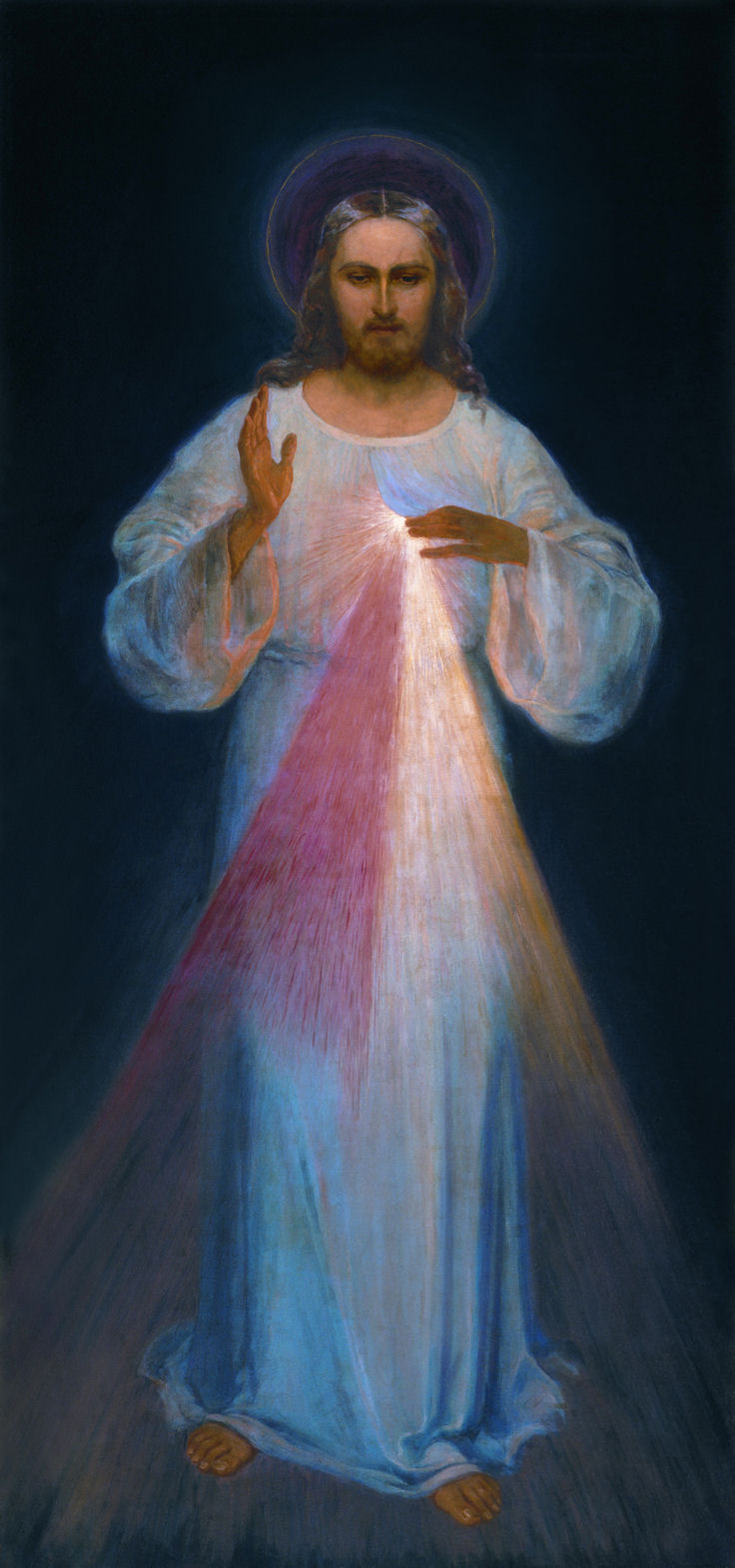
By June 1934, Kazimirowski had applied the final varnish. In academic terms, the canvas was a masterwork. The figure of Jesus emerged from absolute darkness, stepping forward with lifelike dynamism. The eyes were lowered, casting a tender gaze upon the viewer, and the pale and red rays pierced the room with atmospheric depth. Kazimirowski expected congratulations. Sopoćko was visibly pleased.
Faustina looked upon the canvas and shattered into tears. To her eyes, the oil paint was an insult to the uncreated glory she had witnessed in her cell. The colors were lifeless dirt compared to the living fire of Christ. The face looked dull and flat. Without uttering a word of praise to Kazimirowski, Faustina rushed out of the studio and hurried to the nearby chapel of the Bernardine Sisters. Collapsing before the tabernacle, she poured out her anguish:
The nut graph of the weeping mystic cuts to the heart of mystical theology. Faustina was not suffering from artistic disappointment; she was suffering from the ontological agony of the finite trying to contain the infinite. She had seen God, and no mortal hand could ever reproduce what eternity looks like.
3. Christ’s Answer: The Greatness Lies in Grace
As Faustina wept on the chapel floor, Jesus spoke to her with quiet, clinical finality. His answer is preserved in the second half of Diary entry 313, providing the definitive theological key to all sacred art:
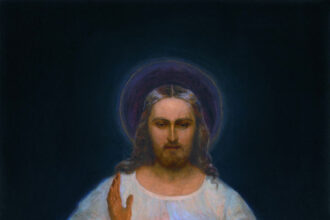
“Not in the beauty of the color, nor of the brush lies the greatness of this image, but in My grace.”
Christ dismantled her aesthetic frustration in a single sentence. The painting was not intended to be a museum piece or an idol of visual perfection. It was an instrument, a sacramental conduit through which divine power would operate. Whether painted by Kazimirowski in 1934 or by Adolf Hyła in Kraków in 1943, the efficacy of the Divine Mercy image depends not on human brushwork, but on the living promise of the Savior who stands behind it.
4. Forensic Vindication: The Face Kazimirowski Never Saw
The supreme irony of Kazimirowski’s canvas is that while Faustina wept at its inadequacy, the painting concealed a miracle of biometric precision. Decades after both the painter and the nun had died, modern forensic researchers scanned the 1934 Vilnius canvas and overlaid it digitally onto the Holy Shroud of Turin.
The results stunned art historians. Despite Kazimirowski having never seen the Shroud—which was locked in a royal reliquary in Turin, Italy, and had only been photographed for the first time by Secondo Pia in 1898—the facial proportions of his painted Christ matched the Shroud negative with microscopic fidelity. The distance between the pupils, the width of the nasal bone, the height of the forehead, and the contours of the chin align seamlessly. In attempting to follow Faustina’s agonizingly detailed verbal corrections, Kazimirowski had unwittingly traced the authentic historical features of the Crucified Christ.
5. Spiritual Reality & Discernment: Embracing Broken Vessels
Faustina’s experience in Kazimirowski’s studio offers profound liberation for anyone wrestling with personal inadequacy, creative frustration, or spiritual disappointment.
Three Core Lessons on Grace and Performance
1. The Torment of the Ideal: Whenever we attempt to serve God, our human efforts will always feel painfully inadequate compared to the majesty of the ideal. Faustina’s tears validate our frustration: our words, our charities, and our prayers are always broken vessels. Yet God chooses to inhabit precisely those broken vessels.
2. Grace Operates Beyond Aesthetics: Do not fall into the trap of spiritual perfectionism. Christ does not demand flawless eloquence or immaculate emotional serenity; He demands the honest offering of what you have. The Vilnius painting was flawed in Faustina’s eyes, yet God chose it to trigger a global spiritual awakening that reached its first public triumph at Ostra Brama in 1935.
3. Obedience Over Sentiment: Even in her deep disappointment, Faustina did not burn the canvas or demand that Sopoćko dismiss the painter. She submitted to her director’s wisdom, proving that fidelity to ecclesiastical authority is the ultimate safeguard against personal delusion.
Institutional Bibliography & Archival Records
Kowalska, Saint Maria Faustina. Diary: Divine Mercy in My Soul. Stockbridge, MA: Marian Press, 2005. Entries 313, 327, 414.
Sopoćko, Rev. Michał. Memoirs on the Creation of the First Divine Mercy Image. Paris: Éditions du Dialogue, 1981.
Nowobilski, Józef. Eugeniusz Kazimirowski: Życie i Twórczość. Kraków: Wydawnictwo Naukowe PAT, 2002.
Vilnius Archdiocese Historical Commission. Dossier on the Cult of the Divine Mercy at Saint Michael’s Church (1934–1948). Vilnius, Lithuania.