

Key Findings & Archival Record
- Prophetic Mandate: In 1935, Jesus commanded Faustina to found a new religious order dedicated exclusively to proclaiming Divine Mercy.
- Interior Crisis: Faustina attempted to obtain dispensations to leave her convent, but ecclesiastical authorities repeatedly blocked her.
- Posthumous Fulfillment: Founded in Vilnius in 1942 by Father Michał Sopoćko as the Congregation of the Sisters of Merciful Jesus.
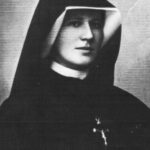
In the spring of 1935, Sister Maria Faustina Kowalska faced what was perhaps the most agonizing dilemma of her monastic life. She was a fully professed sister of the Congregation of Our Lady of Mercy, bound by solemn perpetual vows of poverty, chastity, and obedience. Yet in entry 436 of her diary, she recorded an explicit command from Christ that seemed entirely incompatible with her canonical status: “God demands that there be a Congregation which will proclaim the mercy of God to the world and, by its prayers, obtain it for the world.”
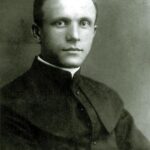
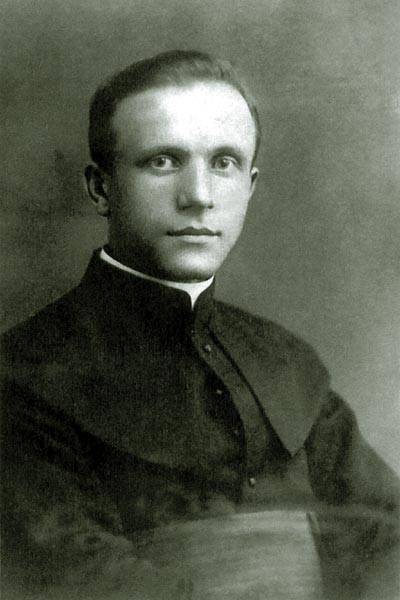
For months, Faustina struggled with the torment of whether she was required to break her existing monastic vows and walk out into the streets of Vilnius to found this community herself. When she consulted her confessor, Father Michał Sopoćko, and her superior, Mother Irene Krzyżanowska, they firmly forbade her from taking independent steps, warning her that canonical rules exist precisely to test mystical inspirations.
The nut graph of the new congregation solves one of the great mysteries of Faustina’s biography. Christ never intended for Faustina to leave her motherhouse to build brick-and-mortar convents; she was the spiritual architect whose deathbed intercession enabled Father Sopoćko to launch the order amidst the flames of Nazi-occupied Vilnius.
The Clandestine Vows of 1942
Faustina died on October 5, 1938, never seeing a single sister wearing the red and white habit she had sketched in her notebooks. But four years later, in 1942, during the height of the German occupation of Lithuania, Father Sopoćko gathered six educated young women in Vilnius who felt drawn to Faustina’s spiritual message.
In total secrecy, dodging Gestapo patrols, the first candidates made private vows of dedication to Divine Mercy on April 11, 1942. This underground seed would eventually receive official ecclesiastical recognition in Poland after the war, formally chartered as the Congregation of the Sisters of Merciful Jesus (Zgromadzenie Sióstr Jezusa Miłosiernego). Today, these sisters operate across more than twenty countries, guarding the original Vilnius painting and ministering in hospices and prisons worldwide.
The Lesson of Posthumous Fruitfulness
The history of the Sisters of Merciful Jesus stands as an enduring lesson in theological patience. Many individuals burn with authentic spiritual callings that appear stymied by institutional bureaucracy, physical illness, or premature death. Saint Faustina’s life proves that the seeds planted in hidden obedience often blossom only after the sower has entered the grave.
Archival Sources & Verification
Sopoćko, Michał. Historia Zgromadzenia Sióstr Jezusa Miłosiernego. Białystok Curia Archives, 1968.
Kowalska, Maria Faustina. Diary: Divine Mercy in My Soul. Stockbridge, MA: Marian Press, 2005.
Wojtkiewicz, Jan. Siostry Jezusa Miłosiernego: Powstanie i Rozwój. Gorzów Wielkopolski, 1992.