

Key Findings & Archival Record
- Documented Phenomenon: Frequent physical and psychological attacks by demonic entities in Vilnius and Kraków convent cells (1934–1938).
- Manifestations: Violent bed shaking, burning phantom fires, hideous monstrous forms, and whispers to abandon prayer.
- Spiritual Weapon: The immediate, faithful execution of the Sign of the Cross and invocations of the Holy Name.
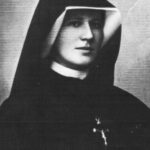
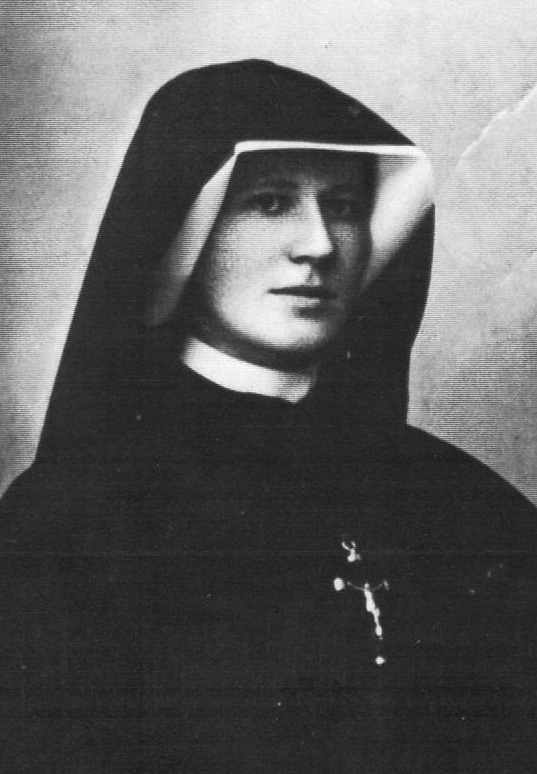
To read the private notebooks of Saint Maria Faustina Kowalska is to step onto a violent invisible battlefield. While popular spirituality often sanitizes monastic life into tranquil contemplation, Faustina lived in direct, daily combat with demonic entities. In the dark corridors of the convent at Kraków-Łagiewniki, nocturnal assaults were an ordinary reality. Devils overturned her bed, threw burning coals against the walls, and assumed horrifying bestial shapes to shatter her sanity.
Yet across dozens of diary entries recording these encounters, one astonishing pattern consistently repeats itself. Faustina never engaged the apparitions in conversation, never sought theatrical exorcisms, and never gave way to panic. Her weapon was the ancient, universal gesture of Christian antiquity: the Sign of the Cross.
The nut graph of Faustina’s warfare shows that demonic malice is completely powerless against simple, sacramental faith. Her encounters demonstrate that evil relies on intimidation and illusion, which vanish instantly when confronted by the authority of the Crucified Christ.
The Night of the Phantom Hounds: Diary Entry 713
In one of her most vivid descriptions, recorded in entry 713, Faustina awoke to find her room filled with terrifying, black phantom hounds spitting sulfur and attempting to tear her habit. Instead of screaming for the mother superior, she remained perfectly calm in her bed: “When I saw the hatred of these monsters, I made the Sign of the Cross slowly and deliberately over them. Instantly, they vanished into thin air like smoke, leaving only silence.”
On another occasion, while praying in the convent chapel late at night, a monstrous figure attempted to suffocate her. Faustina made the Sign of the Cross on her breast and commanded the entity in the name of the Triune God to depart. The entity cursed the Divine Mercy and dissolved immediately.
The Psychology of Fear vs. Sacramental Authority
The lesson Saint Faustina leaves for the modern believer facing spiritual oppression or irrational panic is grounded in sacramental theology. The Sign of the Cross is not a superstitious charm; it is the physical confession of the Trinity and the Passion of Christ. When traced over the human body with living faith, it re-establishes the soul’s legal belonging to the Kingdom of God, against which no hellish intelligence has legal jurisdiction.
Archival Sources & Verification
Kowalska, Maria Faustina. Diary: Divine Mercy in My Soul. Stockbridge, MA: Marian Press, 2005.
Amorth, Gabriele. An Exorcist Tells His Story. San Francisco: Ignatius Press, 1999.
Borkiewicz, Jan. Mistyczne Walki Świętej Siostry Faustyny. Kraków: Wydawnictwo Apostolstwa Modlitwy, 2001.