

Key Findings & Archival Record
- Date: April 30, 2000 (The Second Sunday of Easter during the Great Jubilee Year).
- Location: Saint Peter’s Square, Vatican City.
- Historical Significance: Saint Maria Faustina Kowalska declared the first canonized saint of the third millennium; Divine Mercy Sunday established universally across the Roman Rite.
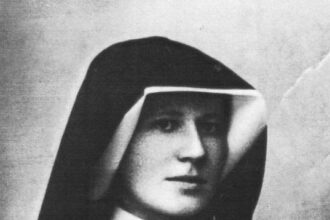
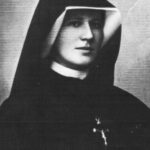
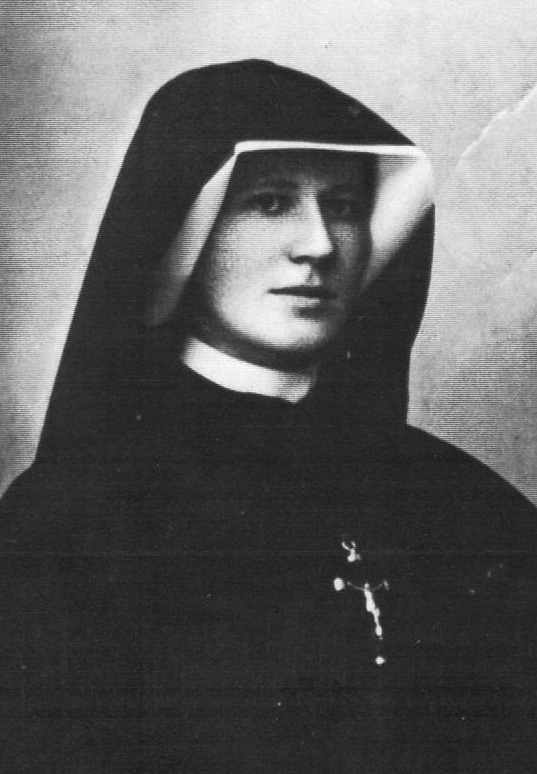
On Sunday morning, April 30, 2000, Saint Peter’s Square in Rome was submerged in an ocean of pilgrims carrying Polish, Lithuanian, and American flags. The facade of the great basilica was draped with a towering tapestry of Sister Maria Faustina Kowalska, the uneducated peasant girl who had died sixty-two years earlier in a humble convent in Kraków. Presiding over the liturgy was Pope John Paul II, whose personal biography had been inextricably woven into her message since the Nazi blitzkrieg of 1939.
The canonization was historic in every dimension. Faustina was the very first person raised to the altars in the third millennium. And in the midst of his homily, John Paul II executed an act of supreme papal authority that fulfilled the exact demand made to Sister Faustina in Płock in 1931: he officially inserted Divine Mercy Sunday into the General Roman Calendar for the universal Catholic Church.
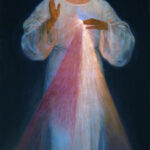
The nut graph of April 30, 2000 represents the total vindication of a condemned devotion. Forty-one years after the Holy Office banned her diary and prohibited her image, the highest authority in Christendom declared that Faustina’s message was the indispensable theological light for the modern era.
John Paul II’s Personal Confession
In his canonization homily, the aging pontiff departed from clinical Latin prose to deliver an impassioned personal testament. He recalled how during the Nazi occupation, as a young clandestine seminarian working in the Solvay chemical quarry in Kraków, he walked every day past the convent where Faustina lay buried. Her message had sustained the Polish people through the horrors of the Gestapo and the iron fist of Soviet totalitarianism.
“By this act,” John Paul proclaimed to the listening world, “I today pass on the message of Divine Mercy to the new millennium. I pass it on to all people, so that they will learn to know ever better the true face of God and the true face of their brethren.”
The Fulfilled Prophecy of Diary 1304
Archivists who studied Faustina’s notebooks noted a jaw-dropping prediction recorded in Diary entry 1304, written in 1937: “I suddenly saw the Holy Father in a great assembly… and around him were cardinals and bishops and a vast crowd of people. And I saw that the Feast of Mercy was proclaimed with great solemnity.”
Faustina saw the exact liturgical event sixty-three years before it happened, down to the vestments and the joyous ringing of the Roman bells. Her canonization closed the loop on one of the most rigorously documented prophetic arcs in Christian history.
Archival Sources & Verification
John Paul II. Homilia Canonizationis Mariae Faustinae Kowalska. Acta Apostolicae Sedis 92 (2000): 556–561.
Kowalska, Maria Faustina. Diary: Divine Mercy in My Soul. Marian Press, 2005.
Weigel, George. Witness to Hope: The Biography of Pope John Paul II. New York: HarperCollins, 1999.