
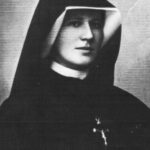
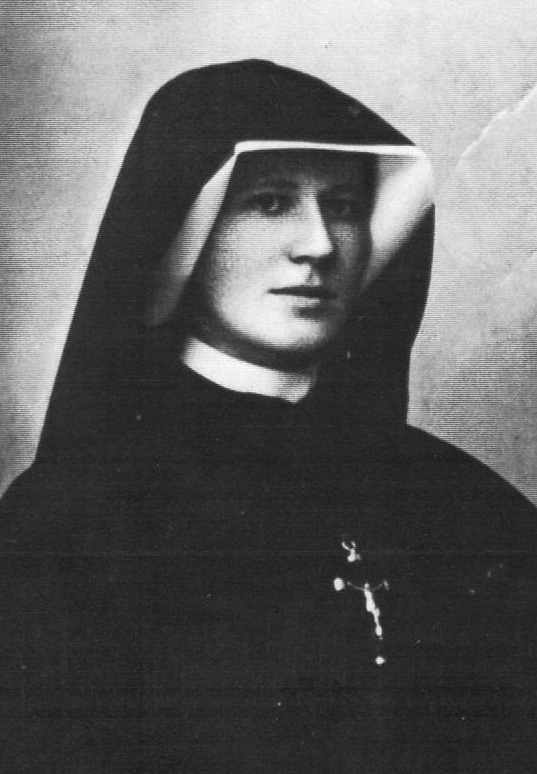

From December 1936 until her death in October 1938, Sister Faustina lived under the shadow of terminal tuberculosis. Sent to the Prądnik Sanatorium outside Kraków, she endured not only physical suffocation, but the painful misunderstanding of fellow sisters who assumed she was exaggerating her illness.
Key Findings & Archival Record
- The Location: Prądnik Biały municipal hospital and sanatorium for pulmonary tuberculosis, north of Kraków.
- The Diagnosis: Advanced pulmonary tuberculosis complicated by intestinal tuberculosis; Dr. Adam Silberg diagnosed complete cavitation of both lungs.
- The Misunderstanding: Because Faustina never complained, had a naturally ruddy complexion, and hid her hemorrhages, several sisters whispered that she was pretending illness to avoid convent labor.
- The Secret Scribe: It was in this hospital bed, often propped up on pillows with a fountain pen, that she wrote Notebooks IV, V, and VI.
1. Scene Lede: The Isolation Room
The sanatorium at Prądnik was filled with the sound of desperate coughing and the odor of carbolic acid. In the 1930s, tuberculosis was a death sentence. Patients were quarantined, their utensils boiled in separate vats, their bed linens burned upon death.
Sister Faustina occupied a small, bare room with a single window. Her physician, Dr. Silberg, marveled at her serenity. While other patients succumbed to despair, Sister Faustina spent her days writing in a thick lined notebook, praying the Chaplet, and offering every breath for sinners.
“The doctor was surprised that I was still walking. He told Mother Superior that my lungs were completely destroyed… But I told Jesus: ‘Take me when You will; I belong entirely to You.'” (Diary, 1056)
2. Archival Record: The Agony of Being Misunderstood
The greatest cross Faustina carried at Prądnik was not physical hemorrhaging; it was the suspicion of her own religious community. In interwar convents, physical toughness was praised; sickness was often viewed with suspicion.
Some sisters visited her and muttered: “Sister Faustina looks so healthy; she simply does not want to work in the kitchen.” Faustina wept into her pillow, but resolved never to defend herself, offering the humiliation to Christ as a sacrifice for priests and religious.
3. Spiritual Discernment: When Others Misjudge You
Have you been slandered, misunderstood, or accused of false motives by people who should have supported you? Do not waste your energy defending yourself to human courts. Place your reputation into the hands of God, who sees in secret.
Institutional Bibliography & Primary Sources
- Kowalska, St. Maria Faustina. Diary: Divine Mercy in My Soul. Stockbridge, MA: Marian Press, 2005. (Entries 1056, 1261).
- Silberg, Dr. Adam. Medical Reports on the Health of Sister Faustina Kowalska. Prądnik Hospital Archives, 1937–1938.