
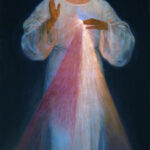

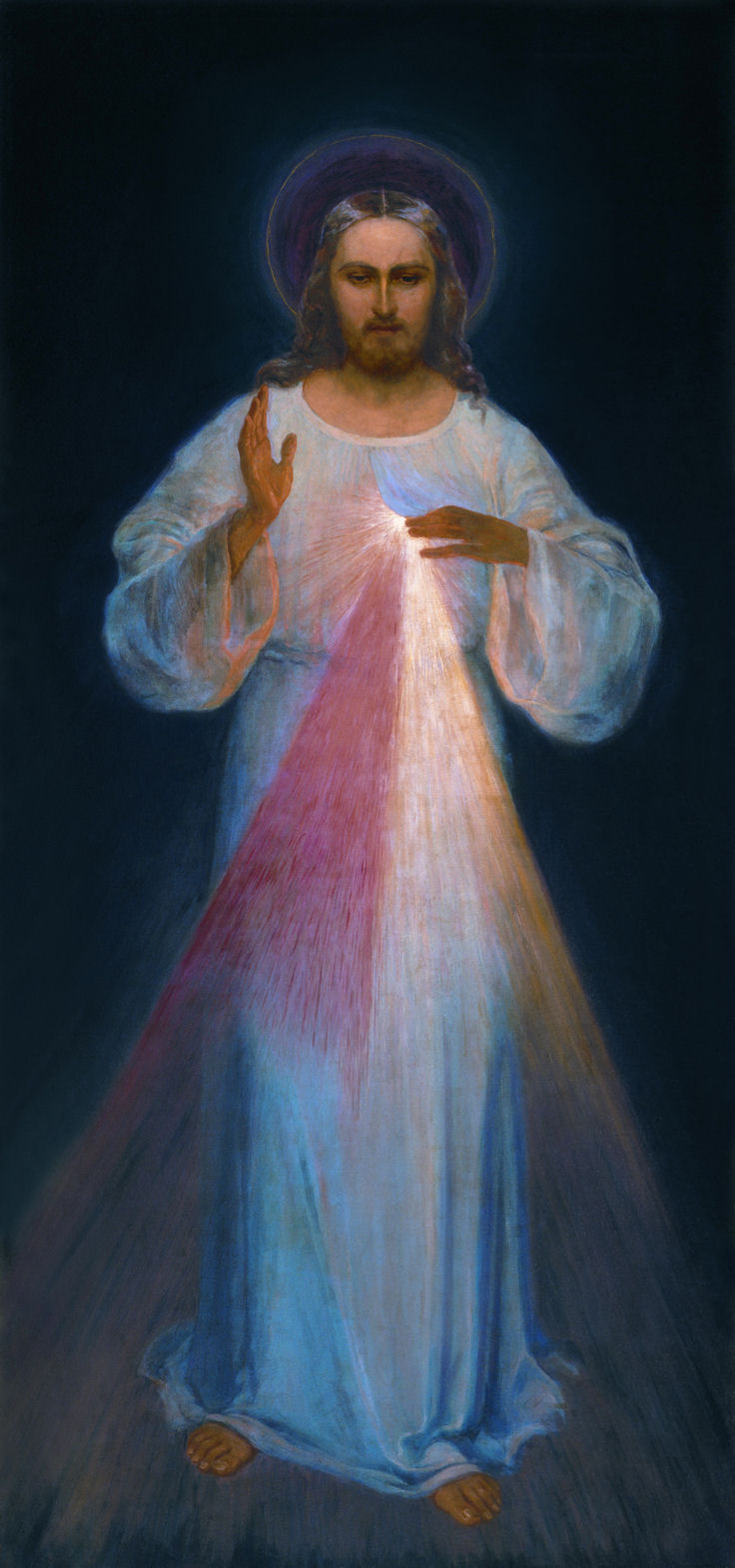
While the message of Divine Mercy conquered the world, the original 1934 painting by Eugeniusz Kazimirowski came within inches of total destruction. From Soviet desecration to secret midnight rescues across closed borders, this is the gripping thriller of how the canvas survived.
Key Findings & Archival Record
- The Soviet Seizure (1948): Soviet communist authorities closed the Church of Saint Michael in Vilnius, converting it into a storage warehouse; the original painting remained abandoned inside.
- The Midnight Bribe (1951): Two brave Polish women, Janina Rodziewicz and Bronisława Miniotaite, bribed a Soviet guard with vodka and money, slipped inside, cut the canvas from its stretcher, and rolled it into a tube.
- The Belarusian Exile (1956–1986): Smuggled across the Soviet republic border into Nowa Ruda, Belarus, where it hung high behind the wooden altar of an abandoned church for thirty years, surviving damp, freezing cold, and KGB inspections.
- The Triumphant Return: Rescued in 1986 and permanently enshrined in the Sanctuary of Divine Mercy in Vilnius in 2005.
1. Scene Lede: The Padlocked Church in Vilnius
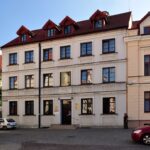
In 1948, the Soviet NKVD launched a systematic purge of Catholic churches in newly annexed Lithuania. Father Michał Sopoćko was forced to flee Vilnius under threat of arrest and deportation to Siberia. The Church of Saint Michael, where Kazimirowski’s painting hung, was padlocked and turned into a secular storehouse.
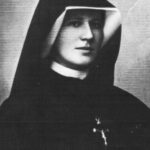
The sacred canvas, painted under the tears of Saint Faustina, was left covered in dust among broken pews and abandoned agricultural equipment. Soviet officials had marked the inventory for burning.
2. Archival Record: The Midnight Rescue
In 1951, two devout Catholic women in Vilnius, Janina Rodziewicz and Bronisława Miniotaite, decided to act. Under cover of night, they approached the Soviet night watchman guarding the church. Plying him with rubles and vodka, they secured thirty minutes of access.
Climbing up to the gallery in freezing darkness, they carefully removed the canvas, rolled it onto a wooden cylinder, concealed it beneath their winter coats, and walked past the guardhouse into the snow. Had they been caught, the penalty would have been ten years of hard labor in a Siberian gulag.
The painting was subsequently smuggled across the border into Belarus to the village of Nowa Ruda, where a courageous local priest, Father Józef Grasewicz, hung it high behind the altar of a small wooden church. When Grasewicz was deported to Siberia, the local faithful kept vigil, secretly heating the church with charcoal to prevent the damp Belarusian winter from destroying the pigments.
3. Spiritual Discernment: God Preserves His Instruments
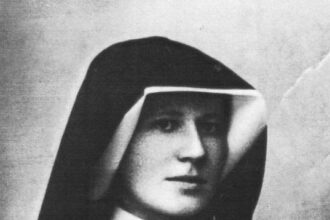
In entry 378 of her diary, Faustina had foreseen this exact trial: “There will come a time when this work… will be as though completely destroyed; and then God will act with great power.”
Totalitarian empires rise, build gulags, and collapse into the dust of history. The Soviet Union fell; the original painting of Divine Mercy stands triumphant in Vilnius today, drawing pilgrims from every nation on earth.
Institutional Bibliography & Primary Sources
- Kowalska, St. Maria Faustina. Diary: Divine Mercy in My Soul. Stockbridge, MA: Marian Press, 2005. (Entry 378).
- Krzysztofowicz, Andrzej. The Odyssey of the Vilnius Image of Merciful Jesus. Vilnius University Press, 2005.
- Songaila, Rev. Vaidas. The History of the First Divine Mercy Painting. Vilnius: Sanctuary Publications, 2012.