
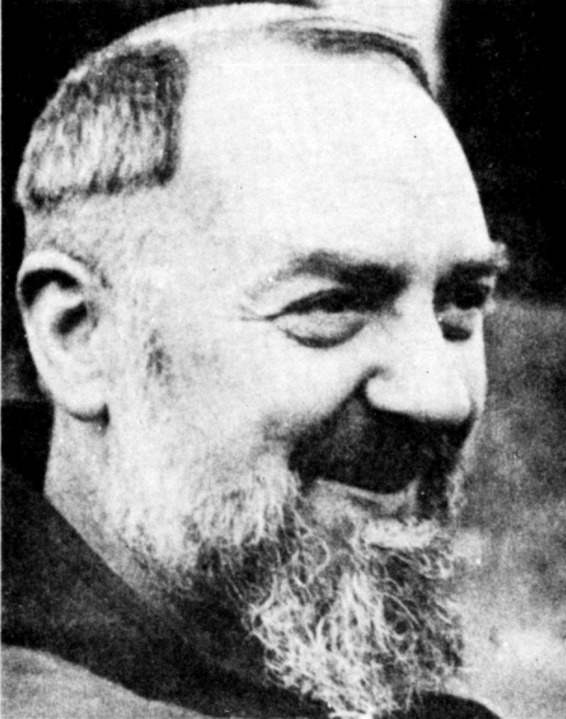
Long before he bore the bleeding wounds of Christ or drew millions to a windswept mountain in Apulia, Francesco Forgione was a quiet, solemn boy who sat alone beneath an ancient elm tree in Piana Romana, speaking to invisible visitors he assumed were visible to everyone.
Key Findings & Archival Record
- Setting & Lineage: Born May 25, 1887, in Pietrelcina (Benevento), to Grazio Forgione and Maria Giuseppa De Nunzio, illiterate peasant farmers living in a two-room limestone home.
- Earliest Apparitions (Age 5): First recorded visions of the Sacred Heart of Jesus, the Virgin Mary, and his Guardian Angel in 1892, occurring so naturally that he believed all people possessed the same interior sight.
- Ascetical Rigor: As a child, Francesco refused toys, withdrew from games, and secretly slept on stone floors using a rock for a pillow until discovered by his mother.
- Family Sacrifice: Grazio Forgione emigrated twice to Jamaica and New York to work on railways, sending remittances to pay for private Latin tutoring so Francesco could meet the academic threshold of the Capuchin novitiate.
1. Scene Lede: The Boy Beneath the Elm Tree
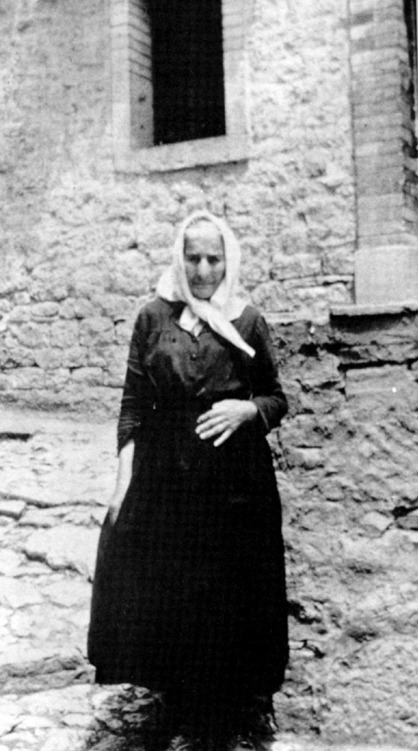
In the late nineteenth century, the hillside village of Pietrelcina in Campania lived according to the rhythms of antiquity. Its houses were built of raw limestone mortared with mud; donkeys carried water jars up steep cobblestone alleys; and electricity was decades away. Francesco Forgione, the fourth child of Grazio and Maria Giuseppa, stood out from his peers not by precocious intellect, but by an unnerving, interior gravity.
While neighborhood children gathered in the piazza to kick rag balls and wrestle, Francesco retreated to the countryside pasture of Piana Romana. Sitting under a massive elm tree while tending his family’s flock of sheep, he spent hours completely motionless. When playmates called out to him, he shook his head and remained where he was.
Decades later, when his Capuchin spiritual directors Fr. Benedetto and Fr. Agostino ordered him under holy obedience to disclose when his mystical experiences began, Padre Pio answered with disarming peasant simplicity:
“From my tenderest years, around the age of five, I already had these celestial visions… I believed that everybody saw the Madonna and the angels just as I did.” (Epistolario I)
2. Archival Record: The Stone Floor and the Immigrant Father
Francesco’s mother, known locally as “Mamma Peppa,” noticed early that her son possessed a severe ascetical instinct. One evening, going into the small bedroom to tuck the boy in, she found the straw mattress empty. Peering under the bed, she discovered ten-year-old Francesco curled asleep on the cold stone floor, resting his head against a rough block of limestone.
Horrified, she pulled him out and scolded him: “My son, why do you torment your flesh like this?” Francesco looked down and murmured softly: “Because Jesus suffered on the cross and did not have a soft bed.”
Yet entering religious life was impossible for a peasant family without means. The Capuchin friars required basic Latin literacy, and Pietrelcina had no public secondary school. Grazio Forgione, seeing his son’s unwavering determination, made the painful choice familiar to millions of Southern Italians: he boarded a steerage ship for America. Laboring on railroad lines and construction sites in New York and Pennsylvania, Grazio sent home money order after money order with a single instruction:
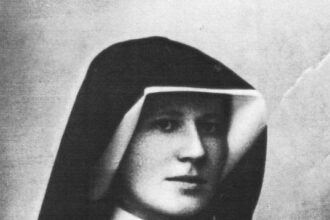
“Spend every penny on Francesco’s schooling. My son must have his books; he must become a friar with a beard.” — Grazio Forgione
3. The Vision of the Two Armies
On January 1, 1903, five days before entering the Capuchin novitiate at Morcone at age fifteen, Francesco experienced an eschatological vision that outlined the spiritual warfare of his entire future life.
In spirit, he was transported to a vast field divided between two immense hosts. On one side stood a radiant multitude clad in white garments; on the other stood a terrifying horde of dark, monstrous forms. At the center of the dark army stood a colossal giant whose forehead reached the clouds. A luminous figure beside Francesco instructed him that he must fight this monster in personal combat.
“The luminous guide told me: ‘You must fight with this giant. Do not fear, for I will be with you and I will help you vanquish him.’ From that day, the battle began and never ceased.” (Ruffin, Ch. II)
4. Spiritual Discernment: The Root of Sanctity
The childhood of Padre Pio provides modern seekers with an essential spiritual diagnostic. Sanctity does not erupt overnight from dramatic adult crises; it is cultivated in the hidden soil of family devotion, peasant simplicity, and uncalculated generosity. Grazio Forgione’s sweat in American railroad trenches was the human foundation upon which God built the greatest twentieth-century mystic.
Archival Bibliography & Primary Sources
- Ruffin, C. Bernard. Padre Pio: The True Story. Huntington, IN: Our Sunday Visitor, 1982/1991 (Chapters I & II).
- da Pobladura, Melchiorre, and da Ripabottoni, Alessandro, eds. Letters of Padre Pio of Pietrelcina (Epistolario I). San Giovanni Rotondo, 1984.
- Zavala, José María. Padre Pío: Los Milagros Desconocidos del Santo de los Estigmas. Madrid: LibrosLibres, 2010 (Capítulo II).
- Carty, Rev. Charles Mortimer. Padre Pio the Stigmatist. St. Paul, MN: Radio Replies Press, 1951 (Chapter I).
Continue the investigation: Read the next chapter in the series: The 118-Degree Fever: The Novitiate and the Shattered Thermometers →