
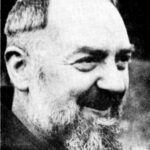

In recent decades, critics of Padre Pio have repeatedly cited a single sensational document: a 1919 pharmacy receipt for four grams of carbolic acid and veratrine, claiming it proves the friar faked his stigmata. The Vatican Secret Archives reveal the historical truth behind the smear.
Key Findings & Archival Record
- The Document: A handwritten note from Padre Pio in autumn 1918 to pharmacist Maria De Vito requesting four grams of pure carbolic acid and valerian/veratrine.
- The Historical Setting: Mount Gargano was being ravaged by the Spanish Influenza pandemic; over 200 citizens of San Giovanni Rotondo died in weeks, and Capuchin novices were dangerously ill.
- Medical Purpose: Carbolic acid (phenol) was the standard clinical disinfectant of the era used to sterilize syringes and needles for administering medicine to infected friars.
- Toxicological Impossibility: Forensic dermatologists confirmed that applying carbolic acid to open tissue creates grayish-white chemical burns, toxic necrosis, and systemic poisoning; it cannot produce clean, symmetrical, bleeding lesions that persist for 50 years.
1. Scene Lede: The Spanish Flu on Mount Gargano
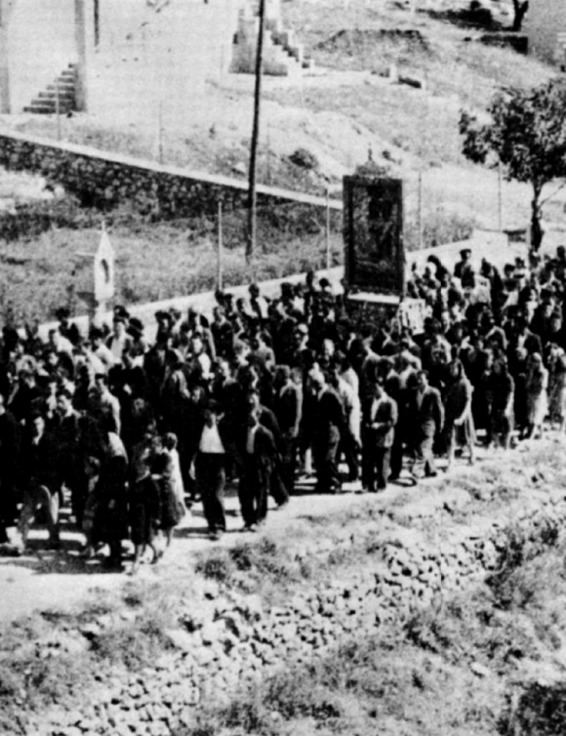
Autumn 1918 was an era of apocalyptic terror in Southern Italy. The Great War was ending, but the Spanish Influenza was sweeping through towns with devastating lethality. In San Giovanni Rotondo, a primitive mountain town with zero running water, church bells tolled day and night. Coffins were stacked outside the cemetery, and hundreds of families lost multiple children within days.
Inside the Capuchin friary, the novice students collapsed with high fevers and pulmonary bleeding. Padre Pio, alongside the guardian, served as a nurse in the friary dispensary. Doctors were overwhelmed, and medical supplies were scarce.
It was in this context that Padre Pio gave a short handwritten note to Maria De Vito, a local pharmacist and spiritual daughter:
“Please send me four grams of carbolic acid to disinfect the syringes we use for injections for the boys… We need it urgently.” (Archival Letter to Maria De Vito, 1918)
2. Archival Record: How the Invoice Became a Smear
Years later, when corrupt elements within the archdiocese and rival clergy sought to shut down the growing pilgrimage to San Giovanni Rotondo, the old pharmacy invoice was rediscovered. Handed to Archbishop Pasquale Gagliardi of Manfredonia, it was forwarded to the Holy Office in Rome with a sensational accusation: *Here is the proof that Padre Pio burns his hands with acid.*
The Holy Office took the allegation seriously and launched an exhaustive toxicological inquiry. Inquisitors questioned both Padre Pio and the pharmacist under oath. Pio explained with complete transparency:
“During the epidemic, we had to give dozens of injections daily to the sick friars. We had no boiling sterilizers; carbolic acid was the only disinfectant available to clean the steel needles between patients.” — Padre Pio, Sworn Testimony to Bishop Rossi
3. The Toxicological Impossibility
The conclusive refutation of the carbolic acid smear came from secular forensic pathology. Phenol is a severe cellular poison. If applied to healthy skin, it causes rapid coagulation of cellular proteins, producing a chalky white, cauterized eschar. Within hours, the tissue sloughs off, leaving an irregular, jagged, painful chemical ulcer surrounded by severe erythema and swelling.
If repeatedly applied to open flesh over months or years, phenol is absorbed systemically into the bloodstream, causing acute tubular necrosis in the kidneys, convulsions, cardiovascular collapse, and death.
“A physician knows immediately that Padre Pio’s lesions could never be produced by carbolic acid. His wounds were clean, bleeding, non-inflammatory, and completely free of chemical eschar. To maintain such wounds with phenol for fifty years without fatal systemic intoxication is toxicologically impossible.” (Dr. Giorgio Festa, Surgical Defense, 1925)
4. Spiritual Discernment: Slander as the Price of Holiness
The carbolic acid controversy illustrates an enduring spiritual law: whenever God acts with undeniable power, human cynicism searches for the cheapest possible explanation. Christ was accused of casting out demons by Beelzebub; Padre Pio was accused of maintaining the Passion of Christ with four grams of disinfectant. When false accusations arise in our own lives, Pio’s example points the way forward: do not retaliate, speak the truth with simple clarity, and let time and integrity vindicate your cause.
Archival Bibliography & Primary Sources
- Ruffin, C. Bernard. Padre Pio: The True Story. Our Sunday Visitor, 1982/1991 (Chapter XII: ‘Holiness or Hysteria?’).
- Congregation for the Doctrine of the Faith. Acta Sancti Officii: Causa Francisci Forgione (Padre Pio de Pietrelcina). Archivio Segreto Vaticano, 1919–1923.
- Rossi, Bishop Raffaello Carlo. Voto sull’inchiesta a San Giovanni Rotondo. Vatican City, 1921.
- Zavala, José María. Padre Pío. LibrosLibres, 2010.