
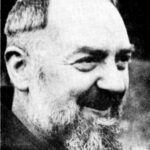
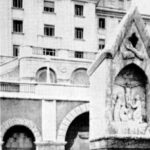

On July 14, 1933, the two-year silence imposed upon Padre Pio was broken by direct order of Pope Pius XI. Realizing that the Holy Office had been poisoned by fabricated testimonies, the Pontiff revoked the prohibition and restored the friar to the public altar.
Key Findings & Archival Record
- The Papal Decision: Pope Pius XI examined independent documentation submitted by Cardinal Donato Sbarretti and Emanuele Brunatto, exposing systemic corruption among diocesan accusers.
- The Historic Rescission: On July 10, 1933, Pius XI told the Assessor of the Holy Office: “I have not been badly disposed toward Padre Pio, but I was poorly informed.”
- The Return to the Altar (July 16, 1933): On the Feast of Our Lady of Mount Carmel, Padre Pio walked back into the public church of Our Lady of Grace to celebrate Mass for over two thousand weeping pilgrims.
- The Long-Term Impact: Marked the end of the initial Roman freeze; although confession faculties for women were delayed until 1934, public ministry expanded exponentially across Europe.
1. Scene Lede: July 16, 1933: The Unlocked Doors
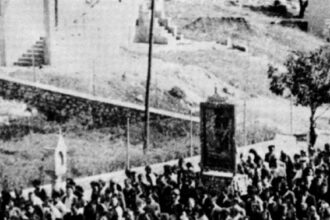
At 4:30 AM on Sunday, July 16, 1933, the massive wooden bolts of the church of Our Lady of Grace were drawn back. Outside in the mountain chill, thousands of pilgrims from across Italy had waited through the night on stone terraces. When the heavy doors swung open, an emotional wave of weeping, singing, and prayers flooded the nave.
Moments later, the sacristy curtain parted. Clad in golden festive vestments for the Feast of Our Lady of Mount Carmel, Padre Pio stepped toward the main altar. His face was pale from seven hundred and fifty-two days of monastic seclusion, but his step was firm. As he made the Sign of the Cross at the foot of the altar, the packed congregation fell into profound, reverent silence.
“Introibo ad altare Dei: I will go in to the altar of God… The two years of solitary imprisonment were over. Truth had triumphed over intrigue.” (Ruffin, Ch. XVIII)
2. Archival Record: The Vatican Audit of Injustice
Pope Pius XI’s sudden reversal was not a casual impulse; it was the result of a rigorous re-examination of the judicial file. When the Holy Office conducted its 1931 suspension, it had relied on reports heavily influenced by Archbishop Pasquale Gagliardi and disgruntled local clerics.
Between 1931 and 1933, independent canonists and loyal converts unraveled the web of slander. Cardinal Donato Sbarretti, Secretary of the Holy Office, reviewed the dossier and presented Pope Pius XI with undeniable proof that the Manfredonia curia had engaged in financial extortion and fabricated testimonies.
“The Holy Father was visibly pained when he realized how Rome had been manipulated. He acted swiftly to undo the injustice and restore Padre Pio to the ministry of the altar.” — Archivio della Congregazione per la Dottrina della Fede
3. The Resumption of the Confessional
Although the July 1933 decree permitted public Mass, Rome proceeded with canonical caution regarding confession faculties. In March 1934, faculties to hear the confessions of men were formally restored, followed by faculties for women in May 1934.
The moment the confessional shutters reopened, the legendary ministry of reconciliation exploded. Pilgrims arrived in such numbers that the municipal authorities had to establish a formal booking ticketing system to prevent riots in the piazza.
4. Spiritual Discernment: The Vindication of Patience
Padre Pio’s restoration proved that divine justice operates on eternal timelines. Had Pio rebelled, formed an independent faction, or attacked Rome during his two-year house arrest, his cause would have been permanently discredited. Because he suffered in total silence, the truth dismantled his accusers from within. For modern Christians enduring unjust criticism, Pio’s path remains clear: trust God, maintain obedience, and let integrity outlive the storm.
Archival Bibliography & Primary Sources
- Ruffin, C. Bernard. Padre Pio: The True Story. Our Sunday Visitor, 1982/1991 (Chapter XVIII: ‘The Imprisonment’).
- Congregation for the Doctrine of the Faith. Acta Sancti Officii: Decretum de facultatibus P. Pii de Pietrelcina. Archivio Segreto Vaticano, 1933.
- Carty, Rev. Charles Mortimer. Padre Pio the Stigmatist. Radio Replies Press, 1951.
- Zavala, José María. Padre Pío. LibrosLibres, 2010.
Continue the investigation: Read the next chapter in the series: The American Heiress on the Mountain: Mary Pyle and the Capuchin Haven →