
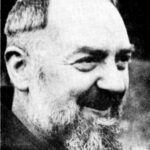

In the spring of 1948, a twenty-seven-year-old Polish priest studying in Rome boarded a train for the mountainous promontory of Mount Gargano. His name was Father Karol Wojtyła. For three days, the future Pope John Paul II knelt at Padre Pio’s dawn Masses, made his sacramental confession to the stigmatist, and forged a spiritual alliance that would ultimately overturn decades of Vatican opposition.
Key Findings & Archival Record
- Historical Date: Early April 1948 (during Wojtyła’s doctoral studies at the Pontifical University of Saint Thomas Aquinas, the Angelicum).
- The Eyewitness Accounts: Confirmed by Cardinal Karol Wojtyła’s later written testimonies, letters, and conversations recorded by papal biographer George Weigel.
- Sacramental Encounter: Wojtyła attended Padre Pio’s extensive dawn Mass and made his personal confession inside the rustic oak confessional.
- The Papacy Prediction: Historical analysis of whether Padre Pio explicitly prophesied Wojtyła’s election to the Chair of Peter, or spoke of his future supreme suffering.
Few encounters in twentieth-century ecclesiastical history carry the profound resonance of the meeting between Karol Wojtyła and Padre Pio. Here were two men who would profoundly shape the Catholic Church through the darkness of totalitarianism, modern secularization, and spiritual renewal.
The Scene Lede: A Rough Pilgrimage to Mount Gargano
In 1948, traveling from Rome to San Giovanni Rotondo was an arduous, bone-jarring journey. The young Polish doctoral student, completing his dissertation on the theology of faith in Saint John of the Cross, took a slow local train to Foggia and rode a crowded post-bus up the steep, winding mountain ascent. Dressed in a threadbare black cassock, Wojtyła arrived with a fellow Polish seminarian, seeking spiritual communion with the living mystic.
Wojtyła woke at 4:00 AM to secure a spot in the small church of Our Lady of Grace. When Padre Pio ascended the altar, Wojtyła witnessed the intense, agonized contemplation of the priest during the Canon of the Mass. Later, Wojtyła waited patiently in the sacristy line to enter the dark confessional box where Padre Pio heard priestly confessions.

The Nut Graph: The Question of Prophecy
For decades, popular Catholic legend circulated that during this 1948 confession, Padre Pio told the young Polish priest: “You will be pope, and you will see your robes covered in blood.” However, rigorous archival research and John Paul II’s own explicit statements clarify the truth behind this encounter.
While John Paul II repeatedly confirmed that he confessed to Padre Pio and discussed spiritual direction with him, he consistently downplayed the sensational claim of an explicit papal prediction. When asked directly in later years, the Pope stated with a gentle smile that Padre Pio had spoken deeply about his future ministry and the necessity of suffering for the Church, but that no explicit mention of the papacy was made in the sacramental forum. The true bond between them was mystical, rooted in their shared understanding of redemptive suffering.
Forensic Evidence & Archival Records: The Shoulder Wound Inquiry
There was, however, a remarkable private revelation documented during Wojtyła’s visit. As Cardinal, Wojtyła recounted that he had asked Padre Pio which of his wounds caused him the greatest physical agony. To his astonishment, the friar did not answer his hands, feet, or side, but rather a hidden, unacknowledged lesion:
“It is my shoulder wound, where the heavy wood of the Cross dug into the bone, that hurts me most of all, because it is unknown to men and never dressed.”
This revelation deeply marked the Polish priest. Years later, when Brother Modestino of Pietrelcina sorted Padre Pio’s garments following his death, he discovered a blood-soaked undershirt displaying a profound hematoma and skin abrasion on the right shoulder, precisely corresponding to the ancient monastic tradition of Christ’s shoulder wound.

Spiritual Reality & Discernment: The Hand of Providence
The 1948 encounter established an unbreakable spiritual bridge between Krakow and San Giovanni Rotondo. Fourteen years later, when Dr. Wanda Poltawska, a close friend of Archbishop Wojtyła and survivor of Ravensbrück concentration camp, lay dying of terminal throat cancer, Wojtyła would bypass official Vatican skepticism to dispatch an urgent, direct plea for intercession to the stigmatist.
When Karol Wojtyła was elected Pope John Paul II in October 1978, one of his first major initiatives was to personally open the official Vatican archives, sweeping aside decades of administrative obstruction to advance Padre Pio’s cause for beatification and canonization. The seed planted in a quiet April confession blossomed into universal glory.

Institutional Bibliography & Primary Sources
The historical documentation of the Wojtyła-Padre Pio relationship is verified across canonical sources:
- Weigel, George. Witness to Hope: The Biography of Pope John Paul II. HarperCollins, 1999, Chapter 3: “Roman Days.”
- John Paul II. *Autobiographical Reflections and Addresses on Padre Pio of Pietrelcina.* Libreria Editrice Vaticana.
- Ruffin, C. Bernard. Padre Pio: The True Story. Our Sunday Visitor, 1991, Chapter XX: “The Roman Question.”
- Zavala, José María. Padre Pío: Los milagros desconocidos del santo de los estigmas. LibrosLibres, 2010, Chapter XV: “El Papa polaco.”
Continue reading our 52-week archival investigation: analyze the medically verified miracle of a young girl born without pupils who received complete sight in our next installment: Part 31: The Miracle of Gemma Di Giorgi: The Girl Born Without Pupils (1947).