
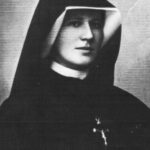

On January 30, 1964, the dark cloud of suspicion that had hung over San Giovanni Rotondo for four agonizing years was shattered by supreme papal authority. Newly elected Pope Paul VI, having reviewed the complete archival file and recognized the grotesque injustice of the Maccari visitation, ordered the immediate revocation of every restriction, granting Padre Pio absolute apostolic liberty.
Key Findings & Archival Record
- The Papal Rescript: Dispatched on January 30, 1964, by Cardinal Amleto Giovanni Cicognani, Vatican Secretary of State, acting under direct instructions from Pope Paul VI.
- The Restoration of Faculties: Padre Pio was granted absolute freedom to celebrate Holy Mass without time limits, hear confessions freely, speak with visitors, and administer the hospital without interference.
- Paul VI’s Historic Statement: The Pope famously praised Padre Pio as a gift to the universal Church, marveling: “Look what fame he has! Look how many people he gathers around him! Why? Because he says Mass humbly, hears confessions from dawn to dusk, and is the visible representation of the wounds of Our Lord.”
- The Immediate Impact: The removal of police guards, the dissolution of hostile monastic surveillance, and a jubilant resurgence of global pilgrimages to Mount Gargano.
The intervention of Pope Paul VI marks the decisive turning point in twentieth-century Franciscan history. It demonstrated that while human prejudice and bureaucratic incompetence may cloud the judgment of Church officials for a season, authentic truth eventually pierces through darkness.
The Scene Lede: A Papal Telegram Reaches the Mountain
In mid-February 1964, a confidential communication bearing the seal of the Cardinal Secretary of State arrived at the Capuchin Provincialate. The letter was addressed directly to the Father Guardian of San Giovanni Rotondo. It conveyed the explicit will of Pope Paul VI: every restriction, watch, and disciplinary measure imposed since 1960 was null and void.
When the superior entered Cell No. 1 to inform Padre Pio that he was once again a free man, the 76-year-old friar did not leap for joy or express triumphalism over his vanquished accusers. He simply made the Sign of the Cross, bowed his head toward the crucifix on his wall, and whispered: “May the name of the Lord be praised, and may His holy Church be exalted.”

The Nut Graph: Paul VI’s Discerning Vision
Giovanni Battista Montini, elected Pope Paul VI in June 1963, possessed an acute theological intellect. As Archbishop of Milan, he had observed the pastoral phenomenon of the Padre Pio prayer groups that flourished across Lombardy. He recognized what curial bureaucrats had missed: while theological academics debated abstract theories, Padre Pio was bringing hundreds of thousands of fallen-away men and women back to the Sacraments.
In an address to the superiors of the Capuchin Order in February 1971, Paul VI would summarize Padre Pio’s monumental legacy in words that remain etched in Catholic memory:
“Look what fame he had! What a worldwide following! But why? Was it because he was a philosopher? Was it because he was wise? Because he had resources at his disposal? No! It was because he said Mass humbly, heard confessions from morning to night, and bore the visible seal of the wounds of Christ.”
Forensic Evidence & Archival Records: The Dismantling of the Surveillance
Archival records from San Giovanni Rotondo reveal the immediate consequences of the 1964 papal decree. The microphone wires that had sacrilegiously invaded the confessional and cell were ripped out. Hostile friars who had orchestrated the espionage were reassigned to distant friaries across Italy. The local Carabinieri ceased their intrusive patrols around the cloister, and the town returned to peaceful celebration.
Padre Pio was once again permitted to celebrate Mass at his own pace, immersing himself deeply into the mystery of Calvary without superiors staring at clocks. The confessional lines swelled to historic proportions, requiring complex reservation numbering systems to accommodate the thousands arriving weekly from Europe, the Americas, and Asia.

Spiritual Reality & Discernment: The Peace of the Just
The restoration of liberty in 1964 confirmed the ancient biblical principle: God permits His righteous servants to pass through the crucible of misunderstanding so that their gold may be purified in the fire. Padre Pio emerged from the 1960–1964 crisis with his reputation not merely cleared, but crowned with the aura of heroic patience.
With four years of earthly life remaining, the aging stigmatist could now turn his remaining strength toward preparing for his final journey: the fast-approaching fiftieth anniversary of his stigmata and his definitive transit to eternity.

Institutional Bibliography & Primary Sources
The archival documents verifying Pope Paul VI’s intervention are preserved in official ecclesiastical publications:
- Cicognani, Amleto Giovanni Cardinal. *Rescript of the Secretariat of State on the Faculties of Padre Pio of Pietrelcina (Jan 30, 1964).* Archives of the Holy See, Vatican City.
- Pope Paul VI (Giovanni Battista Montini). *Discorso ai Padri Capitolari dell’Ordine dei Frati Minori Cappuccini.* L’Osservatore Romano, February 20, 1971.
- Ruffin, C. Bernard. Padre Pio: The True Story. Our Sunday Visitor, 1991, Chapter XXV: “The Second Storm.”
- Zavala, José María. Padre Pío: Los milagros desconocidos del santo de los estigmas. LibrosLibres, 2010.
Continue reading our 52-week archival investigation: explore the comprehensive synthesis of how faith and clinical medicine fused into one of Southern Europe’s greatest hospitals in our next installment: Part 39: Quarter 3 Retrospective: The Temple of Science and Faith.