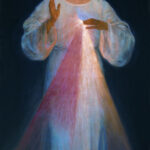


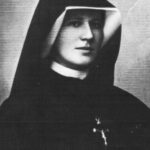

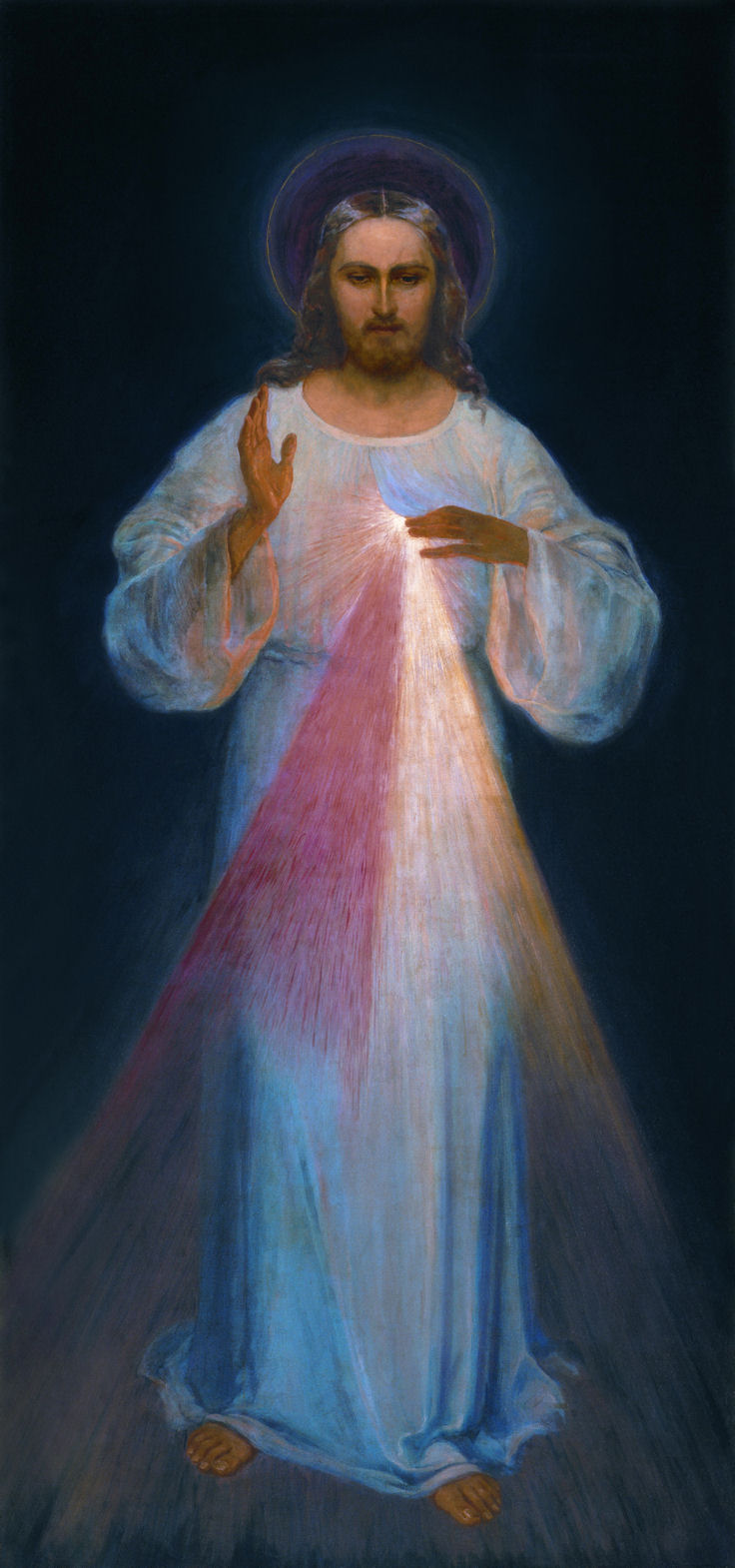
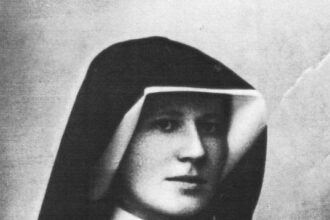
When Father Michał Sopoćko first inspected the sketches for the Divine Mercy canvas in Vilnius, he asked Sister Faustina a question that puzzled theologians: why were the rays emanating from Christ’s chest pale and crimson, rather than decorative gold or white? Christ’s answer anchored the devotion directly in the Johannine mystery of Calvary.
Key Findings & Archival Record
- The Question (Vilnius, 1934): Father Michał Sopoćko directed Faustina to ask Jesus the specific theological meaning behind the two colored beams in the apparition.
- The Definition: The pale ray represents the Water that cleanses souls (Baptism and Confession); the red ray represents the Blood that gives life to souls (The Holy Eucharist) (Diary, 299).
- Biblical Origin: John 19:34—when the Roman centurion pierced the side of the crucified Christ with a lance, “immediately there came out blood and water.”
- Ecclesiastical Promise: Christ promised that souls who dwell in the shelter of these rays will be shielded from the just hand of God at the final judgment.
1. Scene Lede: The Confessor’s Theological Query
In early 1934, inside the confessional of the Church of Saint Michael in Vilnius, Father Michał Sopoćko found himself grappling with artistic and theological precision. Academic painter Eugeniusz Kazimirowski had begun laying the undercoats of the canvas, but the nature of the two translucent streams emanating from the Savior’s heart required absolute doctrinal clarity.
Sopoćko commanded Faustina to bring the matter directly to Christ in prayer. She did so, and received a concise dogmatic definition:
“The two rays denote Blood and Water. The pale ray stands for the Water which makes souls righteous. The red ray stands for the Blood which is the life of souls. These two rays issued forth from the very depths of My tender mercy when My agonized Heart was opened by a lance on the Cross.” (Diary, 299)
2. Archival Record: The Patristic Echo of John 19:34
Faustina had never read the Patristic writings of Saint John Chrysostom or Saint Augustine. Yet her diary records theological concepts identical to the early Church Fathers.
Chrysostom wrote in the 4th century: “There flowed from His side water and blood. Do not pass this mystery by without contemplation… for from both these the Church has sprung: through the bath of regeneration and through the participation in the mysteries.”
Faustina’s simple transcription in 1934 preserved this ancient sacramental unity: the Water that washes away guilt in the confessional box, and the Blood that feeds the soul at the altar. This profound sacramental reality also connects intimately with historical Eucharistic investigations, such as the Eucharistic Miracle of Lanciano and the cardiac tissue studied in the Buenos Aires miracle investigation.
3. Spiritual Discernment: The Sanctuary of the Rays
In entry 299, Jesus added a warning and a comfort: “Happy is the one who will dwell in their shelter, for the just hand of God shall not lay hold of him.”

The rays are not static artwork; they represent dynamic refuge. When personal guilt, past sins, or dark memories threaten to overwhelm the conscience, the Christian is called to retreat mentally and spiritually beneath the shelter of the Water and Blood.
Institutional Bibliography & Primary Sources
- Kowalska, St. Maria Faustina. Diary: Divine Mercy in My Soul. Stockbridge, MA: Marian Press, 2005. (Entries 299, 326, 414).
- John Chrysostom. Homilies on the Gospel of Saint John, Homily 85.
- Różycki, Rev. Ignacy. The Essential Features of the Divine Mercy Devotion. Rome: Sacred Congregation for the Causes of Saints, 1979.