
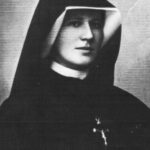
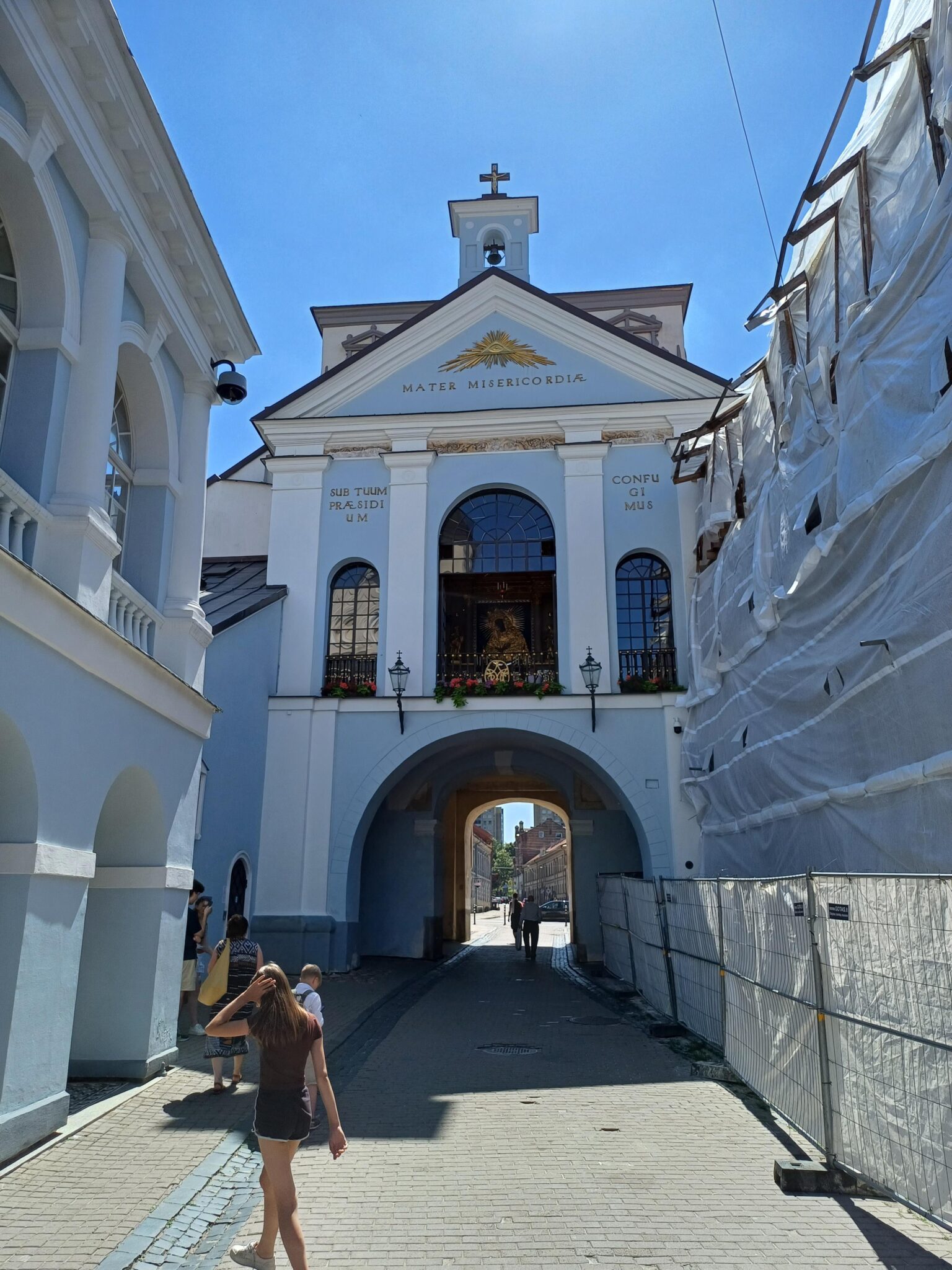

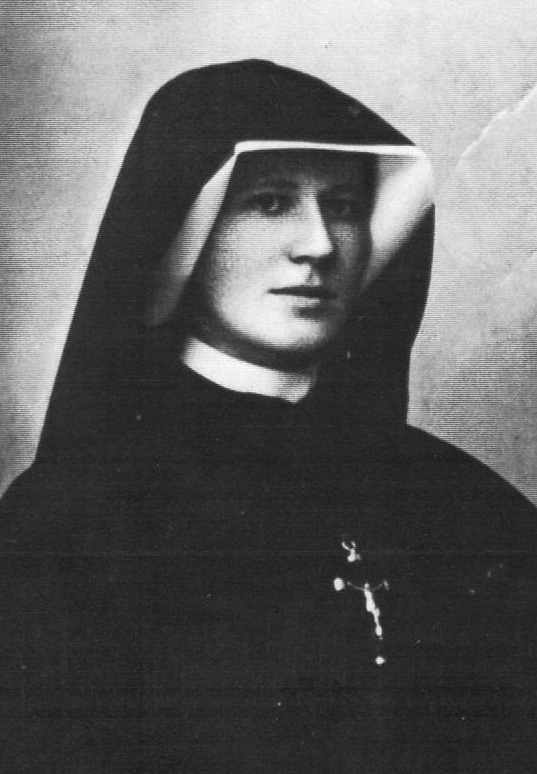
On the stormy evening of Friday, September 13, 1935, inside her convent cell in Vilnius, thirty-year-old Sister Maria Faustina Kowalska looked out into the spiritual realm and beheld a terrifying apparition. Standing suspended in the clouds above the earth was an angel clothed in blinding lightning, the executor of divine wrath, sent with bolts of thunder to strike and obliterate a specific, unnamed Polish city. Paralyzed by the sight of imminent destruction, Faustina began to plead with God, but her prayers were utterly powerless. It was only when an unknown, mystical prayer was dictated directly into her interior spirit that the angel’s arm dropped, powerless to unleash judgment.
Key Findings & Archival Record
- Date & Location: Friday, September 13, 1935; Convent of the Sisters of Our Lady of Mercy, Antokol district, Vilnius.
- Mystical Vision: An Angel of Wrath, wielding lightning bolts of divine justice, sent to destroy a city due to its grave moral sins.
- The Origin of the Chaplet: When human intercession failed, Faustina heard interior words offering the Body, Blood, Soul, and Divinity of Christ to the Eternal Father; the words instantly immobilized the angel (Diary, 474–475).
- Subsequent Confirmation: The following morning, September 14 (the Feast of the Exaltation of the Holy Cross), Christ appeared and commanded her to recite this prayer on ordinary rosary beads, establishing the Chaplet of Divine Mercy.
1. Scene Lede: The Sky Over Antokol
In the autumn of 1935, the world stood on the precipice of catastrophe. Adolf Hitler had repudiated the Treaty of Versailles, Joseph Stalin was executing the Great Purge across the Soviet border just miles east of Vilnius, and moral nihilism was sweeping through European capitals. In the Antokol suburb of Vilnius, Sister Faustina lived a life of quiet routine, tending the convent greenhouse and vegetable plots. But her interior life was tuned to the spiritual frequency of cosmic warfare.
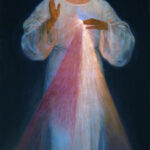
On the evening of September 13, as darkness fell over Lithuania, Faustina retired to her cell. Suddenly, her soul was elevated into a mystical vision of extraordinary terror. She saw an angel, radiant with blinding light, holding in his hands jagged bolts of lightning. In her diary, she recorded the scene with clinical gravity:
The nut graph of the Angel of Wrath vision shatters the modern illusion of a passive, permissive God. Divine justice is an objective, inexorable reality; human sin accumulates like a massive electrical charge that demands satisfaction. Faustina’s testimony demonstrates that human intercession is powerless against divine justice unless it is anchored in the infinite merit of the Son of God.
2. Archival Record: The Moment Human Strength Failed
As Faustina pleaded with the angel, she realized with terrifying clarity that her personal holiness, her monastic vows, and her tears meant nothing against the majesty of outraged divine justice. In entry 474, she recorded her absolute impotence: “My pleading was a mere nothing in the face of the divine anger. Just then I saw the Most Holy Trinity. The greatness of Its majesty pierced me deeply, and I did not dare to repeat my entreaties.”
At that exact moment of human helplessness, the Holy Spirit took possession of her soul. Words she had never learned, phrases she had never heard in the convent choir, surged into her intellect. She found herself offering to the Eternal Father the ultimate sacrifice of the Cross:
The effect was instantaneous and staggering. In entry 475, she recorded: “As I was praying in this manner, I saw the Angel’s helplessness: he could not carry out the just punishment which was rightly due for sins. Never before had I prayed with such inner power as I did then.” The lightning dissipated; the dark clouds rolled back; the angel lowered his arms, unable to execute judgment against a soul sheltered beneath the Blood of the Lamb.
3. The Feast of the Cross: The Dictation of the Rosary Beads
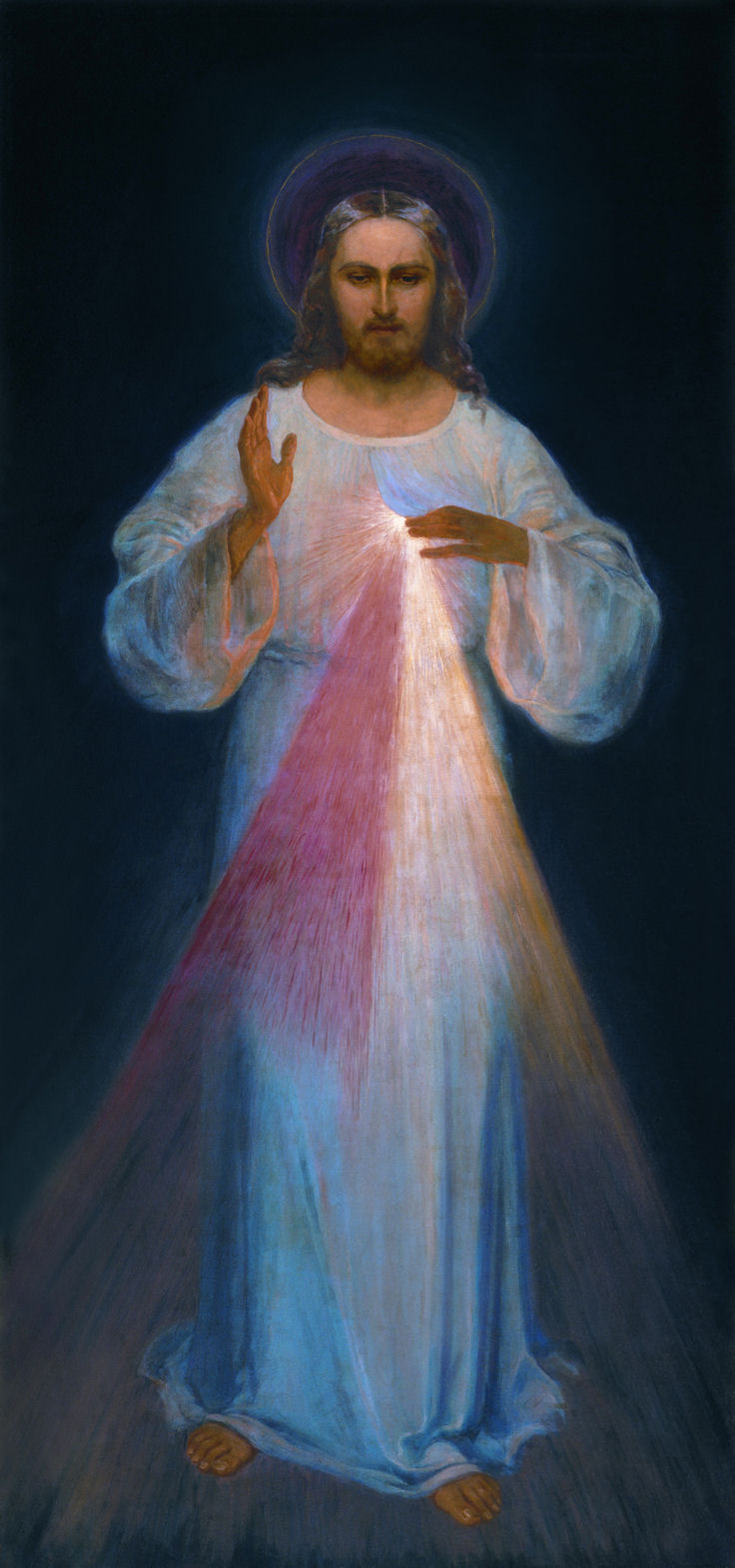
The following morning, Saturday, September 14, 1935—the universal liturgical Feast of the Exaltation of the Holy Cross—Sister Faustina entered the convent chapel for morning meditation. As she knelt before the altar, Christ spoke to her with clear, pedagogical precision. He did not let the prayer of the previous night remain a fleeting mystical memory; He formalized it into an enduring spiritual weapon for the entire world:

“This prayer serves to appease My wrath. You will recite it for nine days, on the usual rosary, in the following manner: First of all, you will say one Our Father and Hail Mary and the I Believe in God. Then on the Our Father beads you will say the following words: ‘Eternal Father, I offer You…’ On the Hail Mary beads you will say the following words: ‘For the sake of His sorrowful Passion have mercy on us and on the whole world.’ In conclusion, three times you will recite these words: ‘Holy God, Holy Mighty One, Holy Immortal One, have mercy on us and on the whole world.’” (Diary, 476).
As we explored in our study of the Two Rays of Blood and Water, the Chaplet is an extension of the Eucharistic sacrifice. By offering the “Body, Blood, Soul, and Divinity” of Christ, the lay faithful exercise their baptismal priesthood, presenting to the Father the only currency in existence capable of paying the debt of human malice.
4. The City Marked for Destruction: Historical Context
In entry 474, Faustina deliberately withheld the name of the city marked for destruction: “in particular a certain place, which for good reasons I cannot name.” Archival historians and Polish theologians have long debated whether that city was Warsaw, which was utterly devastated by the Nazi blitzkrieg nine years later in 1944, or Vilnius itself, which was slated for Soviet liquidation.
Regardless of the geographical identity, the lesson remains chillingly modern. God does not execute judgment arbitrarily; societies bring judgment upon themselves by casting off divine law, trampling upon the vulnerable, and exalting pride. The Chaplet of Divine Mercy was revealed precisely as an emergency brake on historical catastrophe. When recited by humble believers, it suspends the hand of wrath and purchases time for global repentance.
5. Spiritual Reality & Discernment: How to Wield the Beads Today
The Chaplet of Divine Mercy takes less than seven minutes to recite, yet it carries guarantees that outshine worldly empires. When you take up the beads, you are not repeating mindless formulas; you are standing in the breach between heaven and earth.
Three Core Practices of the Chaplet
1. Praying for the Dying: In Diary entry 811, Christ made an irrevocable promise: “When they say this chaplet in the presence of the dying, I will stand between My Father and the dying person, not as the just Judge but as the merciful Savior.” Keep a rosary nearby; whenever you hear of an accident, a terminal diagnosis, or a soul in agony, pray the Chaplet immediately.
2. Pairing the Chaplet with the 3:00 PM Hour: As we will unpack in our next investigation on the 3:00 PM Hour of Mercy and its three conditions, praying the Chaplet at the hour of Christ’s death unlocks extraordinary intercessory authority.
3. Facing Demonic Oppression: The words of the Chaplet invoke the sacrificial Blood of Christ, which demons cannot withstand. When experiencing spiritual warfare, terror, or dark desolation, reciting the Chaplet acts as a fortress of peace.
Institutional Bibliography & Archival Records
Kowalska, Saint Maria Faustina. Diary: Divine Mercy in My Soul. Stockbridge, MA: Marian Press, 2005. Entries 474–476, 687, 811.
Sopoćko, Rev. Michał. The Origins of the Chaplet of Divine Mercy. Białystok Curia Archives, 1955.
Koszarek, Jan. Teologia Koronki do Miłosierdzia Bożego. Poznań: Pallottinum, 1989.
Congregation of the Sisters of Our Lady of Mercy. Historical Chronicles of the Antokol House, Vilnius (1933–1936). Warsaw, Poland.