
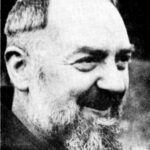
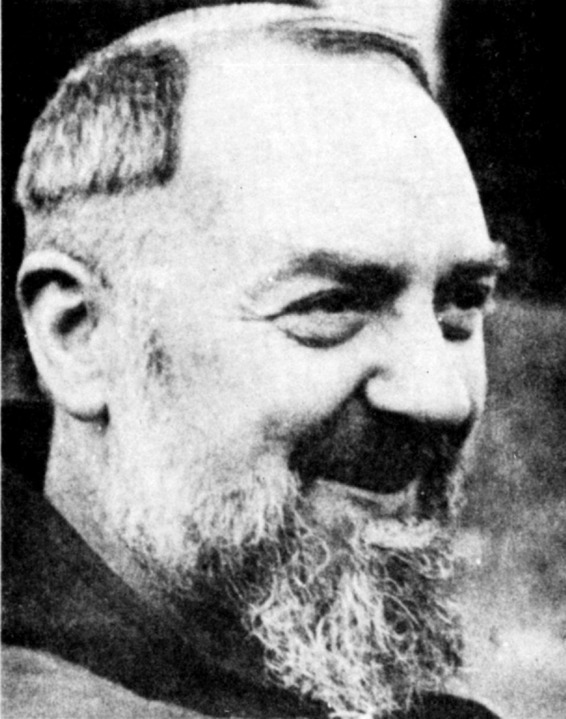

In May 1919, the Capuchin provincial ordered Dr. Luigi Romanelli, physician-in-chief of the City Hospital of Barletta, to San Giovanni Rotondo. His five formal clinical inspections produced the first rigorous secular medical testimony on the stigmata of Padre Pio.
Key Findings & Archival Record
- Medical Examiner: Dr. Luigi Romanelli, Mayor of Barletta and Chief Physician of the Barletta Civil Hospital, an experienced surgeon and diagnostician.
- Investigation Scope: Five separate on-site examinations between May 15, 1919, and November 1920.
- Clinical Observations: Lesions were perfectly symmetrical; the wounds in the hands passed completely through; pressure provoked immediate bleeding without evidence of inflammatory edema.
- Sworn Conclusion: Romanelli certified under oath to the Holy See that the wounds could not be attributed to natural pathology, self-mutilation, or medical fraud.
1. Scene Lede: The Scalpel in the Monastic Parlor
Dr. Luigi Romanelli arrived at the friary of Our Lady of Grace on May 15, 1919, determined to apply the cold methods of modern clinical diagnostics. He was not a Franciscan; he was a municipal hospital chief who had dealt with hundreds of surgical traumas, gangrenous amputations, and wartime shrapnel wounds.
Seated across from Padre Pio in the small whitewashed dispensary, Romanelli asked the thirty-one-year-old friar to remove his fingerless gloves and wool stockings. The doctor pulled out his magnifying glass and probe instruments to inspect the flesh.
In his official report, submitted to the Holy Office and later published in the canonical *Positio*, Romanelli recorded his clinical astonishment:
“The wounds in the hands are covered by a reddish-brown membrane… If you press them, they bleed. The tissue surrounding the lesions shows no redness, no edema, and no inflammation. The lesions are perfectly symmetrical on both hands and feet.” (Dr. Luigi Romanelli, Report of May 1919)
2. Archival Record: The Transfixing Hands
One of the most contentious medical questions was whether the hand wounds penetrated all the way through the palm. Romanelli addressed this directly in his clinical deposition:
“The lesions on the palms correspond perfectly with the lesions on the backs of the hands. When I held the palm in front of the sunlit window, you could discern that the tissue was transfixed from back to front… I could almost make my thumb and forefinger meet through the palms without tearing tissue.” — Dr. Luigi Romanelli
Romanelli ruled out any possibility of self-infliction. An artificial chemical wound created by acids or alkalis inevitably causes chemical necrosis, cellular sloughing, and severe perimeter inflammation. Padre Pio’s skin was completely smooth right up to the very margin of the circular cuts.
3. The Pectoral Thorax Examination
Romanelli then examined Pio’s left chest wall. He found a transverse wound shaped like an inverted cross, approximately seven centimeters in length, penetrating into the intercostal tissue. As Romanelli pressed sterile cotton against it, fresh arterial blood soaked through the fabric instantly.
“I cannot find any clinical classification to explain these lesions. They are completely outside medical science.” (Dr. Romanelli, Sworn Statement to the Holy Office)
4. Spiritual Discernment: Science Meets Mystery
Dr. Romanelli’s report provided the benchmark against which all subsequent medical examinations were measured. He did not claim to understand the supernatural origin, but he established the empirical boundary: modern surgery possessed no tools to explain how a human body could bleed daily from five transfixing wounds without rotting, scarring, or dying. For modern seekers, Romanelli’s scalpel proves that faith and objective clinical reason do not contradict one another; authentic miracles invite clinical inspection.
Archival Bibliography & Primary Sources
- Ruffin, C. Bernard. Padre Pio: The True Story. Our Sunday Visitor, 1982/1991 (Chapter XII: ‘Holiness or Hysteria?’).
- Romanelli, Dr. Luigi. Relazione medica sulle stimmate del Padre Pio da Pietrelcina. May 1919 (Vatican Secret Archives, CDF Fondo Padre Pio).
- Carty, Rev. Charles Mortimer. Padre Pio the Stigmatist. Radio Replies Press, 1951 (Chapter XI).
- Festa, Dr. Giorgio. Misteri di Scienza e Luci di Fede. Rome, 1938.
Continue the investigation: Read the next chapter in the series: The Atheist’s Sealed Wax Test: Dr. Amico Bignami (July 1919) →